

Leaderself - Page 9 of 28
-
Robert Playter: Boston Dynamics CEO on Humanoid and Legged Robotics | Lex Fridman Podcast #374
The video is about Robert Playter, CEO of Boston Dynamics, discussing the development of humanoid and legged robots. The company has been creating robots for over 30 years, including the humanoid robot Atlas and the robot dog Spot. Playter talks about the challenges of developing robots that can walk naturally and the importance of movement in robotics. He also discusses his own interest in gymnastics and how it influenced his appreciation for the elegance and beauty of movement.
-
Michael Malice on Why You Should Leave New York, Bad Relationships, and The White Pill | EP 176
The video is about Michael Malice discussing his thoughts on leaving New York, bad relationships, and the White Pill. He talks about his nephew's Crohn's disease and how his sister is struggling to cope with it. He also discusses dietary advice for people with Crohn's disease, including eliminating grains, processed foods, dairy, and soy. He emphasizes the importance of believing that a diet change can help and giving it a try. He also talks about the resilience of children and how they can adapt to different lifestyles.
-
George Hotz: Tiny Corp, Twitter, AI Safety, Self-Driving, GPT, AGI & God | Lex Fridman Podcast #387
The video is about George Hotz, the founder of Comma AI and Tiny Corp, discussing various topics such as autonomous driving, Twitter, AI safety, self-driving, GPT, AGI, and God. Hotz shares his thoughts on the end of the human species, the diversity of humanity, and the usefulness of models in describing reality. He also talks about the connection between constructive reality and machine learning, and the idea of a George Hotz model. Hotz discusses the potential benefits and drawbacks of having a model of himself, and how it could impact relationships and personal growth.
-
Jimmy Wales: Wikipedia | Lex Fridman Podcast #385
The video is about the origin story of Wikipedia, which was founded by Jimmy Wales. Wales was inspired by the free software movement and the idea of collaboration in creating cultural works. He started with an encyclopedia, which he thought would be easy to collaborate on. However, he soon realized that he needed a more rigorous process to ensure the accuracy and quality of the content. He implemented a seven-stage review process, but it was not successful. He then tried to write a biography of Robert Merton, but was intimidated by the feedback process. He then decided to launch Wikipedia as a side project, with the idea of starting to play around with the concept.
-

Leaving the Cult of Wokeness with Jordan Peterson | Africa Brooke - MP Podcast #120
The video is about Jordan Peterson's daughter, Mikhaila Peterson, discussing her views on the "cult of wokeness" and its impact on individuality and group identity. She argues that the devaluation of the individual as the primary category is dangerous and can lead to negative consequences such as fear, violence, and the normalization of racism. She also talks about the pressure to conform and comply with groupthink, which can be exhausting and harmful to one's well-being.
-
“We Didn’t Want To Become The Kardashians” | HeavyDSparks On Success 166
The video is about a person named Dave Sparks, who talks about his journey from being a sick person to becoming an entertainer in the automotive world. He started filming a TV show called "Diesel Brothers" in 2015 and has been on season eight. He also talks about his YouTube content and his work as a search and rescue professional. He discusses how his business, which started as diesel sellers, transformed into a TV show.
-
Corporate America Is Controlling You and You Need to Know | Jordan Peterson and Vivek Ramaswamy 160
The video is about how corporations are controlling people's lives and how they are using their power to influence policies that are contributing to issues like energy shortages. The speaker, Mikhaila Peterson, discusses the concept of ESG (Environmental, Social, and Governance) and how it is being used by companies to push their own agenda. She also talks about the dangers of too much centralization and the importance of civic duty in the west. The episode is sponsored by Rabbit Air, a company that makes air purifiers.
-

Former Mob Boss - "The Mafia Destroyed My Family" | Michael Franzese 163
The video is about a former mobster, Michael Franzese, who shares his story of becoming a made member of the Colombo crime family and the consequences of his actions. He discusses the ritual of becoming a made member, his wife's influence on his decision to leave the mob, and his current work as a public speaker and author. The video is sponsored by Rabbit Air, a company that produces HEPA air purifiers to help people with allergies.
-

Opposing Views: Is Bitcoin The Future? | Peter Schiff & Robert Breedlove - MP Podcast #124
The video is about the opposing views on whether Bitcoin is the future or not. The speaker, Mikhaila Peterson, interviews two guests, Peter Schiff and Robert Breedlove, to discuss their perspectives on Bitcoin and its potential as a future currency. Schiff is an American economist, stockbroker, and author who is known for predicting economic shifts and events. He is not a fan of cryptocurrencies and believes that they are a pyramid scheme that benefits those with access to newly printed money at the expense of others. Breedlove, on the other hand, is a crypto enthusiast who strongly believes in the potential of Bitcoin as a store of value and a means of payment. He is also an entrepreneur, philosopher, and the host of the "What is Money" show. The video explores the pros and cons of Bitcoin and its potential as a viable alternative to traditional currencies.
-
Randall Kennedy: The N-Word - History of Race, Law, Politics, and Power | Lex Fridman Podcast #379
The video is about the history of the N-word and its use in race, law, politics, and power. The speaker, Randall Kennedy, discusses the word's origins, its evolution into a slur, and its current use in various contexts. He also talks about the controversy surrounding the word and the experiences he has had as a result of writing a book about it.
-
Why You're Failing to Attract Anyone | Dr. Robert Glover - MP Podcast #105
The video is about Dr. Robert Glover, a marriage and family therapist, discussing his experience and advice on being a compassionate person without being resentful. He talks about his book "No More Mr. Nice Guy" and how it focuses on coaching men to take responsibility for their actions and needs, and to develop healthy relationships with others. He also discusses the importance of self-care and nurturing oneself through various practices such as exercise, meditation, and spending time with friends and professionals. The video is hosted by Mikhaila Peterson, who is a lifestyle and diet researcher, and the episode is number 105 of her podcast.
-
Chris Lattner: Future of Programming and AI | Lex Fridman Podcast #381
The video is about Chris Lattner, a brilliant engineer who has made significant contributions to the field of computing, including the creation of the LLVM compiler infrastructure project, the Swift programming language, and key contributions to TensorFlow and TPUs as part of Google. He is now co-creator of a new full-stack AI infrastructure for distributed training, inference, and deployment on all kinds of hardware called Modular, and a new programming language called Mojo that is a superset of Python with the performance of C++ in many cases. The conversation with Chris Lattner focuses on the vision for Mojo and how it aims to make machine learning more accessible, understandable, and usable by normal people and researchers.
-
Concentration Camps, Drug Use, and Solar Panels | EP 169 Michael Shellenberger
The video is about the environmental impact of solar panel production and the role of politicians, news media, and activists in perpetuating the problem. The speaker, Michael Shellenberger, argues that the solar panel industry is contributing to the depletion of natural resources and the release of toxic chemicals into the environment. He also discusses the political and economic factors that are driving the demand for solar panels and the need for more sustainable energy solutions. The video is sponsored by Rabbit Air, a company that produces air purifiers to help people with allergies.
-

Letting Go of Beliefs and Pursuing Truth | Amala Ekpunobi 154
The video is about Amala Ekpunobi, a social media personality and host of PragerU's show Unapologetic. She discusses her previous activism, how she changed her mind, and her experience working for PragerU. She also talks about the negativity she experiences online and the importance of air filters, particularly Rabbit Air. The video is sponsored by Rabbit Air.
-
Manolis Kellis: Evolution of Human Civilization and Superintelligent AI | Lex Fridman Podcast #373
The video is about the evolution of human civilization and the potential impact of superintelligent AI on it. The speaker, Manolis Kellis, discusses the idea that humans are irreplaceable due to the unique combination of genetic and evolutionary baggage that they carry. He argues that humans are constantly relearning and evolving, and that this complexity and interconnectedness of emotions, instincts, and gut reactions make us uniquely human. Kellis also discusses the importance of preserving this aspect of humanity in order to maintain creativity and freshness.
-

Mass Protests, Morality Police, and Iranian Bravery | King Raam 162
The video is about the protests in Iran and the killing of a 22-year-old girl named Masa Amini due to her hair being outside of her hijab. The speaker, King Raam, discusses the situation in Iran and the impact of the protests on the Islamic Republic. The speaker also talks about the importance of understanding the situation and the misconceptions surrounding Islam and the hijab.
-
Alex Hormozi: NO NEW FRIENDS (My “Extreme Views” on Friendship)
The video is about Alex Hormozi's extreme views on friendship, where he sees friendship as a transactional relationship and values friends who root for him and help him achieve his long-term goals.
-
Alex Hormozi: The REAL Reason Your Business Isn't Growing
The video discusses the reasons why businesses may not be growing and provides three frameworks to help entrepreneurs expand their customer base within their current niche or market.
-

Alex Hormozi: Day In The Life of Alex Hormozi
The video is about a day in the life of Alex Hormozi, including a story about how he and his wife had to charter a plane during Hurricane Maria in Puerto Rico.
-
Alex Hormozi: 3 Ways to Do What You Love (and get wealthy too)
The video discusses the three paths that entrepreneurs can take to do what they love and become wealthy, including the path of the pure artist, the path of the pure entrepreneur, and the hybrid path.
-
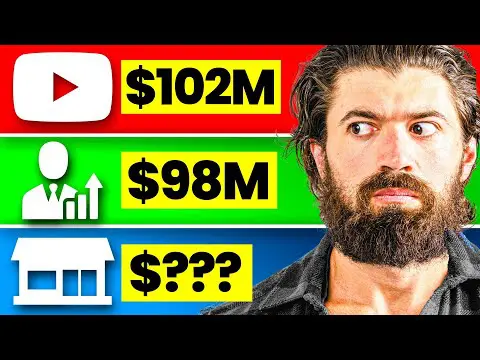
Alex Hormozi: I Solved Three $100,000,000 Business Problems
In this video, Alex Hormozi discusses three business problems that can take a company from 10 to 100 million dollars and provides a framework for applying these solutions to any business or personal brand.
-
Alex Hormozi: How to Build a LEGIT Online Course (2023)
The video discusses the four things that differentiate a legitimate online course from a scam, using Harvard as an example.
-

Alex Hormozi: TheDiet (REVEALED)
The video is about Alex Hormozi's diet and how he maintains his six-pack while still being able to eat dessert every night.
-
Alex Hormozi: How to go ALL IN on your side hustle...
The video is about the three-step process of going from a side hustle to a main hustle, including defining a side hustle, securing financial stability, and ensuring consistency and reliability in the side hustle before making the jump to a main hustle.
-
Alex Hormozi: How I Set Goals That ACTUALLY MAKE MONEY
The video is about Alex Hormozi's four-step goal setting process, which involves identifying the problem being solved, creating a hypothesis, determining the input and output, and reviewing the results.
-
Alex Hormozi: “I'm Broke, What Should I Sell?”
The video is about the different things that can be sold, including physical and digital products, services, access, attention, risk, money, and endorsements/brands, and how to choose what to sell based on resources and skills.
-
Alex Hormozi: The SEASON OF NO (What it Takes to Win)
The video is about the importance of entering a “season of no” in order to achieve success by focusing on the one thing that matters most and saying no to everything else.
-
Alex Hormozi: How to Grow ANY Local Business (my framework)
The video discusses a framework for deciding whether to expand a local business through franchising or privately owned locations, based on factors such as cost, effort, scale, and personal preferences, and how to calculate the potential return on investment for each option.
-
Alex Hormozi: HOW TO GET WHAT YOU WANT (6 Proven Methods)
The video discusses six proven methods for getting what you want, including reciprocity, consistency, and social proof.
-
Alex Hormozi: Why You Shouldn't Copy Me
The video is about why copying someone else's identity or brand is not a good idea and how being unique and true to oneself can make a person stand out in marketing and personal branding.