
Malcolm Gladwell: Working From Home Is Destroying Us! | E162
Last updated: Jun 2, 2023
The video is an interview with Malcolm Gladwell discussing the importance of feeling a sense of belonging and contributing to society, and how working from home can hinder those feelings.
The video features an interview with Malcolm Gladwell, a business guru and journalist, who argues that working from home is destroying our sense of belonging and feeling necessary. He believes that reducing our lives to the language of happiness must go alongside the question of what contribution we are making to the world we live in. Gladwell emphasizes that neglect, not conflict, drives people away, and being an outsider can be liberating. He reflects on his early years living in different countries and growing up in a magical place without broader anxieties, which he now realizes was an enormous blessing.
- Working from home can hinder feelings of belonging and contribution to society.
- Feeling necessary and having a sense of belonging is important for humans.
- Reducing life to the language of happiness must go alongside the question of what contribution one is making to the world.
- Choosing to make an amazing contribution to society at the cost of one's unhappiness is a difficult decision.
- Casting someone out is the great sin, neglect drives people away more than conflict.
- The video is an interview with Malcolm Gladwell.
- Gladwell had lived in three or four countries by the age of 10.
- Gladwell cites being an outsider as liberating.
- Working from home can lead to a lack of social interaction and a sense of isolation.
Malcolm Gladwell: Working From Home Is Destroying Us! | E162 - YouTube

The Importance of Belonging and Contribution
- Working from home can hinder feelings of belonging and contribution to society.
- Feeling necessary and having a sense of belonging is important for humans.
- Reducing life to the language of happiness must go alongside the question of what contribution one is making to the world.
- Choosing to make an amazing contribution to society at the cost of one's unhappiness is a difficult decision.
- Casting someone out is the great sin, neglect drives people away more than conflict.

Introduction and Gratitude
- The video is an interview with Malcolm Gladwell.
- Gladwell is a business guru and rock star journalist.
- Stephen Bartlett is the interviewer.
- Bartlett expresses gratitude for Gladwell's books and their impact on his life.
- Gladwell expresses gratitude for the opportunity to speak with Bartlett.

Early Years and Travel
- Gladwell had lived in three or four countries by the age of 10.
- He had an English father and Jamaican mother.
- Gladwell was conscious of himself as an outsider, which he found useful and liberating.
- He grew up in Southwestern Ontario, a magical place with no broader anxieties.
- Gladwell was never scared of anything growing up.
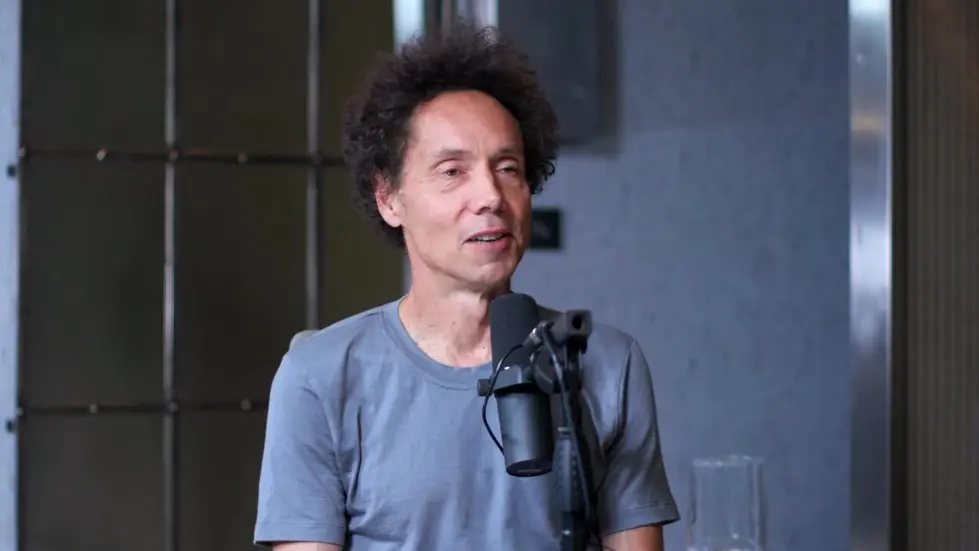
Malcolm Gladwell: Working From Home Is Destroying Us! | E162 - YouTube
Being an Outsider
- Gladwell cites being an outsider as liberating.
- He gives an example of not playing ice hockey in rural Canada, which made him permanently outside of hockey culture.
- Not participating in compulsory rituals of belonging can be freeing.
- Being an outsider can lead to bullying and social inadequacy for some people.
- Gladwell sees being an outsider as a positive thing for himself.

Malcolm Gladwell's Childhood
- Gladwell had a solitary childhood.
- He had more time to read and indulge his curiosity.
- He believes that children today are pushed into unwanted social interaction.
- He thinks that it should be fine for a seven-year-old to spend an evening by themselves.
- He believes that parental involvement can have an impact on someone's outcomes.

Benign Neglect vs. Lack of Parental Involvement
- Gladwell believes that benign neglect is not the same as a lack of parental involvement.
- Benign neglect is when parents have stopped hovering over their children but have not abandoned them.
- Parents have removed the unnecessary or unproductive hovering but have left a safe structure in place.
- Gladwell thinks that those who describe their parents' absence from their childhood do them a disservice.
- He believes that parents who choose to parent in a wiser way can lead to greater independence and better outcomes.

Gladwell's Mother's Subversive Parenting
- Gladwell's mother was quite subversive in a quiet West Indian kind of way.
- She was quite happy if Gladwell chose not to go to school on a regular basis.
- She realized that opposing his desire would make it worse, so she decided to endorse it instead.
- She diffused whatever rebellious intent Gladwell had by signing fake notes for him to give to the principal.

Gladwell's Father's Personality
- Gladwell's father was a very Englishman who liked dogs, gardening, and long walks in the rain.
- He was exceedingly intelligent but combined it with a kind of humility that was the more important aspect of his personality.
- He would never make it explicit that he was smarter than most people he met.
- If he thought that someone had a slight edge of knowledge in some domain over him, he would defer to them.
- This made him an incredibly curious person.

The Importance of Humility in Journalism
- Good journalism requires a baseline respect for what others can teach you.
- Entering into every interview with the expectation that you know less than the person you're interviewing.
- Asserting ourselves in normal conversation can hinder effective interviewing.
- Trusting that the person being interviewed can teach you something you can't learn on your own.
- Great journalists have the ability to make it plain to whoever they're talking to that they know less than them.

Joe Rogan as a Bridge to His Audience
- Joe Rogan has a wonderful ability to put himself squarely in the position of his listeners.
- He's having the conversation that his listeners wish they could be having with the subjects on his show.
- For a host of any kind of show, being able to do that is a winning quality.

Malcolm Gladwell's Path to Journalism
- Malcolm Gladwell never imagined that writing could be a profession.
- He fell into journalism by accident after graduating from university.
- He grew up in a small town where no one made a living in the creative professions.
- Advice for young people just starting out: small factors can have a tremendous impact on your outcomes.
- Living in a big city can be beneficial for those pursuing careers in journalism, media, or business.

The Negative Impact of Working from Home
- Working from home can hinder our sense of belonging and contributing to society.
- Humans have a fundamental need to feel like they're part of something bigger than themselves.
- Working from home can lead to a lack of social interaction and a sense of isolation.
- It can also lead to a lack of accountability and a decrease in productivity.
- Employers should consider the negative impact of remote work and find ways to mitigate it.

The Importance of Mobility
- Immigrants are more successful because they are willing to move where opportunities are.
- They don't have any roots or family that's keeping them in one place.
- They simply make a beeline for the places where they can further their own economic and personal interests the quickest and the most efficiently.
- Native people don't do that too many encumbrances.
- Young people should always ask themselves where they want to move first question.

The Disadvantage of Working from Home
- People have confused the efficiency of digital communication with emotional efficiency and psychological efficiency.
- It is only logistically efficient, it does not resolve the quiz and help someone trust you more or take a chance on you or get to know you in all of your complexity.
- Working from home can hinder the sense of belonging and contributing to society.
- It can also hinder the opportunity to move where the opportunity is.
- People need to go where the opportunity is, it's not going to come to them magically.

The Happiness of First Generation Immigrants
- Happiness is a fairly stable trait.
- There are people who are happy regardless of where they are and people who are not.
- People for whom happiness represents itself differently.
- First generation immigrants are in survival mode.
- The second generation has the chance of being in a thriving self-actualization situation.

The Definition of Happiness
- Happiness is a fairly stable trait.
- There are people who are happy regardless of where they are and people who are not.
- People for whom happiness represents itself differently.
- Building a massive business, making a family stable, and creating a secure beachhead in a whole new country can make someone happy.
- It's just not the kind of lie on the beach read a good book happy.

Definition of Happiness
- People who have accomplished something like being a billionaire derive a different kind of satisfaction from it.
- Working more than most people does not mean being less happy.
- A narrow definition of happiness is not accurate.
- People tend to be happier when they have stronger and more meaningful relationships and more balance in their lives.
- Balance is appropriate for the average person, but for someone who built an enormous business from scratch, happiness may look differently.

Drive and Contribution
- Individuals who are highly driven may not have a balanced life, but they may still be happy and fulfilled.
- Some successful people have built great companies due to their insecurities.
- Language of happiness has to go alongside the question of what contribution one is making to the world.
- Many people who are not personally happy make enormous contributions, which is far more important.
- People who make an enormous contribution, like Florence Nightingale, may not be happy, but their contribution continues to this day.

Working from Home
- Working from home can hinder the sense of belonging and contributing to society.
- People need to feel like they are part of something bigger than themselves.
- Working from home can lead to isolation and disconnection from colleagues and the community.
- Working from home can also lead to a lack of structure and balance in one's life.
- Working from home can be detrimental to mental health and well-being.

Importance of Relationships
- Strong and meaningful relationships are essential for happiness.
- People who have strong relationships tend to be happier and healthier.
- Relationships provide a sense of belonging and contribute to one's overall well-being.
- People who have strong relationships are more resilient and better able to cope with stress.
- Relationships require time and effort, but they are worth it in the end.

The Importance of Feeling a Sense of Belonging and Contributing to Society
- People have different dimensions in their lives that they want to satisfy.
- Feeling happy is something that individuals want for themselves.
- Making a great contribution to society is something that others would like from them.
- People may choose to make a significant contribution to society at the cost of their own happiness.
- The contribution made depends on what it is and the individual's perspective.

The Sacrifices Made for a Future Cause
- People may sacrifice their career and happiness for a future cause.
- Individuals may pursue an idea that doesn't work at the time but is essential in the future.
- People may be glad they made the sacrifice even if it didn't pay off during their lifetime.
- Heroes who failed in their pursuit of a better future would still say it was worth it.
- People are often motivated by their own ego and insecurity to accomplish something.

The Story of the Bomber Mafia
- The Bomber Mafia is a group of pilots in the 1930s who had a dream about a better way to fight wars.
- They had ideas about how high altitude precision bombing could revolutionize warfare and save countless civilian lives.
- Their dream didn't work during the Second World War, and many of them had their careers destroyed.
- Their ideas are now essential to the way we think about war today and save countless lives.
- Haywood Hansel was a brilliant and passionate figure who devoted his life to the Air Force.

The Pursuit of Accomplishment
- People are often motivated by their own ego and insecurity to accomplish something.
- Successful people often have a root cause of their achievements, such as being bullied or outcasted.
- Individuals pursue accomplishments to prove someone wrong or fit in.
- People may view these individuals as courageous or brave, but it may be an involuntary pursuit.
- Understanding the root cause of an individual's pursuit of accomplishment is essential.

Psychology of Courage
- Insecurity can manifest as courage.
- Courage can have many fathers.
- People can take harmful things and spin them into gold.
- Feeling like an outcast can lead to courage.
- Courage can be born out of frustration, isolation, and rejection.

The Brahma Mafia
- A group of young men in the 1930s who believed planes were the future of warfare.
- They felt overlooked and ignored in the Army.
- They moved to a remote Air Force Base in Alabama to be left alone and dream big.
- They had a massive chip on their shoulder about the morons running the Army.
- They sparked a technological revolution, but it was born out of loneliness and frustration.

Isolation and Belonging
- Working from home can hinder feelings of belonging and contributing to society.
- Humans have a need to feel like they belong and are contributing to something greater than themselves.
- Isolation can lead to feelings of loneliness and frustration.
- Belonging can lead to feelings of courage and motivation.
- Being part of a group can lead to innovation and progress.

The Importance of Community
- Community is essential for human progress and innovation.
- Being part of a community can lead to feelings of belonging and purpose.
- Communities can provide support and motivation for individuals.
- Communities can lead to collaboration and the sharing of ideas.
- Working together towards a common goal can lead to great achievements.

The Importance of Serendipity in Innovation
- Sheer serendipity can unleash innovation.
- Random events can allow innovators to turn their disgruntlement and neurosis into gold.
- There are times when innovators are just early, and their ideas come to fruition afterwards.
- There are innovators who pursue an idea, and then they're just early.
- It's important to have faith that their vision will be realized at some point.

The Journey is More Important Than the Destination
- The ultimate goal is just a thing that gives us orientation, but we're always on a journey.
- Striving towards a meaningful goal surrounded by people we love and feeling challenged is what makes us happy.
- Once the goal is complete or we're not around people we love and it's not challenging us, we're no longer satisfied.
- It's important to strive towards a goal that is challenging and meaningful.
- Surrounding ourselves with people who believe in us is crucial to achieving our goals.

The Negative Impact of Working from Home
- Working from home can hinder our sense of belonging and contributing to society.
- Humans are social creatures and need to feel connected to others.
- Working from home can lead to isolation and loneliness.
- It's important to have a sense of community and to feel like we're part of something bigger than ourselves.
- Working from home can also lead to a lack of motivation and productivity.

The Importance of Believing in Yourself
- It's important to have faith in yourself and your abilities.
- Believing in yourself can help you overcome obstacles and achieve your goals.
- Surrounding yourself with people who believe in you can also help you achieve your goals.
- It's important to have a positive mindset and to focus on the possibilities rather than the limitations.
- Believing in yourself can help you turn your dreams into reality.

The Illusion of Timing
- Innovators often underestimate the time it takes to bring an idea to fruition.
- Success is based on the illusion that an idea can be pulled off quickly.
- No significant innovation has taken less time than the innovator imagined.
- There are many reasons why everything takes longer than expected, such as legislation and unforeseen obstacles.
- People often think that just because they can describe an idea clearly, they can will it into being overnight.

The Example of the Automated Teller Machine
- The inventor of the ATM machine thought it would take seven years to spread the idea throughout the world.
- It actually took 25 years for the ATM machine to become popular.
- Consumer behavior had to change, and people had to make space for the machines.
- People are extremely conservative when it comes to how they deal psychologically with money.
- It can take a generation for people to warm up to a new idea.

The Importance of Timing
- Timing is important when it comes to inventing things, creating things, and launching a podcast.
- People often claim to understand timing, but they were just lucky.
- Some people have a kind of intuition about the marketplace.
- Timing is not something that can be fully controlled.
- It is possible to improve timing by being aware of the market and being patient.

The Negative Effects of Working from Home
- Working from home can hinder a sense of belonging and contributing to society.
- People need to feel like they are part of something bigger than themselves.
- Working from home can lead to isolation and a lack of social interaction.
- People need to be around others to feel motivated and inspired.
- Working from home can lead to a lack of structure and discipline.

Steve Jobs' Genius
- Being first is massively overrated.
- Jobs was always late to every market that he eventually won.
- His genius was in understanding that if you are the first person, you're probably too early.
- Jobs was very commercial in the way that he approached product innovation.
- He had an uncanny sense of how to bring something to a mass market.

10 Years at The Washington Post
- Working at The Washington Post taught Malcolm Gladwell fundamental humility.
- He learned to write without anxiety.
- The discipline of being forced to write something every day in a limited amount of time cured him of writer's block and anxiety.
- It was like a boot camp for writers.
- It was enormously useful in freeing him up to spend his mental energies on other parts of the writing process.

You have read 50% of the summary.
To read the other half, please enter your Name and Email. It's FREE.
You can unsubscribe anytime. By entering your email you agree to our Terms & Conditions and Privacy Policy.
Watch the video on YouTube:
Malcolm Gladwell: Working From Home Is Destroying Us! | E162 - YouTube
Related summaries of videos:
- Gary Neville: From Football Legend To Building A Business Empire | E170
- Chris Kamara: The Untold Heartbreaking Story Of A Football Legend | E177
- Maisie Williams: The Painful Past Of A Game Of Thrones Star | E181
- Gabor Mate: The Childhood Lie That’s Ruining All Of Our Lives. | E193
- Gary Vee’s Emotional Confession About His Success & Family! | E207
- Doctor Tim Spector: The Shocking New Truth About Weight Loss, Calories & Diets | E209
- No.1 Neuroscientist: Age 30 to 50 Will Be Your Unhappiest, Here's How To FIX IT! - Dr. Tali Sharot
- Jesse Lingard Reveals The Problem With Man United Today & Why He Moved To Nottingham Forest | E214
- Jay Shetty: 8 Rules For Perfect Love & Amazing Sex! | E217
- The Weight Loss Scientist: You've Been LIED To About Calories, Dieting & Losing Weight: Giles Yeo
- Home
- About us
- Contact
- Book Summaries 0-9
- Book Summaries A
- Book Summaries B
- Book Summaries C
- Book Summaries D
- Book Summaries E
- Book Summaries F
- Book Summaries G
- Book Summaries H
- Book Summaries I
- Book Summaries J
- Book Summaries K
- Book Summaries L
- Book Summaries M
- Book Summaries N
- Book Summaries O
- Book Summaries P
- Book Summaries Q
- Book Summaries R
- Book Summaries S
- Book Summaries T
- Book Summaries U
- Book Summaries V
- Book Summaries W
- Book Summaries X
- Book Summaries Y
- Book Summaries Z
- Jay Shetty Podcast - Summaries
- Tom Bilyeu Impact Theory - Summaries
- Lex Fridman - Summaries
- Diary of a CEO - Summaries
- Alex Hormozi - Summaries
