
Harvard Psychologist Shows You How to Make Your Negative Thoughts Serve You | Susan David
Last updated: Jun 2, 2023
The video is about how emotions are not negative and should not be pushed aside, but rather used as data to help individuals adapt and thrive in their personal and professional lives.
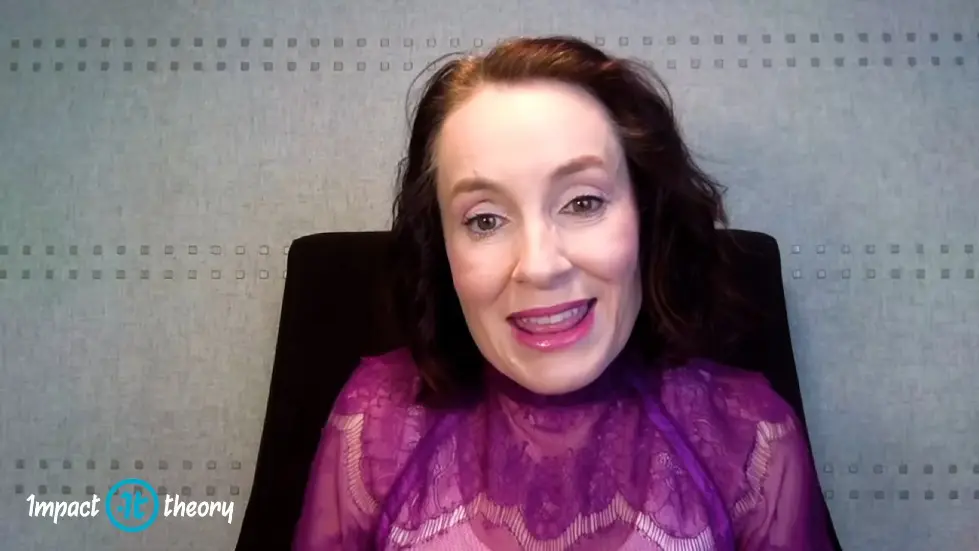
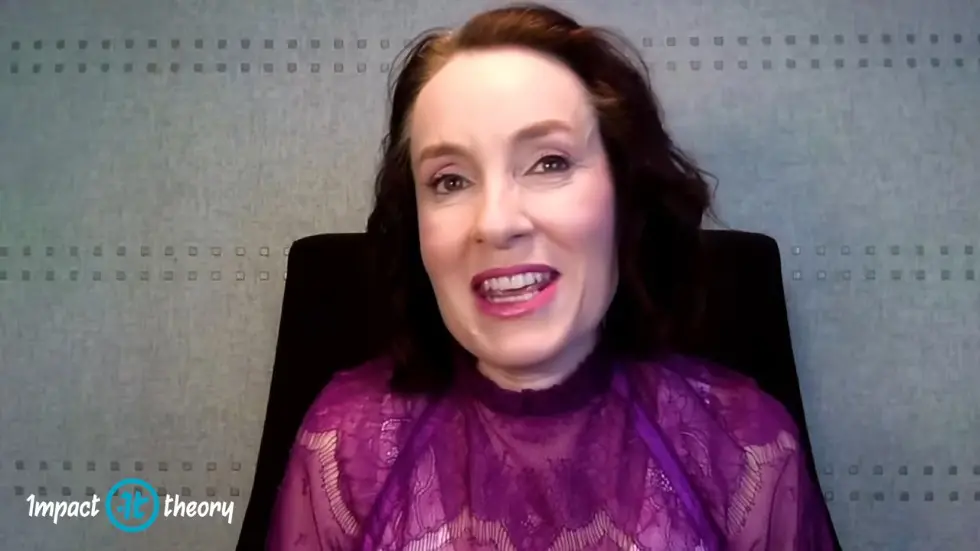
The video features an interview with Susan David, an award-winning Harvard Medical School psychologist and author, who discusses the concept of emotional agility. She explains that emotions are not negative and should not be pushed aside, but rather they contain valuable information about what we care about. By understanding the data that our emotions bring, we can adapt and thrive in the world. David emphasizes the importance of our internal narrative and how we deal with our thoughts, emotions, and stories, as it drives everything from our relationships to our careers and parenting. She encourages people to develop critical skills to connect with themselves in ways that help them be their best.
- Emotions are data, not directives, and critical skills in complex times.
- Internal narratives can hold people back.
- Discomfort is the price of admission to a meaningful life.
- Negative thoughts can be used as data to help us adapt and thrive.
- Internal alignment is crucial for personal and professional success.
- There is nothing inherently good or bad about any thought or emotion.
- Childhood experiences can shape an individual's adult identity.
- Recognizing and using our emotions as data can help us rebuild and grow after experiencing negative stories or emotions.
- Using our emotions as data can help us recognize when we are out of alignment with our values and make decisions that align with our goals.
Harvard Psychologist Shows You How to Make Your Negative Thoughts Serve You | Susan David - YouTube

Emotions are Data, Not Directives
- Emotions are often seen as negative and need to be controlled.
- Emotions have evolved to help us adapt and thrive.
- Emotions contain information about the things we care about.
- Understanding the values signaled by emotions helps us adapt.
- Emotions are data, not directives, and critical skills in complex times.

Internal Narrative and Emotional Agility
- Internal narratives can hold people back.
- Emotional agility is about dealing with thoughts, emotions, and stories.
- How we come to our inner worlds drives everything.
- Emotional agility helps us thrive in the world.
- Emotional agility is critical for success in relationships, careers, parenting, and leadership.
The Importance of Discomfort
- Discomfort is the price of admission to a meaningful life.
- Discomfort helps us grow and adapt.
- Discomfort is not negative, but a necessary part of life.
- Discomfort helps us learn and develop resilience.
- Discomfort is a signal that we are pushing ourselves out of our comfort zone.

Harvard Psychologist Shows You How to Make Your Negative Thoughts Serve You | Susan David - YouTube
Embracing Negative Thoughts
- Negative thoughts should not be pushed aside.
- Negative thoughts can be used as data to help us adapt and thrive.
- Negative thoughts can be reframed to help us see things in a different light.
- Negative thoughts can be used to challenge our assumptions and beliefs.
- Negative thoughts can be a source of growth and learning.

The Importance of Internal Alignment
- Internal alignment is crucial for personal and professional success.
- Internal alignment involves feeling integrated and aligned with one's values.
- Emotions and thoughts are valuable data that should not be pushed aside.
- However, it is important to prevent oneself from getting stuck in negative thoughts and emotions.
- Stories written on mental chalkboards in childhood can hold us back as adults.

The Functionality of Thoughts, Emotions, and Stories
- There is nothing inherently good or bad about any thought or emotion.
- Thoughts and emotions evolved to help individuals ward off danger, judge, criticize, understand, and pick apart.
- Stories are functional at a core level because they help individuals make sense of stimuli in their environment.
- Even if a story does not serve an individual, it is still a form of sense-making.
- The important question to ask oneself is whether a story, thought, or emotion is serving them.

The Impact of Childhood Experiences on Adult Identity
- Childhood experiences can shape an individual's adult identity.
- Neurologically, individuals are like sponges in their early years.
- Some psychologists believe that certain things must be learned by the age of four, or they will be difficult to change later in life.
- Stories written on mental chalkboards in childhood can hold individuals back as adults.
- It is possible to change these stories and create a new narrative for oneself.

The Process of Changing Negative Stories
- The first step in changing negative stories is to recognize that they are not serving you.
- It is important to identify the specific story and how it is holding you back.
- Once the story is identified, it can be challenged and replaced with a new narrative.
- This process involves recognizing the evidence that supports the new narrative and practicing it until it becomes a habit.
- Changing negative stories is a gradual process that requires patience and persistence.

Recognizing and Using Emotions as Data
- Our thoughts, emotions, and stories are not inherently good or bad, but they can impact our behavior and relationships.
- When we get hooked by a negative thought or emotional story, it can move us away from our values.
- Emotional agility is the process of becoming healthy with ourselves and our emotions so that we can bring other parts of ourselves to the surface.
- Identifying and understanding our emotions can help us recognize when they are out of alignment with our values and goals.
- Accepting difficult emotions with gentleness can help us use them as data to adapt and thrive in our personal and professional lives.

Defining Who You Want to Be and Your Values
- Many people struggle to define who they want to be and what their values are.
- Identifying your values can help you recognize when your emotions are out of alignment with them.
- Recognizing your emotions and using them as data can help you solidify your identity and values.
- The process of defining who you want to be and your values involves recognizing and accepting difficult emotions, and using them to guide your behavior and decisions.
- Defining your values can help you prioritize what is important to you and make decisions that align with your goals.

Overcoming Internal Struggles with Emotions
- Our culture often tells us that some emotions are bad, which can lead to internal struggles with our difficult emotions.
- Identifying and accepting our emotions can help us overcome these internal struggles and use our emotions as data.
- Recognizing the difference between type one emotions (frustration, anger, anxiety, fear, grief) and type two emotions (emotions about the emotion) can help us focus on using our emotions as data.
- Accepting discomfort as the price of admission to a meaningful life can help us embrace difficult emotions and use them to adapt and thrive.
- Gentle acceptance of difficult emotions can help us use them as data to guide our behavior and decisions.
Using Emotions to Rebuild and Grow
- Recognizing and using our emotions as data can help us rebuild and grow after experiencing negative stories or emotions.
- Identifying our values and using them to guide our behavior and decisions can help us rebuild our identity and move towards who we want to be.
- Accepting discomfort and difficult emotions as part of the process can help us adapt and thrive in our personal and professional lives.
- Using our emotions as data can help us recognize when we are out of alignment with our values and make decisions that align with our goals.
- Embracing difficult emotions and using them to guide our behavior and decisions can help us grow and become the person we want to be.

Gentle Acceptance and Self-Compassion
- Gentle acceptance is not passive resignation, but rather acknowledging and accepting our emotions without judgment.
- Self-compassion is often seen as weak or lazy, but it is actually the ability to soothe ourselves and love ourselves in difficult times.
- Self-compassion creates a space for us to take risks and try new things, knowing that we will be there for ourselves if something goes wrong.

Emotions as Signposts to Values
- Our emotions contain signposts to our values, as we don't feel strongly about things we don't care about.
- Slowing down and identifying the emotion we are feeling can help us connect with our values.
- Asking ourselves what the emotion is telling us about our values can help us identify what is important to us.
- Asking ourselves what we did today that was worthwhile can help us connect with our values.
- Designing a day for ourselves and identifying what we would do can also help us identify our values.

Exploring Our Values
- There are different ways to explore our values, such as a quiz with mapped out values.
- Connecting with our values is important because the world around us is constantly telling us what our values should be.
- Connecting with our internal compass protects us from living someone else's life and helps us be true to ourselves.

The Importance of Emotional Agility
- Emotions are not negative and should not be pushed aside, but rather used as data to help individuals adapt and thrive in their personal and professional lives.
- Values help to protect us from social contagion and are important for our mental health and well-being.
- Depression is now the leading cause of disability globally, outstripping cancer and heart disease.
- Emotional agility is a critical skill for dealing with complexity and being able to be healthy with ourselves.
- Being emotionally agile helps individuals to deal with difficult emotions and identify the cause of the emotion, leading to active steps towards improvement.

The Fragility of Life and the Importance of Emotional Agility
- Technology has outstripped our psychological capacity to thrive, leading to an age of incredible complexity.
- Being emotionally agile is a fundamental skill for individuals, families, and children.
- Agility and flexibility in innovation require opening oneself up to difficult emotions.
- Being healthy with ourselves is critical for dealing with the world as it is, not as we wish it to be.
- Emotion granularity, or becoming more granular with difficult emotions, helps individuals to identify the cause of the emotion and take active steps towards improvement.

The Value System Quiz
- The quiz takes individuals through questions around whether they push their emotions aside, whether they're agile with their emotions, what some of their core values are, and some of the skills that can be developed.
- The quiz helps individuals to be with their emotions more effectively and start signaling their values.
- Emotion granularity is a simple technique that helps individuals move beyond big labels of emotions and identify the cause of the emotion.
- Labeling emotions in a more granular way helps individuals to identify the cause of the emotion and take active steps towards improvement.
- The quiz is a practical tool for individuals to develop emotional agility and identify their core values.

Using Emotions as Data
- Emotions are data that can be used to help individuals adapt and thrive in their personal and professional lives.
- Pushing emotions aside can lead to rigidity and black and white thinking.
- Being emotionally agile helps individuals to deal with complexity and be creative and innovative.
- Opening oneself up to difficult emotions is necessary for agility and flexibility in innovation.
- Being healthy with ourselves is critical for dealing with the world as it is, not as we wish it to be.

Emotional Granularity
- Emotional granularity is critical to our well-being.
- Children who can accurately label their emotions do better over time.
- Labeling emotions can completely shift things.
- Labeling emotions helps differentiate between things.
- Labeling emotions can completely change relationships.

You have read 50% of the summary.
To read the other half, please enter your Name and Email. It's FREE.
You can unsubscribe anytime. By entering your email you agree to our Terms & Conditions and Privacy Policy.
Watch the video on YouTube:
Harvard Psychologist Shows You How to Make Your Negative Thoughts Serve You | Susan David - YouTube
Related summaries of videos:
- Jay Shetty Reveals How Mindset Matters | Impact Theory
- Is Your Self-Identity Limiting Your Potential? | Vusi Thembekwayo on Impact Theory
- "TRY THIS Technique For 7 Days To IMPROVE YOUR BREATHING!" | James Nestor
- Harvard Nutritional Psychiatrist Shares the Key Foods for Incredible Mental Health | Dr. Uma Naidoo
- Rachel Hollis Shares Her Secrets for Reframing The Toughest Years of Your Life
- Stanford Psychiatrist Reveals How Cognitive Therapy Can Cure Your Depression and Anxiety
- Matthew McConaughey Shares his Trick for Getting What You Want
- Psychotherapist's Hacks on How to Change Your Life | Lori Gottlieb on Impact Theory
- Why You've Been Lied to About Where to Put Your Time, Energy, & Focus | Seth Godin on Impact Theory
- Anti-Aging Expert Reveals Secret to Staying Young | Dr. Alexander Paziotopoulos on Health Theory
- Home
- About us
- Contact
- Book Summaries 0-9
- Book Summaries A
- Book Summaries B
- Book Summaries C
- Book Summaries D
- Book Summaries E
- Book Summaries F
- Book Summaries G
- Book Summaries H
- Book Summaries I
- Book Summaries J
- Book Summaries K
- Book Summaries L
- Book Summaries M
- Book Summaries N
- Book Summaries O
- Book Summaries P
- Book Summaries Q
- Book Summaries R
- Book Summaries S
- Book Summaries T
- Book Summaries U
- Book Summaries V
- Book Summaries W
- Book Summaries X
- Book Summaries Y
- Book Summaries Z
- Jay Shetty Podcast - Summaries
- Tom Bilyeu Impact Theory - Summaries
- Lex Fridman - Summaries
- Diary of a CEO - Summaries
- Alex Hormozi - Summaries
