
Rick Rubin and Andrew Huberman: Protocols to Access Creative Energy and Process
Last updated: Dec 26, 2023
The video is about Andrew Huberman and Rick Rubin discussing his creative process and answering questions about it. Rubin is a world-renowned music producer who has worked with many famous artists. He has also written a book about the creative process. The video covers practical aspects of the creative process, including what Rubin does each day and how he produces music or other forms of art. Rubin also discusses what people should do to access their creative energy and process, including what they should do from the time they wake up until they go to sleep. The video is sponsored by Maui Nei venison and Eight Sleep.
This video by Andrew Huberman was published on Dec 25, 2023.
Video length: 02:28:09.
The video is about Rick Rubin, a world-renowned music producer, discussing his creative process and answering questions from listeners.
Rubin has worked with many famous artists, including Red Hot Chili Peppers, Beasty Boys, Jay-Z, and Lady Gaga. He has also authored a book called "The Creative Act: A Way of Being." In the video, Rubin discusses his daily routine and the specific practices he uses to access creative energy and process. He also answers questions about his creative process and what listeners can do to access their own creative energy.
The video is sponsored by Maui Nei Venison and Eight Sleep.
- Rick Rubin's creative process involves a combination of inspiration, collaboration, and reflection.
- People should start their day with a morning routine that includes exercise, meditation, and a healthy breakfast.
- They should take time to engage in activities that inspire them, such as listening to music or reading a book.
- They should set aside dedicated time for creative work and avoid distractions.
- They should be open to feedback and willing to make changes to their work as needed.
- They should also take care of their physical and mental health by getting enough sleep, eating a healthy diet, and practicing self-care.
- Rubin has been meditating since his teenage years and does a daily 10 or 20 minute meditation.
- He finds Yoga Nidra or nsdr (non-sleep deep rest) to be incredibly restorative and does it every single day.
- Rubin mentions the importance of having a routine and being consistent in order to access creative energy and process.
Rick Rubin: Protocols to Access Creative Energy and Process - YouTube

Introduction
- Welcome to the Huberman Lab podcast
- Hosted by Andrew Huberman, a professor of neurobiology and ophthalmology at Stanford School of Medicine
- Guest is Rick Rubin, a world-renowned music producer
- Rubin has worked with many famous artists and has written a book about the creative process
- Today's discussion focuses on the practical aspects of the creative process

Rick Rubin's Creative Process
- Rubin starts his day by meditating and exercising
- He then listens to music and gets inspired by it
- He spends time brainstorming and coming up with new ideas
- He collaborates with other artists and producers to create music
- He also takes time to reflect on his work and make changes as needed

Accessing Creative Energy and Process
- People should start their day with a morning routine that includes exercise, meditation, and a healthy breakfast
- They should take time to engage in activities that inspire them, such as listening to music or reading a book
- They should set aside dedicated time for creative work and avoid distractions
- They should be open to feedback and willing to make changes to their work as needed
- They should also take care of their physical and mental health by getting enough sleep, eating a healthy diet, and practicing self-care

Rick Rubin: Protocols to Access Creative Energy and Process - YouTube
Conclusion
- Rick Rubin's creative process involves a combination of inspiration, collaboration, and reflection
- Accessing creative energy and process requires a morning routine, engaging in inspiring activities, setting aside dedicated time for creative work, and taking care of physical and mental health

Rick Rubin's Creative Process and Practical Aspects
- Rick Rubin is a world-renowned music producer who has worked with many famous artists.
- He has also written a book about the creative process.
- The video covers practical aspects of the creative process, including what Rubin does each day and how he produces music or other forms of art.
- Rubin discusses what people should do to access their creative energy and process, including what they should do from the time they wake up until they go to sleep.
- The video is sponsored by Maui Nei venison and Eight Sleep.

Meditation and Yoga Nidra
- Rubin has been meditating since his teenage years and has done a daily 10 or 20 minute meditation for many years.
- He found that using the Waking Up app makes it easy to take on a meditation practice and do meditation if not every day, very close to every day.
- Research has shown that meditation has an outsize positive effect on everything from stress regulation to sleep, and can make you more creative and focused.
- Rubin started doing Yoga Nidra or nsdr (non-sleep deep rest) about 10 years ago.
- He does Yoga Nidra every single day, anywhere from 10 to 30 minutes, and finds it to be incredibly restorative.

Waking Up and Meditation Practices
- Waking Up is an app that helps people select different lengths of meditations, yoga nras or ndrs, so that they can keep up their practice if they want to.
- Rubin uses different lengths of meditations, yoga nras or ndrs, to keep up his practice.
- If you'd like to try Waking Up, you can go to wakingup.com/huberman to try a completely free 30-day trial.
- Rubin mentions that he has relatively low heart rate variability and started doing a breathing technique specifically for heart rate variability.
- He does a coherence breathing exercise, which involves taking a deep breath and then exhaling, and repeating the process eyes closed.

Creativity and Protocols
- Rubin discusses the importance of having a routine and being consistent in order to access your creative energy and process.
- He mentions that he starts his day with a walk, followed by a shower and then a cup of coffee.
- He then goes to the studio and starts working on music or other forms of art.
- Rubin mentions that he takes breaks throughout the day to rest and recharge.
- He also mentions that he does not work on weekends, and instead spends time with his family and friends.

Rick Rubin's Creative Process
- Rick Rubin is a world-renowned music producer who has worked with many famous artists.
- He has also written a book about the creative process.
- The video covers practical aspects of the creative process, including what Rubin does each day and how he produces music or other forms of art.
- Rubin discusses what people should do to access their creative energy and process, including what they should do from the time they wake up until they go to sleep.
- The video is sponsored by Maui Nei venison and Eight Sleep.

The Importance of Meditation
- Meditation is a practice that helps change the way you are in the world.
- It is not meant to trivialize the real world, but rather to help you react to it in a better way.
- Meditation is like physical exercise, it elevates your blood pressure and secretes inflammatory cytokines.
- During a good workout, your body adapts to the changes and you sleep better, have a better mood, and walk upstairs easily.
- Meditation can help you sleep better, even if you are listening to a podcast while walking on the beach.

The Conversation with Steve Martin
- Rubin was walking on the beach and someone interrupted him while he was listening to a podcast.
- The person who interrupted him told Rubin a story about Steve Martin that he had heard on a podcast.
- Rubin and the person talked about comedy and things that he had said on the podcast.
- The person said that he loves podcasts and listens to them at night because he has terrible insomnia.
- Rubin realized that the person was wearing sunglasses, which mixes the signals to your body and can cause insomnia.

The Dermatologist's Perspective
- The dermatologist Rubin talked to said that everything he had been teaching in his medical practice for the last 40 years was wrong.
- The dermatologist said that getting sunlight signals to the eyes at least once a day in the morning and in the evening is important.
- Rubin learned from a guest whose episode had not yet been aired that the morning and evening sunlight have special properties.
- The contrasts between blues and oranges, blues and pinks that we can't always see if there's cloud cover are what trigger the body's understanding that it's morning and evening and that the night is coming.
- The dermatology community is starting to come online with the idea that low solar angle sunlight early and later in the day sunrise and sun setting are important for the skin and eyes.

The Benefits of Low Solar Angle Sunlight
- Low solar angle sunlight early and later in the day sunrise and sun setting are important for the skin and eyes.
- Rising and setting do not create the kind of skin damage or eye damage that people have been concerned about.
- The next step for the field of dermatology is to start communicating with neuroscientists and circadian biologists.
- The field of dermatology is starting to understand the importance of circadian rhythms and how they affect the skin and eyes.
- Rubin made the choice to remove his headphones and listen to the conversation with the dermatologist on the beach.

Rick Rubin's Creative Process
- Rick Rubin is a world-renowned music producer who has worked with many famous artists.
- He has also written a book about the creative process.
- The video covers practical aspects of the creative process, including what Rubin does each day and how he produces music or other forms of art.
- Rubin discusses what people should do to access their creative energy and process, including what they should do from the time they wake up until they go to sleep.
- The video is sponsored by Maui Nei venison and Eight Sleep.

Rubin's Creative Process
- Rubin starts his day by meditating and doing yoga.
- He then goes for a run or does some form of exercise.
- After that, he spends time listening to music and getting inspired.
- He then works on his projects, which can include anything from music production to writing a book.
- At the end of the day, Rubin spends time unwinding and relaxing.

Rubin's Tips for Accessing Creative Energy
- Rubin suggests that people should start their day with meditation and yoga to access their creative energy.
- He also recommends getting inspired by listening to music or other forms of art.
- Rubin suggests that people should take breaks throughout the day to recharge their creative energy.
- He also recommends spending time unwinding and relaxing at the end of the day to access their creative energy.
- Rubin suggests that people should be open to new experiences and ideas to access their creative energy.

Rubin's Tips for Producing Music
- Rubin suggests that people should listen to a lot of music to get inspired.
- He also recommends collaborating with other artists to produce music.
- Rubin suggests that people should be open to experimenting with different sounds and styles.
- He also recommends taking breaks throughout the production process to recharge.
- Rubin suggests that people should be patient and persistent in the production process.

AI and its ability to shape how music and art are made
- Rick Rubin discusses his thoughts on AI and its ability to shape how music and art are made.
- He is not scared of AI, but he is not yet familiar enough with it to talk about it in detail.
- He finds the point of view of the person making art interesting, but he is not sure if AI has its own point of view.
- He likes people's points of view and what makes an artist great to him is something about their point of view.
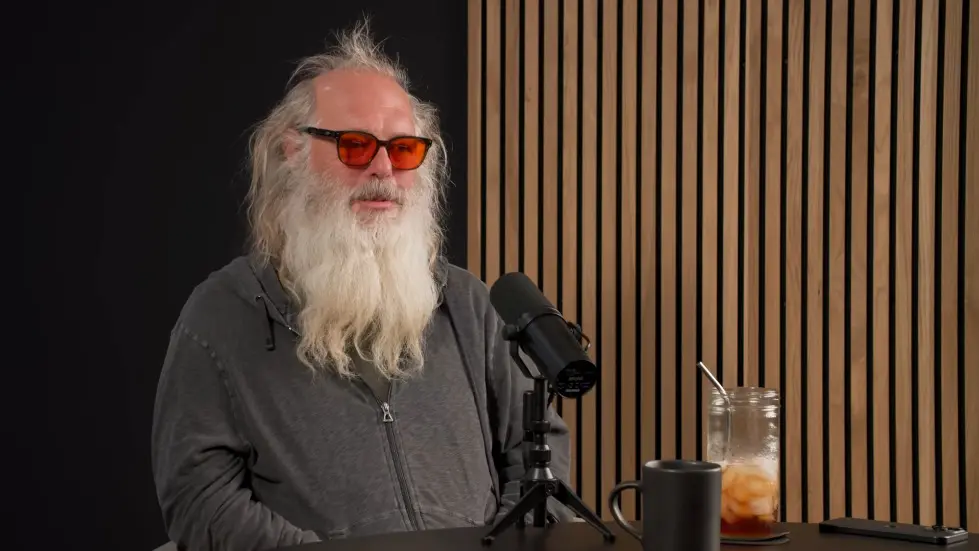
Childhood activities that were enjoyable and easy to get lost in
- Rick Rubin discusses the activities he found most enjoyable and easy to get lost in as a child.
- Reading and listening to music were big parts of his life.
- Playing guitar along with music was also enjoyable, even though he was not good enough to play along.
- Magic was also an interest for him, and he still does magic, although he is not good at it.

Thoughts on mentalists and magic
- Rick Rubin discusses his thoughts on mentalists and magic.
- He finds mentalists interesting because they rely on pure magic, rather than props.
- He loves the experience of trying to guess what a mentalist will do next.
- After seeing a mentalist, he asked him if he was willing to share some insights into how he does what he does.

Writer blocks and overcoming them
- Rick Rubin discusses writer blocks and how to overcome them.
- He suggests going past the idea of the block and thinking about what is causing the block.
- The block can be caused by personal issues, lack of confidence, or thinking about someone else's opinion.
- He suggests working with other artists to overcome writer blocks.

Rick Rubin's Creative Process
- Rick Rubin's creative process involves making something for himself, without any expectation of it changing the world or selling a certain number of copies.
- He believes that everything we make can be a personal reflection of who we are in that moment of time.
- Rubin believes that there are no blocks to creativity, as it is not based on dealing with a different force or perception.
- He suggests that if someone is living in a world of just being honest to where they are, there are no blocks to creativity.
- Rubin believes that the reason someone can't do something is because they are afraid someone else will not like it.

Sponsorship
- The video is sponsored by Maui Nei venison and Eight Sleep.
- The sponsor provides a vitamin mineral probiotic drink, ag1, that meets all of the foundational nutrition needs.
- The drink contains adaptogens to help buffer stress and improve sleep.
- The speaker, Rick Rubin, takes ag1 daily and reports feeling better when he takes it.
- The drink also tastes great.

Comfort with Uncertainty
- Rick Rubin is comfortable with uncertainty and the unknown.
- He accepts that's the way things are.
- When he starts a new project, he always has anxiety because he's uncertain of what's going to happen.
- He knows it won't be done until he feels good about it.
- He feels anxiety of I wonder what's going to happen today.

Therapeutic Creative Process
- The creative process can be therapeutic.
- The speaker, Rick Rubin, allows that to happen sometimes.
- The focus is to get the work done.
- The work can be more therapeutic to allow that to happen.
- The speaker, Rick Rubin, works with musical artists and allows them to discuss their challenges and successes.

Self-Doubt and Artists
- Rick Rubin's book discusses self-doubt and artists.
- He advises artists to embrace their painful emotions and transmute them into great work.
- The speaker, Rick Rubin, has felt those emotions himself.
- He lives a protected monk-like life to avoid things that get in the way of his ability to be where he wants to be.
- Many artists desire nurturing their internal life, which leads to sacrifices.

Section 1: Controlling Stimulation
- Rick Rubin discusses the importance of controlling the amount and type of stimulation in one's life to protect their inner landscape.
- He mentions that certain personality types and voice types may be more susceptible to certain types of stimulation.
- Rubin shares examples of how he has curated the people around him to be people he wants to have in his life.
- He mentions that high-intensity stimulation can be relaxing in certain environments, such as wrestling.
- Rubin discusses how wrestling allows him to experience a wildly dynamic and exciting theater piece where people are doing gymnastic and acrobatic things.

Section 2: Wrestling and the Real World
- Rick Rubin compares wrestling to the real world, stating that it is a more accurate representation of what the world is like.
- He mentions that people don't always tell the truth and when someone tells a story, it might not be the real story.
- Rubin states that wrestling is like the real world because we experience something and then make up a story to understand it.
- He mentions that wrestling is popular because it reflects something both primitive and evolved about the human brain.
- Rubin discusses how watching wrestling allows us to scratch the itch of seeing gladiators, but it's not about hurting each other.

Section 3: Narrative Distancing
- Rick Rubin mentions the concept of narrative distancing, which is the sense that what is happening is a story or a movie, not real.
- He states that in order to thoroughly enjoy wrestling, one has to be able to give up narrative distancing just a little bit.
- Rubin shares an example of how he enjoyed the jump off the top rope onto the mat in wrestling, despite the narrative distancing that came with it.
- He mentions that there were moments in wrestling where he was able to experience the realness of the situation, despite the narrative distancing that came with it.
- Rubin discusses how wrestling allows him to experience a wildly dynamic and exciting theater piece where people are doing gymnastic and acrobatic things.

Section 4: Popularity of Wrestling
- Rick Rubin discusses the increasing popularity of wrestling, despite the fact that supposedly we're evolving.
- He mentions that UFC and other gladiator-like octagon fights are also becoming more popular.
- Rubin states that wrestling reflects something both primitive and evolved about the human brain.
- He mentions that violence is a primitive aspect of the human brain, but it's not about hurting each other in wrestling.
- Rubin discusses how watching wrestling allows us to scratch the itch of seeing gladiators, but it's not about hurting each other.

Section 1: The Video
- The video is about Rick Rubin discussing his creative process and answering questions about it.
- Rubin is a world-renowned music producer who has worked with many famous artists.
- He has also written a book about the creative process.
- The video covers practical aspects of the creative process, including what Rubin does each day and how he produces music or other forms of art.
- Rubin also discusses what people should do to access their creative energy and process, including what they should do from the time they wake up until they go to sleep.

Section 2: The Video's Content
- The video is sponsored by Maui Nei venison and Eight Sleep.
- Rubin discusses his daily routine and how he starts his day with a cup of coffee and a walk.
- He then goes to the studio and works on music or other forms of art.
- Rubin also talks about how he listens to music and other forms of art to get inspired.
- He discusses the importance of taking breaks and stepping away from work to recharge.

Section 3: Practical Tips for Accessing Creative Energy and Process
- Rubin suggests waking up early and getting enough sleep to access creative energy and process.
- He also recommends taking breaks throughout the day to recharge.
- Rubin suggests listening to music and other forms of art to get inspired.
- He recommends trying new things and stepping outside of your comfort zone to access creative energy and process.
- Rubin suggests being open to new experiences and ideas to access creative energy and process.

Section 4: Conclusion
- The video provides practical tips for accessing creative energy and process.
- Rubin's daily routine and approach to music production are also discussed.
- The video is sponsored by Maui Nei venison and Eight Sleep.
- Overall, the video is a great resource for anyone looking to improve their creative process.

The Importance of Being Honest with Yourself
- Rick Rubin emphasizes the importance of being honest with yourself when it comes to your creative process.
- He believes that any thought about the outcome can undermine the entire creative process.
- Rubin suggests that it is okay to think about the outcome after you have finished the thing you are making.
- He believes that it is premature to think about turning people on to your work while you are in the process of creating it.
- Rubin uses the example of diary entries to illustrate the importance of being honest with yourself.

The Science of Discovery
- Rick Rubin discusses the importance of science and the discovery of truth.
- He believes that science is not just about making discoveries, but also about the pursuit of truth.
- Rubin uses the example of someone who fabricated data to illustrate the importance of accuracy in science.
- He believes that the same principles apply to many different aspects of life, beyond just art.
- Rubin believes that the principles of science can be applied to improve one's life, regardless of what they do.

The Art of Creativity
- Rick Rubin discusses the relationship between art and creativity.
- He believes that art is an outgrowth of creativity.
- Rubin uses the subtitle "A Way of Being" to illustrate the importance of creativity in one's life.
- He believes that tapping into oneself is the key to creativity.
- Rubin believes that creativity is not just about what you create, but also about who you are.

The Importance of Being Open-Minded
- Rick Rubin discusses the importance of being open-minded in the creative process.
- He believes that having a narrow belief system can limit the amount of information one has to work with.
- Rubin believes that allowing surprise to be surprised is important in the creative process.
- He believes that having good boundaries is important in the creative process.
- Rubin believes that part of the creative process can feel like being in a tunnel, but that bringing in information from the outside is important.

Rick Rubin's Creative Process
- Rick Rubin is a world-renowned music producer who has worked with many famous artists.
- He has also written a book about the creative process.
- The video covers practical aspects of the creative process, including what Rubin does each day and how he produces music or other forms of art.
- Rubin discusses what people should do to access their creative energy and process, including what they should do from the time they wake up until they go to sleep.
- The video is sponsored by Maui Nei venison and Eight Sleep.

Rubin's Creative Process
- Rubin starts his day by meditating and doing yoga.
- He then eats a healthy breakfast and goes for a run.
- After his run, he listens to music and gets inspired.
- He then works on his projects, which can include music production, writing, or other forms of art.
- Rubin also takes time to relax and recharge, which can include spending time in nature or doing other activities he enjoys.

Accessing Creative Energy and Process
- Rubin believes that accessing creative energy and process is about cultivating a certain way of being.
- He suggests that people can do this through practices such as meditation, yoga, and spending time in nature.
- Rubin also believes that people can update and adapt their nutrition, city, and other aspects of their life to better align with their creative energy and process.
- He suggests that people should be open to trying new things and experimenting with different approaches to accessing their creative energy and process.
- Rubin believes that it's important to be patient and persistent in the process of accessing creative energy and process.

Rubin's Approach to Resistance
- Rubin believes that resistance is a natural part of the creative process.
- He suggests that people should approach resistance with an open mind and be willing to try new things.
- Rubin believes that it's important to communicate with others and be supportive of their creative process, even if they are experiencing resistance.
- He suggests that people should be patient and persistent in the face of resistance, and not give up on their creative process.
- Rubin believes that it's important to be flexible and adaptable in the face of resistance, and to be open to new approaches and perspectives.

Introduction
- The video is about Rick Rubin discussing his creative process and answering questions about it.
- Rubin is a world-renowned music producer who has worked with many famous artists.
- He has also written a book about the creative process.
- The video covers practical aspects of the creative process, including what Rubin does each day and how he produces music or other forms of art.
- Rubin also discusses what people should do to access their creative energy and process, including what they should do from the time they wake up until they go to sleep.

Rubin's Creative Process
- Rubin starts his day by meditating and doing yoga.
- He then goes for a run or does some form of exercise.
- After that, he spends time listening to music and getting inspired.
- He then works on his projects, which can include music production, writing, or other forms of art.
- Rubin also makes sure to take breaks and spend time with his family and friends.

Accessing Creative Energy and Process
- Rubin believes that people should start their day with a morning routine that includes meditation, exercise, and getting inspired.
- He also recommends taking breaks throughout the day to recharge and refresh.
- Rubin suggests that people should be open to new experiences and ideas, and not be afraid to take risks.
- He also emphasizes the importance of being persistent and not giving up on your creative projects.
- Finally, Rubin encourages people to surround themselves with supportive and positive people who can help them grow and succeed.

Sponsorship
- The video is sponsored by Inside Tracker, a personalized nutrition platform.
- Inside Tracker analyzes data from your blood and DNA to help you better understand your body and reach your health goals.
- Rubin has long been a believer in getting regular blood work done for the simple reason that many of the factors that impact your immediate and long-term health can only be analyzed from a quality blood test.
- Inside Tracker makes it easy for people to see the levels of all those things (metabolic factors, lipids, hormones, etc.) and gives them specific directives that they can follow to bring those numbers into the optimal ranges for them.

Section 1: The Benefits of Using Technology
- The speaker discusses the benefits of using technology in the creative process.
- He mentions that technology allows for easy access to a wide variety of resources.
- The speaker also notes that technology can help him discover new and unexpected creative ideas.
- He mentions that he uses online radio stations and curated playlists to find new music to listen to.
- The speaker also notes that he prefers to listen to music that is programmed for him, rather than having to pick it out himself.

Section 2: The Importance of Listening
- The speaker emphasizes the importance of listening in the creative process.
- He mentions that he prefers to listen to music that is curated by others, rather than having to pick it out himself.
- The speaker also notes that he enjoys the discovery of new and unexpected creative ideas when listening to music.
- He mentions that he uses online radio stations and curated playlists to find new music to listen to.
- The speaker also notes that he prefers to listen to music that is programmed for him, rather than having to pick it out himself.

Section 3: The Role of Technology in the Creative Process
- The speaker discusses the role of technology in the creative process.
- He mentions that technology allows for easy access to a wide variety of resources.
- The speaker also notes that technology can help him discover new and unexpected creative ideas.
- He mentions that he uses online radio stations and curated playlists to find new music to listen to.
- The speaker also notes that he prefers to listen to music that is programmed for him, rather than having to pick it out himself.

Section 4: The Importance of Discovery in the Creative Process
- The speaker emphasizes the importance of discovery in the creative process.
- He mentions that he enjoys the discovery of new and unexpected creative ideas when listening to music.
- The speaker also notes that he uses online radio stations and curated playlists to find new music to listen to.
- He mentions that he prefers to listen to music that is programmed for him, rather than having to pick it out himself.
- The speaker also notes that he prefers to listen to music that is curated by others, rather than having to pick it out himself.

The Unconscious Mind and Creative Process
- The unconscious mind is constantly trying to teach us things in the way that we learn best.
- Dreams are all analogies because that's how people learn best.
- The unconscious and instinct are a reflection of our creative process.
- The instinct and unconscious are where great ideas come from.
- Things that come from our intellectual selves are much less charged and smaller ideas.

Andrew Dice Clay's Story
- Andrew Dice Clay was a comedian who told offensive jokes and his audience loved him.
- He became a comedian because he wanted people to love him, not to hurt anybody.
- When he changed his artistic output to try to make the people who didn't like him like him, it undermined his gift and his career.
- He's in a better place now and he's back to caring less about the reaction and getting a better reaction.
- Rick Rubin liked Andrew Dice Clay's performance as the female artist's father in A Star is Born.

Advice to Starting Comedians
- Rick Rubin's advice to a starting comedian is to be true to themselves and not to listen to anyone.
- Rick Rubin believes that a book could be a blank book and that the things that you want to put in it are what make it great.
- Rick Rubin gave advice to the author of the book that Rick is working on, saying that the sooner you can get to a complete draft that you're happy with or happyish with, the better the book will be.

Section 1: Diary Entries
- Rick Rubin uses diary entries as a way to get something out of his system and process his thoughts and feelings.
- Diary entries can be anywhere from one to eight handwritten pages, single line spacing, and go back and forth between all caps and cursive.
- Rubin has been doing this since high school and has a drawer filled with dated diary entries.
- Diary entries can be positive or negative, but they are a way for Rubin to process his emotions and experiences.
- Rubin has learned to enjoy the cycles of his life and finds them to be a positive experience.

Section 2: Expressive Writing
- Expressive writing is a process developed by James Pennebaker that involves writing about the most challenging, upsetting, or traumatizing experience of one's life.
- Studies have shown that expressive writing can lead to positive shifts in psychology, physiology, and immune system function.
- Rubin is so struck by the data from this work that he plans to dedicate a whole podcast episode to it.
- Rubin has found that expressive writing can be a powerful tool for processing difficult emotions and experiences.
- Rubin has learned to approach expressive writing with an open mind and a willingness to confront difficult emotions.

You have read 50% of the summary.
To read the other half, please enter your Name and Email. It's FREE.
You can unsubscribe anytime. By entering your email you agree to our Terms & Conditions and Privacy Policy.
Watch the video on YouTube:
Rick Rubin: Protocols to Access Creative Energy and Process - YouTube
Related summaries of videos:
- David Goggins and Andrew Huberman: How to Build Immense Inner Strength
- Andrew Huberman: How to Prevent and Treat Colds and Flu
- Dr. Sean Mackey and Dr. Andrew Huberman: Tools to Reduce and Manage Pain
- Dr. Robert Lustig and Dr. Andrew Huberman: How Sugar and Processed Foods Impact Your Health
- Dr. Karen Parker and Dr. Andrew Huberman: The Causes and Treatments for Autism
- Robert Greene and Andrew Huberman: A Process for Finding and Achieving Your Unique Purpose
- Dr. Andrew Huberman: AMA #13: Winter Months and Sickness, Wim Hof Breathing and Stressors
- Dr. Adam Grant and Dr. Andrew Huberman: How to Unlock Your Potential, Motivation and Unique Abilities
- Andrew Huberman: A Science-Supported Journaling Protocol to Improve Mental and Physical Health
- Dr. Natalie Crawford and Dr. Andrew Huberman: Female Hormone Health, Fertility and Vitality
- Home
- About us
- Contact
- Book Summaries 0-9
- Book Summaries A
- Book Summaries B
- Book Summaries C
- Book Summaries D
- Book Summaries E
- Book Summaries F
- Book Summaries G
- Book Summaries H
- Book Summaries I
- Book Summaries J
- Book Summaries K
- Book Summaries L
- Book Summaries M
- Book Summaries N
- Book Summaries O
- Book Summaries P
- Book Summaries Q
- Book Summaries R
- Book Summaries S
- Book Summaries T
- Book Summaries U
- Book Summaries V
- Book Summaries W
- Book Summaries X
- Book Summaries Y
- Book Summaries Z
- Jay Shetty Podcast - Summaries
- Tom Bilyeu Impact Theory - Summaries
- Lex Fridman - Summaries
- Diary of a CEO - Summaries
- Alex Hormozi - Summaries
