
This Netflix Co-Founder Turned His Idea Into A Company Worth Over $100 Billion | Marc Randolph
Last updated: Jun 1, 2023
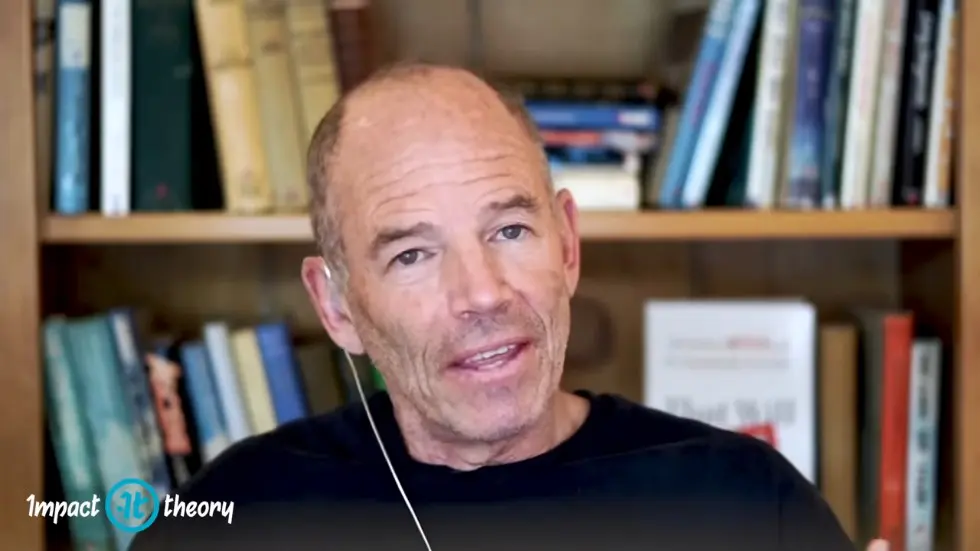
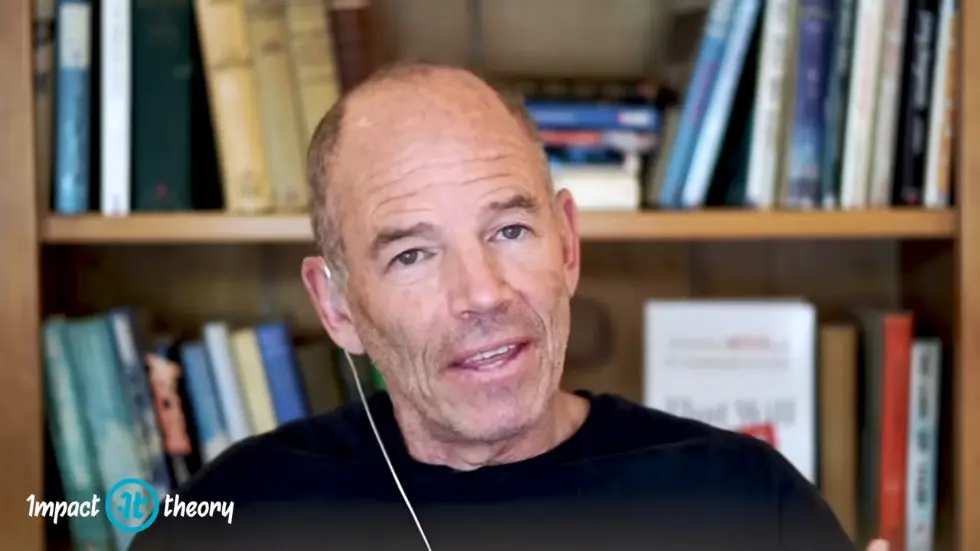
The video is an interview with Marc Randolph, the co-founder of Netflix, discussing the importance of taking action and testing ideas in entrepreneurship, and how he overcame the naysayers who said Netflix would never work.
The video is an interview with Marc Randolph, the co-founder of Netflix, who shares his insights on entrepreneurship. He emphasizes the importance of taking action and testing ideas in the real world, rather than just thinking about them. He also discusses how he faced skepticism and criticism when pitching the idea for Netflix, but ultimately succeeded by fully committing to the idea and taking risks. The interview also touches on Randolph's personal experiences, such as learning to skateboard and the lessons it taught him about taking risks and fully committing to something.
- Entrepreneurs need to test their ideas in reality to separate themselves from dreamers.
- Netflix's success came from constantly testing and iterating their ideas, listening to their customers, and being willing to pivot when necessary.
- Learning from failure is what separates successful entrepreneurs from unsuccessful ones.
- People told Marc Randolph that Netflix would never work, but he didn't let naysayers stop him.
- Starting with an idea that doesn't work is a starting point for learning.
- Founding stories and tales of finding a working business model are far messier than they sound.
- The failure to start is the single most fundamental problem in entrepreneurship.
- Testing and trying different things illuminates the path forward.
- Colliding ideas with reality can help entrepreneurs learn if there is a fundamental premise to their idea.

The Importance of Testing Ideas
- The real brilliance behind entrepreneurs is not how good their ideas are, but how clever they can be about figuring out ways to test those ideas.
- Colliding ideas with reality is what separates an entrepreneur from a dreamer.
- The only way to figure out whether an idea is good or bad is to do it.
- Recognizing that you have no clue about whether an idea is good or bad is the first step to success.
- Action cures all, and taking action is the only way to get the data you need.
Overcoming Naysayers
- People told Marc Randolph that Netflix would never work.
- He heard it from investors, potential employees, and even his wife.
- It's impossible to tell a good idea from a bad idea just by thinking about it.
- Everyone says "that will never work" because they have no clue.
- Realizing that nobody knows anything is the key to success.
Learning from Failure
- Marc Randolph is not a born entrepreneur, but he fell on his face so many times that he learned from his failures.
- One of the most fundamental things you learn in skateboarding is that you have to fully commit to dropping in.
- Being an entrepreneur is like taking a risk and leaning so far out over your board that it seems like you're going to crash and burn on your face.
- You can't be afraid to fail because failure is a necessary part of the learning process.
- Learning from failure is what separates successful entrepreneurs from unsuccessful ones.
The Success of Netflix
- Netflix started as a DVD-by-mail service, which was a completely new idea at the time.
- They had to figure out how to get DVDs to people's homes and how to get them back.
- They also had to figure out how to compete with Blockbuster, which was a dominant player in the market at the time.
- Netflix's success came from constantly testing and iterating their ideas, listening to their customers, and being willing to pivot when necessary.
- They also had a strong culture of innovation and a willingness to take risks.

Starting a Business
- Don't worry about taking action and committing to your idea.
- Starting with an idea that doesn't work is a starting point for learning.
- Netflix started as a DVD mailing service with due dates and late fees.
- Testing and trying different things illuminates the path forward.
- Eventually, you will stumble onto a business model that works.

The Messiness of Entrepreneurship
- Founding stories and tales of finding a working business model are far messier than they sound.
- There are no good ideas, only execution.
- Operating from the framework that there are no good ideas is a key tenant to being an entrepreneur.
- The secret to entrepreneurship is to get all ideas out on the table, even if they are bad.
- Normal people can turn their side hustle into a real business or make their crazy idea real.

The Failure to Start
- The failure to start is the single most fundamental problem in entrepreneurship.
- People have amazing ideas, but they fail to start because they are safe and warm in their head.
- When people try to make their idea real, they bump into reality and realize their assumptions are wrong.
- The real brilliance behind entrepreneurs today is how clever they can be about figuring out ways to test their ideas.
- Stop thinking and start doing.
The Importance of Testing Ideas
- Testing and trying different things illuminates the path forward.
- Each test may not solve the problem completely, but it does help to learn what doesn't work.
- Testing is a fun process and helps to move forward even though the solution hasn't been figured out yet.
- Eventually, you will stumble onto a business model that works.
- The real brilliance behind entrepreneurs today is how clever they can be about figuring out ways to test their ideas.

Importance of Testing Ideas
- Entrepreneurs separate themselves from dreamers by testing their ideas in reality.
- Ideas should be scaled to aspirations and validated quickly, easily, and cheaply.
- Minimal viable products should be even more minimal and less viable.
- Examples include Netflix's idea to do video rental by mail with DVDs and a young woman's idea for peer-to-peer clothing rental.
- Netflix immediately collided their idea with reality by buying a music CD and mailing it to Reid's house to test if their idea would work.

How to Battle Test Ideas
- Make sure your idea is scaled to your aspirations.
- Validate your idea quickly, easily, and cheaply.
- Write your idea on a piece of paper, tape it to your door, and see if anyone knocks.
- Learn about taste, fit, and potential problems by doing it with a sharpie and paper.
- Do it by hand for as long as it takes to learn if there is a fundamental premise.

Examples of Testing Ideas
- Netflix tested their idea by buying a music CD and mailing it to Reid's house to see if their idea of video rental by mail with DVDs would work.
- A young woman tested her idea for peer-to-peer clothing rental by writing on a piece of paper, taping it to her door, and seeing if anyone knocked.
- Testing ideas quickly, easily, and cheaply can help entrepreneurs learn if there is a fundamental premise to their idea.
- Testing ideas can also help entrepreneurs learn about potential problems and how to solve them.
- Testing ideas can be done with minimal viable products that are even more minimal and less viable.

Colliding Ideas with Reality
- Entrepreneurs should immediately try to collide their ideas with reality to see if they will work.
- Colliding ideas with reality can help entrepreneurs learn if there is a fundamental premise to their idea.
- Colliding ideas with reality can also help entrepreneurs learn about potential problems and how to solve them.
- Examples include Netflix's idea to do video rental by mail with DVDs and a young woman's idea for peer-to-peer clothing rental.
- Colliding ideas with reality can be done quickly, easily, and cheaply with minimal viable products that are even more minimal and less viable.

The Importance of Testing Ideas
- It's important to test your ideas before building an app or starting a business.
- Collide your idea with reality to demonstrate that it's a good one.
- Don't focus on raising money, focus on figuring out a way to test your idea quickly.
- People often believe that starting a business and pitching for money is the only way to start a company.
- There's a fear of failure that drives people to try and make sure they've taken their best swing at an idea.

The Perfectionist Trap
- People often design tests that take weeks to do because they want to make sure they've taken their best swing at an idea.
- It's important to test quickly and fail fast.
- No matter how much you polish something, if it's a bad idea, it's still not going to work.
- If it's a good idea, even something completely half-assed will work.
- People often build the app and raise the money before finding out that their idea doesn't work.

Practice Taking Small Steps
- Practice taking small steps and testing your ideas quickly.
- It's important to push through fear and nervousness when testing ideas.
- Speed is more important than perfection when testing ideas.
- Take a small step and find out what works before gambling on something hugely consequential.
- Mark Randolph has been a professional risk taker for 40 years and still gets nervous before speaking in front of big audiences.

Advice for Young People
- Take small steps and test your ideas quickly.
- Don't focus on raising money, focus on demonstrating that your idea is a good one.
- Speed is more important than perfection when testing ideas.
- Don't be afraid to fail, it's part of the process.
- Remember that even successful entrepreneurs have failed many times before succeeding.
The Importance of Testing Ideas
- Jeff Bezos' concept of one-way doors and two-way doors in decision-making.
- Most ideas are two-way doors, allowing for testing and stepping back if necessary.
- Testing is crucial for entrepreneurship, but it's important to combine instinct and intuition with measurement.
- Defining the problem and coming up with hypotheses for tests is crucial.
- Being deliberate about looking at the results of tests is important.

The Need for Risk Tolerance
- Testing is important because there is no crystal ball for success.
- Building a culture of risk tolerance is crucial for entrepreneurship.
- Quantifying the results of tests is important to make sense of what happens.
- Combining instinct and intuition with measurement is important for testing.
- Defining the problem and coming up with hypotheses for tests is crucial.

The Importance of Understanding the Problem
- Understanding the problem you're trying to solve is crucial for coming up with ideas.
- Defining the problem and coming up with hypotheses for tests is crucial.
- Testing is important for finding out which ideas work, but it's not always clear what to test.
- Combining instinct and intuition with measurement is important for testing.
- Being deliberate about looking at the results of tests is important.

The Decision to Shut Off DVD Sales
- Netflix initially sold DVDs in addition to renting them.
- After the first month, they had $100,000 in sales but realized that selling DVDs wasn't profitable.
- They made the decision to shut off DVD sales, which was a commitment rather than a test.
- This decision was a one-way door, as they couldn't go back to selling DVDs once they shut it off.
- The decision was made based on the understanding that selling DVDs wasn't profitable.

The Problem with Selling DVDs and Rental
- Revenue came from selling DVDs, which was bad for a few reasons.
- Competition was inevitable, and Amazon was already expanding.
- Doing both selling and rental was confusing to customers and complicated the checkout process.
- Inventory management and analytics were also complicated.
- Netflix had to focus on one part of the business, and they chose rental.

The Importance of Focus
- Netflix decided to focus everything on rental in one single day without a test.
- Focusing on one thing was a brutal decision, but it was better than taking a pure path to mediocrity.
- Marc Randolph has the ability to be focused in the foreground and the distance at the same time.
- He can see what's most important and focus on it to make the rest of the problems go away.
- The real skill is being able to pick the two or three things that make a difference and focus on them.
You have read 50% of the summary.
To read the other half, please enter your Name and Email. It's FREE.
You can unsubscribe anytime. By entering your email you agree to our Terms & Conditions and Privacy Policy.
Watch the video on YouTube:
This Netflix Co-Founder Turned His Idea Into A Company Worth Over $100 Billion | Marc Randolph - YouTube
Related summaries of videos:
- If You Want To COMPLETELY CHANGE Your Life In 2022, WATCH THIS! | Jordan Peterson
- Psychologist's Tools For Reprogramming Your Subconscious Mind | Nicole LePera on Impact Theory
- Psychologist's Tools For Reprogramming Your Subconscious Mind | Nicole LePera on Impact Theory
- How to Hack Your Mind and Live Your Best Life | Coach Mike Bayer on Impact Theory
- Gabor Mate on How We Become Who We Are | Conversations with Tom
- These Are Skills Needed To Earn Respect | Q&A with Tom Bilyeu
- THIS Is How You Overcome Failure and Launch Yourself to Success | Tom Bilyeu Q&A
- Fight Club Author Chuck Palahniuk on Life, Death and Finding Meaning In Your Life
- The Common SLEEP MISTAKES You Make That DESTROY Your Health! | Matthew Walker
- 10 Ways to Beat Your Distractions, Increase Productivity, and Enjoy the Process!
- Home
- About us
- Contact
- Book Summaries 0-9
- Book Summaries A
- Book Summaries B
- Book Summaries C
- Book Summaries D
- Book Summaries E
- Book Summaries F
- Book Summaries G
- Book Summaries H
- Book Summaries I
- Book Summaries J
- Book Summaries K
- Book Summaries L
- Book Summaries M
- Book Summaries N
- Book Summaries O
- Book Summaries P
- Book Summaries Q
- Book Summaries R
- Book Summaries S
- Book Summaries T
- Book Summaries U
- Book Summaries V
- Book Summaries W
- Book Summaries X
- Book Summaries Y
- Book Summaries Z
- Jay Shetty Podcast - Summaries
- Tom Bilyeu Impact Theory - Summaries
- Lex Fridman - Summaries
- Diary of a CEO - Summaries
- Alex Hormozi - Summaries
