
Andrew Huberman: A Science-Supported Journaling Protocol to Improve Mental and Physical Health
Last updated: Nov 20, 2023
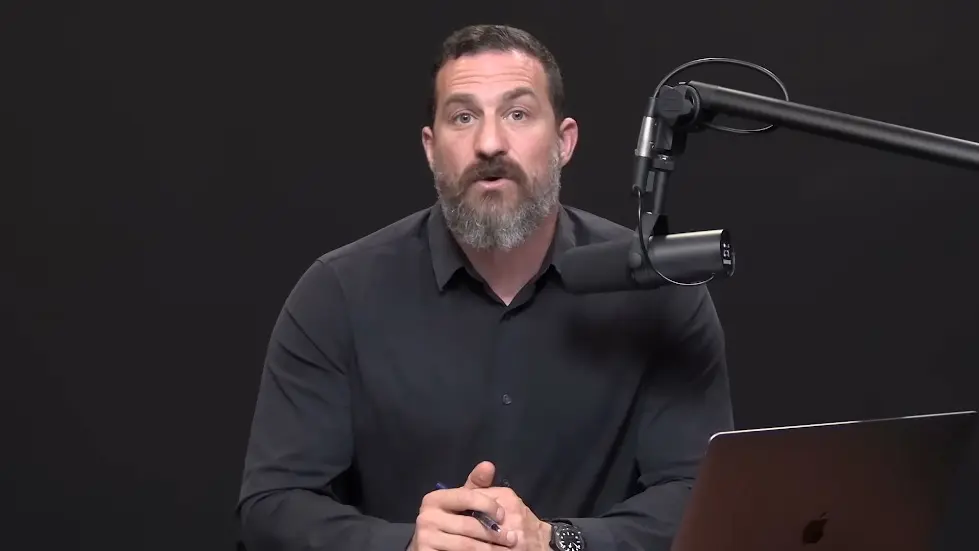
The video by Dr. Andrew Huberman is about a science-supported journaling protocol that can improve mental and physical health. The protocol is based on over 200 peer-reviewed studies in quality journals and has been shown to have a positive impact on various metrics of everyday living, including improved memory, decision-making, and sleep. The protocol is relatively easy to do and can be done in a short amount of time. The video also discusses the underlying science behind the protocol and its effectiveness.
This video by Andrew Huberman was published on Nov 20, 2023.
Video length: 01:38:22.
The video is about a science-supported journaling protocol that can improve mental and physical health.
The protocol is based on over 200 peer-reviewed studies in quality journals and has been shown to have a positive impact on various metrics of everyday living, including improved memory, decision-making, and sleep. The protocol is relatively easy to do and can be done in a short amount of time. The video also discusses the underlying science behind the protocol and explains why and how it is effective for mental and physical health.
The video is sponsored by Element, an electrolyte drink, and 8 Sleep, a company that makes Smart mattress covers with cooling, heating, and sleep tracking capacity.
- The Huberman Lab podcast discusses science and science-based tools for everyday life
- The podcast is hosted by Andrew Huberman, a professor of neurobiology and ophthalmology at Stanford School of Medicine
- Today's discussion is about journaling for mental and physical health
- The science of journaling is discussed, with a focus on a particular form of journaling that has been shown to be especially powerful
- The journaling method and protocol described has been supported by over 200 peer-reviewed studies in quality journals
- The podcast will go into some depth about the specific protocol because there are some important details that everyone should know if they want to apply it and make it as effective as it can be
- The podcast will also talk about some of the underlying science that explains why and how this protocol is so effective for mental and physical health
- The video discusses the importance of tracking the amount of rapid eye movement and slow wave sleep
- The video recommends trying eight Sleep for a special holiday discount
A Science-Supported Journaling Protocol to Improve Mental & Physical Health - YouTube

Introduction
- Welcome to the Huberman Lab podcast
- Discussing science and science-based tools for everyday life
- Hosted by Andrew Huberman, a professor of neurobiology and ophthalmology at Stanford School of Medicine
- Today's discussion is about journaling for mental and physical health

The Science of Journaling
- Today's discussion is not a general discussion about the value of journaling
- It is a discussion about a particular form of journaling that has been shown to be especially powerful for improving mental and physical health
- The journaling method and protocol described has been supported by over 200 peer-reviewed studies in quality journals
- It has been shown to have a positive impact on various metrics of everyday living, including improved memory, decision-making, and sleep

The Particular Journaling Method
- The particular journaling method described takes a relatively small amount of time
- It can be done during the course of one week or even across one month
- The data say that it would still have lasting positive benefits both for body and mind
- It is rare to feature one particular protocol as an entire Huberman Lab podcast

A Science-Supported Journaling Protocol to Improve Mental & Physical Health - YouTube
The Science Behind the Journaling Method
- The podcast will go into some depth about the specific protocol because there are some important details that everyone should know if they want to apply it and make it as effective as it can be
- The podcast will also talk about some of the underlying science that explains why and how this protocol is so effective for mental and physical health

Sleep Tracking
- The video discusses the importance of tracking the amount of rapid eye movement and slow wave sleep.
- The author uses an eight Sleep mattress cover and has seen significant improvements in his sleep quality.
- The video recommends trying eight Sleep for a special holiday discount.
Meditation App
- The video discusses the use of the waking up meditation app.
- The app includes hundreds of meditation programs, mindfulness trainings, yoga NRA sessions, and nsdr.
- The author found the app to be extremely useful for exploring different types of meditation.

Journaling Protocol
- The video discusses a science-supported journaling protocol that can improve mental and physical health.
- The protocol is based on over 200 peer-reviewed studies in quality journals.
- The protocol has been shown to have a positive impact on various metrics of everyday living, including improved memory, decision-making, and sleep.

Science Behind Journaling
- The video discusses the science behind the journaling protocol.
- Dr James Pennebaker initially researched the form of journaling and its positive impacts on the body and mind.
- Pennebaker came up with the precise protocol that is discussed in the video.

The Science-Supported Journaling Protocol
- The video is about a science-supported journaling protocol that can improve mental and physical health.
- The protocol is based on over 200 peer-reviewed studies in quality journals and has been shown to have a positive impact on various metrics of everyday living, including improved memory, decision-making, and sleep.
- The protocol is relatively easy to do and can be done in a short amount of time.
- The video discusses the underlying science behind the protocol and its effectiveness.

Writing Instructions
- The subjects were instructed to write about something that they are thinking about or worrying about way too much.
- The writing should be done by hand with a pen and paper or a pencil and paper.
- The writing should be done in a place where the writer will not be disturbed for the entire 15 to 30 minute duration.
- The writing should be done without paying attention to accurate grammar or rereading ability.
- The writing should tap into a particularly negatively charged memory of the writer's prior life experience.

Specific Instructions
- Write down your deepest emotions and thoughts as they relate to the most upsetting experience in your life.
- Tie this experience to your childhood, your relationship with your parents or siblings, people you have loved or love now, or your career or schooling.
- Many people have not had a truly traumatic experience in their lives but everyone has had major conflicts or stressors.
- Write about the most dramatic or stressful experience you've ever had.
- Allow yourself 15 to 30 minutes and feel welcome to stop before the 30 minute period is over.

Differences from Morning Notes
- The science-supported journaling protocol is a very different form of journaling than morning notes.
- Morning notes is a process of sitting down and writing down whatever's on your mind for the first 5 to 15 maybe even 30 minutes.
- The science-supported journaling protocol is based on over 200 peer-reviewed studies in quality journals.
- The science-supported journaling protocol has been shown to have a positive impact on various metrics of everyday living.

Introduction
- The video is about a science-supported journaling protocol that can improve mental and physical health.
- The protocol is based on over 200 peer-reviewed studies in quality journals and has been shown to have a positive impact on various metrics of everyday living.
- The protocol is relatively easy to do and can be done in a short amount of time.
- The video also discusses the underlying science behind the protocol and its effectiveness.

Section 1: Differences between the Protocol and Gratitude Journaling
- The protocol is distinctly different from so-called gratitude journaling.
- It's writing about things that are extremely unfortunate that happened to you and that you have very charged negative emotions about.
- The form of journaling that we're talking about today is distinctly different from the form of journaling that I and many others have undertaken.
- The protocol is not to say that gratitude journaling or autobiographical daily entries (AK diary type journaling) is not useful.
- There are data to support that gratitude journaling in particular can be very beneficial for both body and mind.

Section 2: The Protocol
- The protocol is designed to tap into very negative experiences of your life.
- It's an entirely unreasonable expectation that you could write about something as difficult as the most difficult experience in your life and then simply pivot and go back into everyday life right away.
- You'll want to designate a time of day or night when you can do this writing and still allow yourself some time to settle down your autonomic system.
- You'll want to remind yourself that the rest of the day continues that you're doing great in fact you made it through this first installment of the journaling exercise so you're probably starting to get the impression that this form of journaling that Penna Baker and colleagues really researched and pioneered the evolution of is quite different than other forms of journaling.
- The idea is to sit down and write for 15 to 30 minutes right continuously write about something that is extremely unfortunate that happened to you and that you have very charged negative emotions about.

Section 3: Benefits of the Protocol
- The protocol has been shown to have a positive impact on various metrics of everyday living.
- It can improve memory, decision-making, and sleep.
- It can be done in a short amount of time.
- It can be done on a daily basis.
- It can be done consistently.

Section 4: Conclusion
- The video provides a science-supported journaling protocol that can improve mental and physical health.
- The protocol is based on over 200 peer-reviewed studies in quality journals.
- The protocol is relatively easy to do and can be done in a short amount of time.
- The video discusses the underlying science behind the protocol and its effectiveness.
- The video provides a clear and concise explanation of the protocol and its benefits.

Introduction
- The video is about a science-supported journaling protocol that can improve mental and physical health.
- The protocol is based on over 200 peer-reviewed studies in quality journals and has been shown to have a positive impact on various metrics of everyday living, including improved memory, decision-making, and sleep.
- The protocol is relatively easy to do and can be done in a short amount of time.
- The video also discusses the underlying science behind the protocol and its effectiveness.

The Original Research
- The original research by Penne Baker and others was to have the same person write about the same experience four times on four consecutive days for 15 to 30 minutes each.
- Students or people from the general population or veterans were literally coming into the laboratory and sitting down and writing about the most difficult experience of their life that they could recall for 15 to 30 minutes on one day and then again on the next day and then the next day and the next day so much of the data on this particular journaling method reflects that four consecutive days of 15 to 30 minute writing bouts of the most difficult experience that you can recall.

Variations on the Protocol
- There have been variations on this protocol such that people selected one day per week and it doesn't even have to be the same day.
- For example, every Monday it could be Monday of one week and then Wednesday of the next week and so on such that you write only one day per week about the most difficult experience you can recall and then you write about that same difficult experience one week later and then again one week later and then again one week later across the course of a month or any 4-week period for that matter.

The Intensity and Demand of the Exercise
- When the speaker hears that they're going to need to write about the most difficult experience of their entire life that they can recall for even 15 minutes let alone 30 minutes let alone two times and here we're talking about four times perhaps even on four consecutive days that actually speaks to some intensity some demand in fact.
- The speaker finds themselves kind of leaning away from that experience a little bit but as the speaker will talk about later that's exactly the point of this type of exercise which is that we are harboring these stories, these experiences, and in some cases partial Recollections and in other cases detailed Recollections of the difficult thing that happened to us perhaps even the most difficult thing that happened to us and those narratives exist in our nervous system these are not necessarily traumas as we talked about before although they can be traumas now we hear a lot about trauma and these days people call all sorts of things trauma and traumatizing and say that they've been traumatized by this or traumatized by that there's actually a specific definition of trauma that was provided by Dr Paul kti who is some of you know is a medical doctor and psychiatrist he's been a guest on this podcast first to talk about trauma he wrote a book about trauma I provide a link to that book in the show note captions by the way and he and I did four episodes of The hubman Lab podcast a So-Cal guest series specifically aimed at mental health what it is how to build mental health specific protocols and Dr Paul kti is really truly a world expert in trauma and he defines trauma as any experience or experiences plural that modify our brain and neural circuitry so it could be brain or body or both such that we do not function as well emotionally behaviorally or cognitively going forward from that experience okay so not every
Section 1: Introduction
- The video is about a science-supported journaling protocol that can improve mental and physical health.
- The protocol is based on over 200 peer-reviewed studies in quality journals and has been shown to have a positive impact on various metrics of everyday living, including improved memory, decision-making, and sleep.
- The protocol is relatively easy to do and can be done in a short amount of time.
- The video also discusses the underlying science behind the protocol and its effectiveness.
Section 2: Low Expressors and High Expressors
- One of the important features of the protocol is that when people do it, they tend to bin out into two different groups.
- These two groups have been described as low expressors and high expressors.
- Low expressors tend to use less descriptive language in their writing and get less emotional during the first bout of writing.
- High expressors tend to be people that use a lot of negative language to describe their negative emotions about the negative experience.
- People who have their physiology measured also tend to have higher amounts of distress and upset in the first bout of writing that first 15 to 30 minute episode.
Section 3: Low Expressors and High Expressors
- Low expressors are effectively relatively more calm less distressed as they write about this very stressful event in their lives relative to the high expressors who have higher blood pressure higher heart rate they tend to be the ones that cry more or hold their breath more or SOB more have higher levels of ctis all during that first round of writing.
- On day one, the low expressors are sharing a bit less they're expressing Less on paper of their particular emotions that they can recall from that traumatic or distressing event.
- The high expressors are much more distressed significantly more so in fact when these are measured in laboratory studies on both mental and physical dimensions of of stress.
- On day one, the high expressors tend to use more negative language to describe their negative emotions about the negative experience.
- On day one, the high expressors tend to have higher blood pressure, higher heart rate, and tend to cry more or hold their breath more or SOB more.
Section 4: Progression of Low Expressors and High Expressors
- On day one, the low expressors are less distressed physiologically and psychologically as they write about this very distressful event.
- On day one, the high expressors are much more distressed significantly more so in fact when these are measured in laboratory studies on both mental and physical dimensions of of stress.
- On day two, three, and four, the low expressors become more and more distressed as the writing exercise continues.
- On day two, three, and four, the high expressors' amount of distress goes down more dramatically.
- Three weeks later and even three months later, both groups are experiencing far less distress and baseline levels of stress than they did prior to embarking on the journaling protocol.
Introduction
- The video is about a science-supported journaling protocol that can improve mental and physical health.
- The protocol is based on over 200 peer-reviewed studies in quality journals and has been shown to have a positive impact on various metrics of everyday living, including improved memory, decision-making, and sleep.
- The protocol is relatively easy to do and can be done in a short amount of time.
- The video also discusses the underlying science behind the protocol and its effectiveness.
Natural Emotion Vocabularies as Windows on Stress and Well-Being
- The study examines people's natural language usage patterns.
- People that have more extensive knowledge of words that describe negative emotions tend to have a lower affect or negative emotional state as compared to people who have more extensive knowledge of vocabulary words that pertain to positive emotions.
- The study found that people who tend to use a lot of negative words tend to have more negative emotional states, while people who naturally tend to use words that describe positive emotional states have more positive emotions.
- The result is significant because it shows that our knowledge of vocabulary words is not nearly as important as which particular words we use on a frequent basis.
Monitoring Writing
- During the four writing sessions, participants should not monitor their writing.
- After the fourth writing session, participants should not look at what they've written for at least a week.
- After a week or more, participants should go back and read what they've written, paying careful attention to the number of words that reflect a negative emotional or affect state in the first versus the second versus the third versus the fourth journal entry.
- This practice can be very quick and highly informative, and can help participants understand their own data analysis of self.
Conclusion
- The science-supported journaling protocol discussed in the video has been shown to have a positive impact on various metrics of everyday living.
- The protocol is relatively easy to do and can be done in a short amount of time.
- The underlying science behind the protocol and its effectiveness are discussed in detail.
- Overall, the video provides valuable information for anyone looking to improve their mental and physical health through journaling.
Introduction
- The video is about a science-supported journaling protocol that can improve mental and physical health.
- The protocol is based on over 200 peer-reviewed studies in quality journals and has been shown to have a positive impact on various metrics of everyday living.
- The protocol is relatively easy to do and can be done in a short amount of time.
The Protocol
- The protocol involves writing about three things before starting to write about a negative experience.
- The first thing to write about is facts about the difficult experience.
- The second thing to include is emotions felt at the time of the experience as well as emotions felt now about that experience.
- The third thing to include is writing about any and all links that come to mind about the negative experience and things that may be happening today or plans for the future.
The Benefits
- The protocol has been shown to have a positive impact on various metrics of everyday living, including improved memory, decision-making, and sleep.
- It is relatively easy to do and can be done in a short amount of time.
Conclusion
- The video discusses the underlying science behind the protocol and its effectiveness.
- It encourages people to think about three things before starting to write about a negative experience.
Introduction
- The video is about a science-supported journaling protocol that can improve mental and physical health.
- The protocol is based on over 200 peer-reviewed studies in quality journals and has been shown to have a positive impact on various metrics of everyday living, including improved memory, decision-making, and sleep.
- The protocol is relatively easy to do and can be done in a short amount of time.
- The video also discusses the underlying science behind the protocol and its effectiveness.
Positive Mental and Physical Changes
- Studies have shown that the positive physical shifts that occur in people who complete this writing exercise are both significant and longlasting.
- The protocol has been shown to benefit people suffering from chronic anxiety and insomnia, reducing depressive symptoms and symptoms of post-traumatic stress disorder.
- People suffering from arthritis, cancer treatment, Lupus, and fibromyalgia have also shown significant improvement in symptoms after doing this writing protocol.
- People with irritable bowel syndrome have achieved some significant degree of relief of their symptoms relative to people who also have irritable bowel syndrome but who do not do the exact same protocol.
Journaling Protocol
- The journaling protocol discussed in the video is highly unusual and involves writing about something very distressing or even traumatic four times, 15 to 30 minutes per time.
- The specific emotional content of the writing is important and different from the conventional form of journaling.
- The data discussed in terms of positive mental and physical effects are statistically significant as compared to a control group that also wrote for an equivalent amount of time and wrote an equivalent number of words on average.
- It's important to keep in mind that the studies discussed in the video are scientific studies where very specific measurements of the experimental group were taken.
The Science-Supported Journaling Protocol
- The video is about a science-supported journaling protocol that can improve mental and physical health.
- The protocol is based on over 200 peer-reviewed studies in quality journals and has been shown to have a positive impact on various metrics of everyday living, including improved memory, decision-making, and sleep.
- The protocol is relatively easy to do and can be done in a short amount of time.
- The video discusses the underlying science behind the protocol and its effectiveness.
The Major Variable
- The major variable that differed in the study was the one particular strength of the protocol.
- It is very hard to think about a control group that would provide real equivalents of time spent and effort spent but that would differ only on one variable which would be heart rate.
The Studies
- The studies essentially everything was the same right people are still writing, they're still sitting, they're still doing it for the same amount of time.
- The content of the writing is different at the level of the emotional tone of the subject that they're writing about.
The Physiological Changes
- There are some general categories of physiological changes that have been observed in people that do the particular protocol.
- The disclosure of traumas or the writing out of very stressful experiences can impact immune function at the level of specific cell types of our immune system that are challenged in a way that mimics the sort of challenge we would experience if we were to be exposed to a bacteria or virus.
The Science Behind T-Lymphocytes
- T-lymphocytes are an essential component of the immune system.
- They are cells that many people describe as white blood cells.
- T-lymphocytes are manufactured in the bone marrow and mature in the thymus.
- The thymus is an organ that sits behind the sternum and matures cells that originate from the bone marrow into white blood cells.
- T-lymphocytes go out and combat infections, including bacterial, viral, and fungal infections.
The Study
- The study isolated T-lymphocytes from the blood of subjects.
- The T-lymphocytes were then challenged with something that mimics an infection, such as con canavalin A.
- The study observed that people who did a four-bout writing protocol experienced greater T-lymphocyte activation from the con canavalin A challenge.
- The study also observed that high disclosers, who poured themselves into the writing protocol, experienced a greater degree of immune activation than low disclosers.
The Impact of Emotions on the Immune System
- The study suggests that the emotional state during the writing exercise has a significant impact on the immune system.
- The field of psychoneuroimmunology has been around for more than 30 years, and scientists and physicians are starting to apply the understanding to their studies and clinical practice.
- The body and mind are linked, and emotions can shape physical responses and vice versa.
The History of Journaling as a Therapy
- The study relates to James Pennebaker and colleagues exploring a particular pattern of journaling.
- Pennebaker has spoken about and written about his own personal experience with asthma as a child.
- The study suggests that journaling can have a positive impact on the immune system and overall health.
Introduction
- The video is about a science-supported journaling protocol that can improve mental and physical health.
- The protocol is based on over 200 peer-reviewed studies in quality journals and has been shown to have a positive impact on various metrics of everyday living, including improved memory, decision-making, and sleep.
- The protocol is relatively easy to do and can be done in a short amount of time.
- The video also discusses the underlying science behind the protocol and its effectiveness.
The Science Behind the Protocol
- The protocol is anchored around the concept of neuroplasticity, which is the nervous system's ability to change in response to experience.
- Neuroplasticity in childhood occurs through passive experience of any sorts of events, reshaping the brain in a way that is often long-lasting.
- The nervous system is designed to be a predictive machine, making good guesses about what's to come next.
- The protocol involves deliberately inducing a negative experience and yet seeing positive physical health outcomes or effects on immune system function.
The Protocol
- The protocol involves having people deliberately induce a negative experience.
- Four episodes of writing about something traumatic or stressful are done.
- The goal is to achieve long-lasting positive shifts in mental and physical health.
- The specific changes occurring at the level of the mind or body are not known, but the pivotal mechanism, also referred to as the Lynch pin mechanism, is being researched.
Conclusion
- The video discusses a science-supported journaling protocol that can improve mental and physical health.
- The protocol is based on over 200 peer-reviewed studies in quality journals and has been shown to have a positive impact on various metrics of everyday living.
- The protocol is relatively easy to do and can be done in a short amount of time.
- The video also discusses the underlying science behind the protocol and its effectiveness.
The Science-Supported Journaling Protocol
- The video is about a science-supported journaling protocol that can improve mental and physical health.
- The protocol is based on over 200 peer-reviewed studies in quality journals and has been shown to have a positive impact on various metrics of everyday living, including improved memory, decision-making, and sleep.
- The protocol is relatively easy to do and can be done in a short amount of time.
- The video discusses the underlying science behind the protocol and its effectiveness.
Childhood as a Critical Period
- Childhood is a critical period during which our experiences create a sort of map within us that allows us to predict what is likely to happen or what people are in the room any number of different things could happen.
- Our nervous system becomes a prediction machine by drawing strong correlations between emotional states, physical surroundings, perception of who's there, what happened just prior to something, and how it made us feel later.
Recounting Stressful or Traumatic Events
- When recalling a stressful or traumatic event, there are three components to it: facts about that experience, how that experience made you feel at the time, and how it makes you feel now and then.
- It is critical to include any links or associations between what happened and really anything at all.
The Mechanism that Seems to be a Sort of Smoking Gun
- When we experience very stressful or traumatic experiences, our prefrontal cortex, the neural real estate just behind our forehead, is reduced in its overall levels of activity.
- Other areas of the brain that are involved in things like aggression, temperature regulation, sleep wake cycles, and so on are also affected.
The Science Behind Journaling
- Neuroimaging studies have shown that when people recall very stressful or traumatic events, the prefrontal cortex level of activity is reduced as compared to when people recall less stressful or less traumatic events.
- Subcortical structures also ramp up their activity when people recall traumatic events at least at first.
- Repeated visiting of stressful and traumatic events in a structured way or even in a pseudo structured way as is the case when people first start journaling about that stressful or traumatic event on day one when it tends to be a pretty unstructured narrative has been shown in the literature to increase the coherence of the narrative that is the degree to which the narrative takes on a story-like structure.
- Increasing the amount of truth-telling in your mind what were the facts what happened what didn't happen perhaps is relevant too but what happened second how did it make you feel that's something that you are uniquely qualified to answer factually because only you can really know how you feel sometimes it takes some effort to think into how you feel to really get a clear sense of how you felt and how you feel but only you can report that factually no one can dispute that those are your feelings and that's part of what you're writing about.
- The third component of what are the connections between different experiences that are coming to mind and there again that is your unique factual report of what's going on inside your head around that event.
The Benefits of Journaling
- Journaling has been shown to increase the baseline levels of activity in certain key areas of the prefrontal cortex, which is associated with improvements in the symptomology around trauma and other stressful events.
- Reporting those events in a way that is initially very stressful or that can be stressful in any number of different four writing bouts over time provides relief from that stress.
- Recalling that trauma and stress in ways that are highly emotional and negative is actually increasing ongoing activity in the prefrontal cortex and indeed yes that is the case.
- During development, neuroplasticity is a passive process, meaning that whatever we are exposed to changes our brain in a way that allows us to more reliably predict the future.
How to Journal
- The video recommends starting with a structured narrative on day one when it tends to be a pretty unstructured narrative.
- Over the course of subsequent writing bouts, the degree to which there's a more coherent narrative placed on the structure of that writing increases.
- The focus should be on increasing the amount of truth-telling in your mind, what were the facts what happened what didn't happen perhaps is relevant too but what happened second how did it make you feel that's something that you are uniquely qualified to answer factually because only you can really know how you feel.
- The third component of what are the connections between different experiences that are coming to mind and there again that is your unique factual report of what's going on inside your head around that event.
The Science-Supported Journaling Protocol
- The video is about a science-supported journaling protocol that can improve mental and physical health.
- The protocol is based on over 200 peer-reviewed studies in quality journals and has been shown to have a positive impact on various metrics of everyday living, including improved memory, decision-making, and sleep.
- The protocol is relatively easy to do and can be done in a short amount of time.
- The video discusses the underlying science behind the protocol and its effectiveness.
Neuroplasticity and Stress
- Neuroplasticity is created when the nervous system goes into states that are atypical as compared to our normal waking states.
- One of the key triggers for neuroplasticity is when we have high levels of the so-called catacol amines dopamine, epinephrine, endorphins, and norepinephrine in our brain and body.
- These states create a state change that we call autonomic nervous system shift, where we have elevated heart rate, more distress, high degrees of emotionality, and it is highly uncomfortable.
- This signals to the neural tissue that something's happening and we need to rewire, change, and the actual rewiring occurs during deep sleep and states such as non-sleep deep rest or anytime we're in a deep relaxation state.
The Science-Supported Journaling Protocol
- The key elements to remember for today's discussion is that these states of heightened levels of emotionality are the trigger for neuroplasticity and that the actual rewiring of neural connections happens in sleep and states such as non-sleep deep rest or anytime we're in a deep relaxation state.
- There have been two separate collections of work in the Psychology and Neuroscience literature in the last 10 years which have focused mainly on two concepts: extremely stressful and traumatic experiences and the idea that when people experience very stressful and traumatic events that the representation of those events is somewhat fractured in the sense that people by not talking about them by not creating a coherent narrative around them start to form false correlations between the kind of stress that they create in our body and mind when we think about them and a confusion about what happened a confusion about why we feel terrible when maybe we weren't the perpetrator or create a sort of lack of coherence between our bodily State and what we're thinking especially because we're not the perpetrator.
The Science-Supported Journaling Protocol
- Evidence for the idea that when people experience very stressful and traumatic events that the representation of those events is somewhat fractured in the sense that people by not talking about them by not creating a coherent narrative around them start to form false correlations between the kind of stress that they create in our body and mind when we think about them and a confusion about what happened a confusion about why we feel terrible when maybe we weren't the perpetrator or create a sort of lack of coherence between our bodily State and what we're thinking especially because we're not the perpetrator.
- There seems to be a lack of coherence about the narrative there's also a mismatch between the bodily State and thoughts about that experience and there seems to be a confusion about who or what was responsible for inducing that negative state in a way that in some sense causes people to set aside that narrative and try and push it away and not think about it because it is confusing it can often even be discombobulating for those that have suffered from very stressful events and Trauma.
The Science-Supported Journaling Protocol
- The video is about a science-supported journaling protocol that can improve mental and physical health.
- The protocol is based on over 200 peer-reviewed studies in quality journals and has been shown to have a positive impact on various metrics of everyday living, including improved memory, decision-making, and sleep.
- The protocol is relatively easy to do and can be done in a short amount of time.
- The video also discusses the underlying science behind the protocol and its effectiveness.
Linking Prefrontal Activity to Truth-Telling
- One of the more impressive experiments within the field of linking prefrontal activity to truth-telling is an experiment that was published a few years ago in the proceedings of the National Academy of Sciences entitled increasing honesty in humans with non-invasive brain stimulation.
- In this experiment, people come into the laboratory and they have people do what is essentially a die rolling game. They roll dice, and then after they roll the dice, only they can see the score that they got. They have to report whether or not the die roll that they did matches or does not match the number that's presented on the screen.
- If it does match, they get a monetary award. The monetary award is not huge but it's not insignificant either for each die roll where they match the number that's presented on the screen they get the equivalent of and because this experiment was done in Switzerland nine Swiss Franks which at the time of the study corresponded roughly to $9 and today corresponds to roughly $10 so they do this repeatedly.
- The statistics of the dice that they roll and the statistics of die rolling and the numbers that they are presented make sure that there can only be a correct match on average 50% of the time.
Honesty in Humans with Non-Invasive Brain Stimulation
- In this experiment, the subjects are asked to report entirely on the honor system what they got when they rolled the dice and what one finds in this study and other studies that have been done subsequent to it is that when you take everyday people, so you take men and women, you take a broad age range, you're not selecting for sociopaths, you're not selecting for people in one given profession or another, pick your favorite profession if you were to assume any one given profession has less honest people than others they collect people from all sorts of walks of life and people report getting the same number that is presented to them that is a match about 68% of the time which means they are not faithfully reporting what happened.
- Nurse imaging studies show that when people lie, certain areas of the frontal cortex increase in their activity although the major effect when one looks neurally is a reduction in the prefrontal cortex and in particular subcompartments of the prefrontal cortex that we'll talk about in a moment and this particular study entitled increasing honesty in humans with non-invasive brain stimulation as the name suggests used non-invasive brain stimulation so this is transcranial magnetic stimulation which is a really nice and convenient tool because you don't have to drill down through the skull you can simply put this tool it's a little coil you put it over a particular part of the brain but on the outside of the skull indeed on the outside of the hair and you can either inhibit or stimulate particular brain areas using this transcranial stimulation.
Inhibiting Neural Activity in a Particular Brain Area
- In this experiment, what they did is they stimulated or inhibited neural activity in particular areas of the prefrontal cortex and what they discovered was I think and many others by the way also agree a remarkable result which is that when they stimulated over a particular region of the prefrontal cortex people's honest report of what happened when they rolled the die relative to the number they were presented increased okay so they went from reporting that they had matched the number on the screen and therefore won money 68% of the time that number was reduced down to what down to 50% of the time in other words this stimulation of the prefrontal cortex took dishonest people even though they were should we say mildly dishonest or dishonest only in certain conditions.
The Science Behind the Journaling Protocol
- The video discusses a science-supported journaling protocol that can improve mental and physical health.
- The protocol is based on over 200 peer-reviewed studies in quality journals and has been shown to have a positive impact on various metrics of everyday living, including improved memory, decision-making, and sleep.
- The protocol is relatively easy to do and can be done in a short amount of time.
- The underlying science behind the protocol involves the activation of the dorsal lateral prefrontal cortex, which is responsible for faithful reporting of all sorts of experiences.
- When people accurately and truthfully report an experience, even if it is a stressful and traumatic one, the repeated activation of the prefrontal cortex occurs, which creates a more coherent framework and understanding of the experience.
Truthtelling and the Prefrontal Cortex
- Truthtelling has been shown to have a positive impact on the prefrontal cortex.
- When people accurately and truthfully report an experience, the prefrontal cortex becomes more active and persistent.
- This positive effect in the sense that it creates a more coherent framework and understanding of the experience.
- The prefrontal cortex does not harbor one area just for faithful accurate reporting of traumas and stressful events.
- The dorsal lateral prefrontal cortex is responsible for faithful reporting of all sorts of other things.
Truthtelling and the Immune System
- Studies have shown that truthtelling can have a positive impact on the immune system.
- When people recount a traumatic or stressful event, the immune system becomes less likely to be active when it's not supposed to be.
- This can lead to reductions in anxiety, improvements in sleep, and reductions in insomnia.
- The nervous system and the immune system are in direct communication, and the brain has networks that can communicate with the bone marrow.
- The nervous system and the immune system are connected through this thing that we call the nervous system.
You have read 50% of the summary.
To read the other half, please enter your Name and Email. It's FREE.
You can unsubscribe anytime. By entering your email you agree to our Terms & Conditions and Privacy Policy.
Watch the video on YouTube:
A Science-Supported Journaling Protocol to Improve Mental & Physical Health - YouTube
Related summaries of videos:
- Dr. Adam Grant and Dr. Andrew Huberman: How to Unlock Your Potential, Motivation and Unique Abilities
- Dr. Andrew Huberman: AMA #13: Winter Months and Sickness, Wim Hof Breathing and Stressors
- Robert Greene and Andrew Huberman: A Process for Finding and Achieving Your Unique Purpose
- Dr. Karen Parker and Dr. Andrew Huberman: The Causes and Treatments for Autism
- Dr. Robert Lustig and Dr. Andrew Huberman: How Sugar and Processed Foods Impact Your Health
- Rick Rubin and Andrew Huberman: Protocols to Access Creative Energy and Process
- David Goggins and Andrew Huberman: How to Build Immense Inner Strength
- Andrew Huberman: How to Prevent and Treat Colds and Flu
- Dr. Sean Mackey and Dr. Andrew Huberman: Tools to Reduce and Manage Pain
- Dr. Natalie Crawford and Dr. Andrew Huberman: Female Hormone Health, Fertility and Vitality
- Home
- About us
- Contact
- Book Summaries 0-9
- Book Summaries A
- Book Summaries B
- Book Summaries C
- Book Summaries D
- Book Summaries E
- Book Summaries F
- Book Summaries G
- Book Summaries H
- Book Summaries I
- Book Summaries J
- Book Summaries K
- Book Summaries L
- Book Summaries M
- Book Summaries N
- Book Summaries O
- Book Summaries P
- Book Summaries Q
- Book Summaries R
- Book Summaries S
- Book Summaries T
- Book Summaries U
- Book Summaries V
- Book Summaries W
- Book Summaries X
- Book Summaries Y
- Book Summaries Z
- Jay Shetty Podcast - Summaries
- Tom Bilyeu Impact Theory - Summaries
- Lex Fridman - Summaries
- Diary of a CEO - Summaries
- Alex Hormozi - Summaries
