
Stanford Psychiatrist Reveals How Cognitive Therapy Can Cure Your Depression and Anxiety
Last updated: Jun 1, 2023
The video is about cognitive behavioral therapy and how it can cure depression and anxiety, as explained by Stanford psychiatrist David Burns.
The video features an interview with David Burns, a psychiatrist and author of the book Feeling Good. He discusses cognitive behavioral therapy (CBT) and how it can effectively treat depression and anxiety. Burns explains that CBT focuses on changing the way individuals think and interpret events, rather than the events themselves. He also emphasizes that the thoughts that trigger depression and anxiety are not valid and that changing the way one thinks can lead to significant improvements in mental health. Burns notes that CBT was initially met with skepticism but has since become widely accepted as an effective treatment for mood disorders.
- The video discusses cognitive behavioral therapy and how it can cure depression and anxiety.
- Cognitive behavioral therapy focuses on changing the way people think and behave.
- Cognitive therapy has become the most popular form of psychotherapy in human history.
- The book "Feeling Good" has sold more than three million copies and the sequel "Feeling Good Handbook" has sold another two million.
- Increasing serotonin levels does not improve depression or anxiety.
- Big pharma makes billions of dollars on the theory of chemical imbalance.
- Team therapy is a more powerful and effective form of therapy that combines cognitive behavioral therapy with other techniques.
- Assessment of resistance is a new dimension in therapy that helps people overcome ambivalence towards change.
- Therapy can help people eliminate negative emotions and discover the cause of their depression.
Stanford Psychiatrist Reveals How Cognitive Therapy Can Cure Your Depression and Anxiety - YouTube

Introduction
- The video is about cognitive behavioral therapy and how it can cure depression and anxiety.
- The guest is David Burns, a Stanford psychiatrist and author of the book "Feeling Good."
- The host is excited to have him on the show and believes his book is one of the most profound books for those struggling with mood disorders.
- The guest has a new book called "Feeling Great" that goes beyond cognitive behavioral therapy.
- The goal of the video is to help those struggling with mood disorders move forward.

What is Cognitive Behavioral Therapy?
- Cognitive behavioral therapy is a type of therapy that focuses on changing the way people think and behave.
- The therapy is based on the idea that people are disturbed not by things that happen to them, but by their views of those things.
- Depressed and anxious people give themselves negative messages and interpret events in a negative way.
- The thoughts that trigger depression and anxiety are not valid thoughts.
- The moment someone changes the way they think and stop believing distorted thoughts, they can change.

Why Does Cognitive Behavioral Therapy Work?
- Cognitive behavioral therapy works because it changes the way people think and behave.
- It is a drug-free idea that has been proven to be effective.
- It was first introduced in the book "Feeling Good" in 1980.
- At that time, there were only about 12 cognitive therapists in the world.
- It was considered quackery because everyone believed that mood disorders were caused by a chemical imbalance in the brain.

Stanford Psychiatrist Reveals How Cognitive Therapy Can Cure Your Depression and Anxiety - YouTube
What's New in "Feeling Great"?
- "Feeling Great" goes beyond cognitive behavioral therapy.
- It introduces a new dimension called TEAM therapy.
- TEAM therapy stands for Testing, Empathy, Agenda Setting, and Methods.
- It is a more powerful and effective form of therapy that combines cognitive behavioral therapy with other techniques.
- It is based on the idea that the therapist needs to be empathetic and use a variety of methods to help the patient.

The Success of Cognitive Therapy
- Cognitive therapy has become the most popular form of psychotherapy in human history.
- It is practiced all over the world and is the most researched form of psychotherapy in human history.
- Researchers discovered that if they handed the book "Feeling Good" to people going to a medical center for treatment for severe or moderate depression, two-thirds of them recovered within four weeks with no pills and no therapy.
- The book "Feeling Good" has sold more than three million copies and the sequel "Feeling Good Handbook" has sold another two million.
- Cognitive therapy has been proven to be effective in treating depression and anxiety.

The Role of Thinking in Depression and Anxiety
- All feelings result from thoughts.
- There is no scientific evidence to link depression to a deficiency of brain serotonin.
- The theory of chemical imbalance is rubbish from the very start.
- Increasing serotonin levels does not improve depression or anxiety.
- The chemicals called antidepressants are actually placebos with side effects.

The Story of Depressed Veterans and Serotonin Levels
- There was a research study on depressed veterans in the VA.
- Half of the veterans were given milkshakes with 20 grams of l-tryptophan, which is 20 times the amount you generally get in your diet.
- The other half were given milkshakes without l-tryptophan.
- There was no difference in the moods of the two groups.
- Increasing serotonin levels does not improve depression or anxiety.

The Influence of Big Pharma on Depression and Anxiety Treatment
- There is money that drives the theory of chemical imbalance.
- Big pharma makes billions of dollars on this theory.
- Drug companies can create a drug that has some effect on the serotonin system and market it as an antidepressant.
- All of the new research indicates that antidepressants are just placebos with side effects.
- Antidepressants do not outperform placebos.
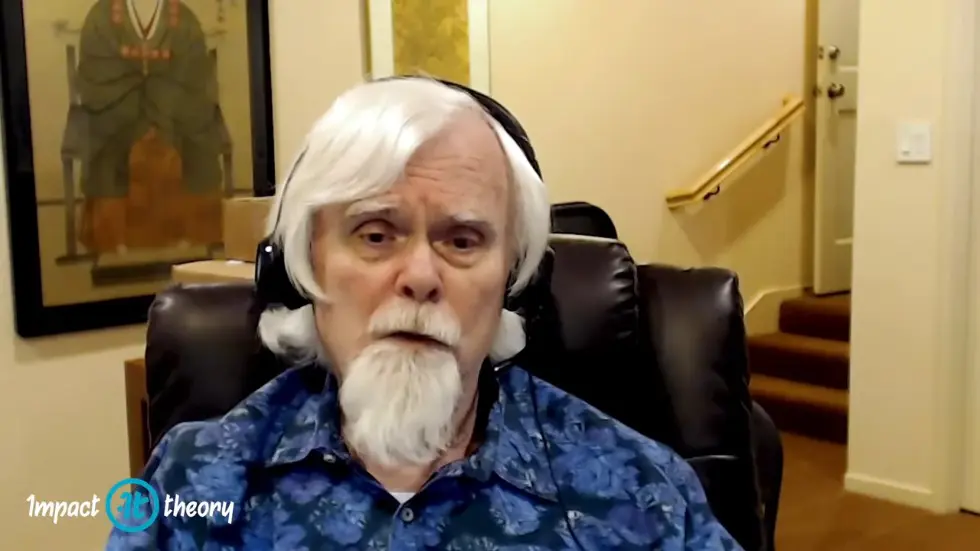
Team Therapy
- Team therapy is like cognitive therapy on steroids.
- It selectively activates people.
- CBT is cognitive behavioral therapy.
- Team is an acronym for testing, empathy, assessment of resistance, and methods.
- Empathy is important in therapy.

Assessment of Resistance
- Assessment of resistance is a new dimension in therapy.
- Resistance is ambivalence towards change.
- People want to change but are hesitant to do so.
- Resistance is huge in depression.
- Depressed people say they want to get better but are resistant to change.

Magical Techniques
- There is no magic button to cure depression.
- Magical techniques can help eliminate negative emotions.
- Depression, anxiety, shame, guilt, hopelessness, and rage can disappear.
- Therapy can help people overcome self-blame.
- Therapy can help people discover that their depression is caused by cruel and untrue messages they give themselves.

Postpartum Depression
- Postpartum depression is caused by negative thoughts, not hormonal imbalances.
- Self-blame is the cause of depression.
- Therapy can help people crush negative thoughts and get rid of depression.
- The goal is never to blame someone for their depression.
- Therapy can help people feel euphoric and joyful.

The Discovery of Cognitive Therapy
- Realizing that you're giving yourself unfair and wrong messages is the greatest discovery a human being can make.
- Personal example of the discovery.
- Electroconvulsive therapy works temporarily because it causes memory loss.

The Train Track Story
- A young man wrote to David Burns and said he couldn't believe that a thought was necessary to have an emotion.
- The train track story was an enlightening example.
- David Burns witnessed a car driving on a railroad track with a train coming.
- He stopped the car and got the driver off the track just in time before the train hit the car.
- The driver was in shock and didn't realize he had been hit by a train.

The Connection Between Thoughts and Emotions
- Thoughts are the cause of emotions, not the other way around.
- Depression and anxiety are caused by negative thoughts.
- Changing negative thoughts to positive ones can cure depression and anxiety.
- The ABC model: A (Activating event), B (Beliefs), C (Consequences).
- Challenging negative beliefs can change the consequences and lead to positive emotions.
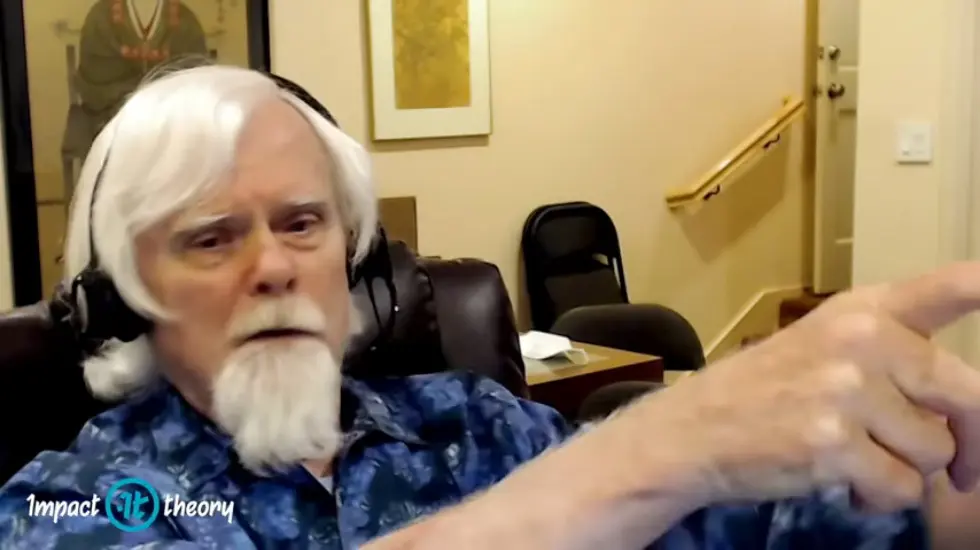
The Effectiveness of Cognitive Therapy
- Cognitive therapy is as effective as medication for treating depression and anxiety.
- Cognitive therapy has long-lasting effects, unlike medication.
- Cognitive therapy can be used in combination with medication for better results.
- Cognitive therapy can also be used to treat other mental health issues such as OCD and PTSD.
- Cognitive therapy is a cost-effective treatment option.

Understanding the Power of Thoughts
- Two people can have different reactions to the same situation based on their thoughts.
- Thoughts can trigger biological responses in the brain.
- Disrupting negative thoughts can prevent negative physiological responses.
- Postpartum depression is often caused by distorted thoughts.
- Recognizing and challenging distorted thoughts is the first step in cognitive therapy.

The 10 Cognitive Distortions
- There are 10 common cognitive distortions that people often experience.
- These distortions include all-or-nothing thinking, emotional reasoning, and mind reading.
- Other distortions include self-blame, should statements, and labeling.
- Recognizing these distortions is key to challenging negative thoughts.
- Mood journaling can help identify and challenge cognitive distortions.

The Process of Cognitive Therapy
- The first step in cognitive therapy is recognizing and challenging distorted thoughts.
- Mood journaling can help identify and challenge cognitive distortions.
- The second step is to replace negative thoughts with positive ones.
- Positive affirmations and visualization can help reinforce positive thoughts.
- Cognitive therapy can be combined with medication for more severe cases of depression and anxiety.

The Benefits of Cognitive Therapy
- Cognitive therapy is a highly effective treatment for depression and anxiety.
- It is a short-term treatment that can produce long-term results.
- Cognitive therapy can be used in combination with medication or as a standalone treatment.
- It can help individuals develop coping skills and prevent relapse.
- Cognitive therapy can improve overall quality of life and increase feelings of happiness and well-being.

Techniques of Cognitive Therapy
- Double standard technique is a simple technique used in cognitive therapy.
- In this technique, the patient is asked to imagine that the therapist is a dear friend of theirs.
- The therapist then talks to the patient as a friend and helps them to see their negative thoughts in a positive light.
- The patient is asked to write down their positive and negative thoughts and then rate how much they believe them.
- The therapist helps the patient to treat themselves with compassion and kindness rather than bullying themselves with negative thoughts.

Learning to Treat Yourself with Compassion
- Cognitive therapy helps patients to treat themselves with compassion and kindness.
- The therapist helps the patient to see their negative thoughts in a positive light.
- The patient is asked to write down their positive and negative thoughts and then rate how much they believe them.
- The therapist helps the patient to treat themselves with compassion and kindness rather than bullying themselves with negative thoughts.
- The essence of cognitive therapy is learning to treat yourself with compassion and kindness.

Realism in Cognitive Therapy
- Cognitive therapy helps patients to be realistic about their negative thoughts.
- The therapist helps the patient to see their negative thoughts in a positive light.
- The patient is asked to write down their positive and negative thoughts and then rate how much they believe them.
- The therapist helps the patient to treat themselves with compassion and kindness rather than bullying themselves with negative thoughts.
- The essence of cognitive therapy is learning to treat yourself with compassion and kindness.

You have read 50% of the summary.
To read the other half, please enter your Name and Email. It's FREE.
You can unsubscribe anytime. By entering your email you agree to our Terms & Conditions and Privacy Policy.
Watch the video on YouTube:
Stanford Psychiatrist Reveals How Cognitive Therapy Can Cure Your Depression and Anxiety - YouTube
Related summaries of videos:
- Matthew McConaughey Shares his Trick for Getting What You Want
- Psychotherapist's Hacks on How to Change Your Life | Lori Gottlieb on Impact Theory
- Why You've Been Lied to About Where to Put Your Time, Energy, & Focus | Seth Godin on Impact Theory
- Anti-Aging Expert Reveals Secret to Staying Young | Dr. Alexander Paziotopoulos on Health Theory
- Evolutionary Biologist Reveals How Society Is Losing It’s Grip on What Makes Us Men and Women
- How to Uncover What's Actually Holding You Back | Gary John Bishop on Impact Theory
- This Is How You Get Better Sleep and Improve Your Health | Health Theory
- From Cleaning Toilets to CEO, Leila Janah on How Rejection Is Inevitable & the Key to Success & Grit
- Richard Dawkins on Detaching Yourself From Irrational Thinking | Conversations with Tom
- The Intermittent FASTING MISTAKES That Make You GAIN WEIGHT! | Dave Asprey
- Home
- About us
- Contact
- Book Summaries 0-9
- Book Summaries A
- Book Summaries B
- Book Summaries C
- Book Summaries D
- Book Summaries E
- Book Summaries F
- Book Summaries G
- Book Summaries H
- Book Summaries I
- Book Summaries J
- Book Summaries K
- Book Summaries L
- Book Summaries M
- Book Summaries N
- Book Summaries O
- Book Summaries P
- Book Summaries Q
- Book Summaries R
- Book Summaries S
- Book Summaries T
- Book Summaries U
- Book Summaries V
- Book Summaries W
- Book Summaries X
- Book Summaries Y
- Book Summaries Z
- Jay Shetty Podcast - Summaries
- Tom Bilyeu Impact Theory - Summaries
- Lex Fridman - Summaries
- Diary of a CEO - Summaries
- Alex Hormozi - Summaries
