
Jeff Bezos: Amazon and Blue Origin | Lex Fridman Podcast #405
Last updated: Dec 15, 2023
The video is about Jeff Bezos, the founder of Amazon and Blue Origin, discussing his childhood experiences on a ranch in Texas and how they influenced his life. He talks about how he learned self-reliance and problem-solving skills from his grandfather, who was a resourceful and innovative person. He also talks about how he fell in love with the idea of space and space exploration at a young age, and how the space race between the Soviet Union and the US during the 1950s and 1960s inspired him.
This video by Lex Fridman was published on Dec 14, 2023.
Video length: 02:11:32.
The video is an interview with Jeff Bezos, the founder of Amazon and Blue Origin.
The conversation is about Bezos' childhood on a ranch in Texas and how it influenced his life. Bezos spent his summers on the ranch from the age of 4 to 16, where he learned how to fix fences, lay pipelines, and vaccinate animals. He also talks about his grandfather's resourcefulness and how he fixed a broken-down D6 bulldozer.
Bezos also discusses his love for space exploration and the impact of the space race between the Soviet Union and the US on his life.
- Jeff Bezos spent a lot of his childhood with his grandfather on a ranch in Texas.
- Jeff Bezos's grandfather bought a broken-down D6 bulldozer for $5,000 and they spent an entire summer fixing it.
- Jeff Bezos fell in love with the idea of space and space exploration when he was five years old.
- The Apollo program was a space exploration program that aimed to land humans on the moon.
- The early days of space exploration were dangerous for astronauts like Gagarin and Glenn.
- Jeff Bezos hopes to see a trillion humans living in the solar system in the future.
- Jeff Bezos grew up on a ranch in Texas and learned self-reliance and problem-solving skills from his grandfather.
- Jeff Bezos's vision for space travel is to live near Earth and use a lot of energy and material resources in space.
- The Blue Ring is a spacecraft designed to take up to 3,000 kilograms of payload up to geosynchronous orbit or in lunar vicinity.
Jeff Bezos: Amazon and Blue Origin | Lex Fridman Podcast #405 - YouTube

Jeff Bezos' Childhood on a Ranch
- Jeff Bezos spent a lot of his childhood with his grandfather on a ranch in Texas.
- He had to pretend to help on the ranch when he was a young child, but his grandfather took care of him.
- As he got older, Jeff became helpful on the ranch and loved it.
- His grandfather had a huge influence on him and taught him self-reliance and problem-solving skills.
- Jeff learned different things on a ranch than he would have learned in a city.

Fixing a D6 Bulldozer
- Jeff's grandfather bought a broken-down D6 bulldozer for $5,000.
- They spent an entire summer fixing the bulldozer, using mail order to buy big gears for the transmission.
- They had to build a crane to move the heavy gears.
- Jeff's grandfather did all of the work on his own and didn't pick up the phone to call someone for help.
- The experience taught Jeff the importance of problem-solving and self-reliance.

Falling in Love with Space Exploration
- Jeff Bezos fell in love with the idea of space and space exploration when he was five years old.
- The space race between the Soviet Union and the US from 1957 to 1969 was epic and inspiring.
- Jeff learned valuable lessons about self-reliance and problem-solving from the space race.
- One of the great things to take away from that time is the importance of self-reliance and problem-solving.
- Jeff Bezos' experiences on the ranch and his love for space exploration have influenced his life and career.

Jeff Bezos: Amazon and Blue Origin | Lex Fridman Podcast #405 - YouTube
The Apollo Program
- The Apollo program was a space exploration program that aimed to land humans on the moon.
- It was an analogy for something that was thought impossible, and it was pulled forward in time due to the Space Race.
- The program was resource-intensive, spending two to three percent of GDP on it.
- It was a technical marvel and an achievement that deserves its place in the pantheon of great human achievements.
- Blue Origin is working on rockets named after some of the folks involved in the Apollo program.

Dangerous Early Days
- The early days of space exploration were dangerous for astronauts like Gagarin and Glenn.
- They were taking huge risks, and there was a big chance of failure.
- The Americans thought that Alan Shepard had a 75% chance of success, while the Soviets may have thought differently.
- Alan Shepard is not as famous as John Glenn, despite being the first American in space.
- John Glenn is the first American to orbit the Earth.

The Future of Humanity
- Jeff Bezos hopes to see a trillion humans living in the solar system in the future.
- The solar system would be full of life, intelligence, and energy if there were a trillion humans.
- Giant space stations are the only way to achieve this vision.
- Materials from the Moon, near Earth objects, and the asteroid belt would be used to build giant O'Neal-style colonies.
- People would live in these colonies and have advantages over planetary surfaces, such as being able to spin them to get normal Earth gravity and put them where they want.

Jeff Bezos's Childhood Experiences
- Jeff Bezos grew up on a ranch in Texas.
- He learned self-reliance and problem-solving skills from his grandfather, who was a resourceful and innovative person.
- Bezos fell in love with the idea of space and space exploration at a young age.
- The space race between the Soviet Union and the US during the 1950s and 1960s inspired him.

Jeff Bezos's Vision for Space Travel
- Bezos wants to live near Earth, not necessarily in Earth orbit, but in the vicinity of orbits and so they can move relatively quickly between their station and Earth.
- He believes that space travel and space exploration is a way to preserve Earth, which is the good planet.
- Bezos wants to use a lot of energy and material resources in space, which is not possible on Earth.
- He believes that space exploration is not in conflict with the celebration of the planet Earth, but rather a way to preserve it.

Jeff Bezos's Idea for Blue Ring
- The Blue Ring is a spacecraft designed to take up to 3,000 kilograms of payload up to geosynchronous orbit or in lunar vicinity.
- It has two different kinds of propulsion: chemical propulsion and electric propulsion.
- The Blue Ring can be used in a couple of different ways, such as slowly moving up to geosynchronous orbit using electric propulsion or reserving chemical propulsion for quick changes in orbits.
- The Blue Ring has a couple of interesting features, such as providing a lot of services to space travelers.

Section 1: Blue Origin Payloads
- Blue Origin's payloads can be one large payload or multiple small payloads.
- The payloads provide thermal management, electric power, compute, communications, and other services.
- Blue Origin has an unusually large amount of radiation-tolerant compute on board its spacecraft.
- The payloads can use this compute when needed, making it easier to design and manage space missions.
- Blue Origin's payloads are like a set of APIs, providing a range of services for space missions.

Section 2: Spacecraft Design
- Blue Origin's spacecraft design includes a large chemical rocket to get a payload out to space.
- The spacecraft also includes a blue ring, which manages various things like compute and transportation.
- The blue ring is not designed to move humans around, but rather to manage payloads in Earth or lunar vicinity.
- Blue Origin is also building a lunar lander, which is designed to land humans on the surface of the Moon.
- The design of Blue Origin's spacecraft is focused on moving payloads around in space, not humans.

Section 3: Early Life and Education
- Jeff Bezos was at Princeton with aspirations to be a theoretical physicist.
- He loved physics and studied it, but also enjoyed computer science.
- Bezos was good at programming and enjoyed his computer science classes.
- He realized that he was going to be a mediocre theoretical physicist and decided to switch to computer science.
- Bezos went to Princeton to pursue a career in theoretical physics, but realized it was not his calling.

Section 4: Career and Inspiration
- Jeff Bezos was inspired by the space race between the Soviet Union and the US during the 1950s and 1960s.
- He fell in love with the idea of space and space exploration at a young age.
- Bezos's grandfather was a resourceful and innovative person who taught him self-reliance and problem-solving skills.
- Bezos's experiences on a ranch in Texas influenced his love for space and his desire to explore it.
- Bezos's career in space exploration was inspired by his childhood experiences and his love for the idea of space exploration.

Jeff Bezos' Childhood Experiences
- Jeff Bezos grew up on a ranch in Texas.
- He learned self-reliance and problem-solving skills from his grandfather, who was a resourceful and innovative person.
- He fell in love with the idea of space and space exploration at a young age.
- The space race between the Soviet Union and the US during the 1950s and 1960s inspired him.

Becoming a Great Physicist
- Becoming a great physicist requires top-notch mathematical skills.
- Visualization skills are also important for theoretical physicists.
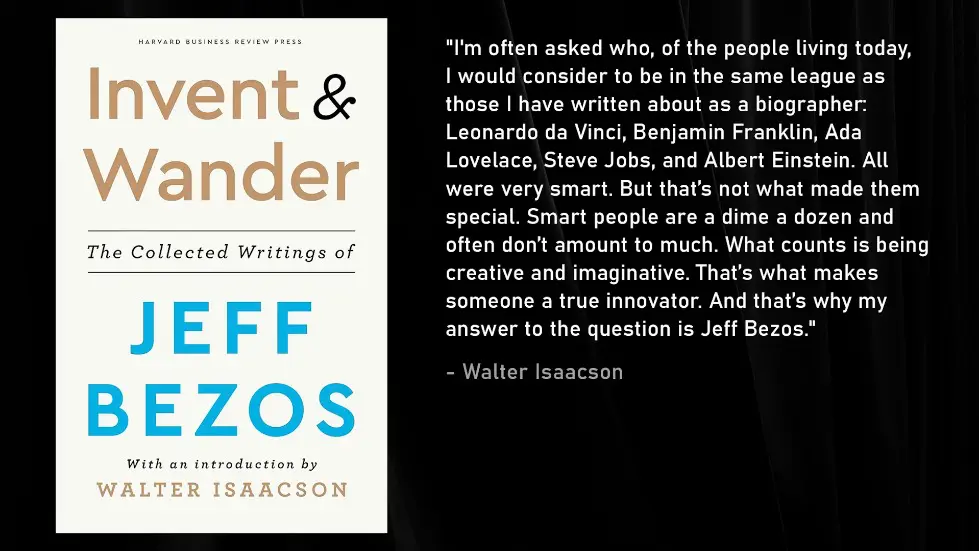
- Walter Isaacson writes that having great creativity puts a person on the same level as Einstein.
- Inventors are able to come up with atypical solutions and create many of them.
- Inventiveness in a high-dimensional space where the search space is very large is where Bezos' inventive skills come from.

Jeff Bezos' Inventive Skills
- Jeff Bezos identifies as an inventor.
- He can come up with atypical solutions and create many of them.
- One of those 100 solutions may not survive scrutiny, but one might work.
- Lateral thinking and inventiveness in a high-dimensional space are important for Bezos.
- Bezos maintains childlike wonder and creativity to this day.
Jeff Bezos' Thinking Process
- When Jeff Bezos sits down to work on a problem, he doesn't know where he's going.
- Invention and lateral thinking require wandering and giving oneself permission to do so.
- Wandering is not always efficient, but it is necessary for invention.
- Group invention is also pleasurable and can lead to new ideas and objections.
- Noticing a good idea and pulling at it can lead to something useful.
Jeff Bezos' Childhood Experiences
- Jeff Bezos grew up on a ranch in Texas.
- He learned self-reliance and problem-solving skills from his grandfather, who was a resourceful and innovative person.
- He fell in love with the idea of space and space exploration at a young age.
- The space race between the Soviet Union and the US during the 1950s and 1960s inspired him.

Blue Origin Rocket Factory and Launch Complex
- Jeff Bezos is the founder of Blue Origin, a space exploration company.
- Blue Origin is building the New Glenn rocket, which will launch from the historic Cape Canaveral launch complex.
- The New Glenn rocket is a very large and heavy lift launch vehicle, taking about 45 metric tons to reach low Earth orbit.
- The rocket is about half the thrust of the Saturn 5 rockets, with 3.9 million pounds of thrust on liftoff.

Technical Aspects of the New Glenn Rocket
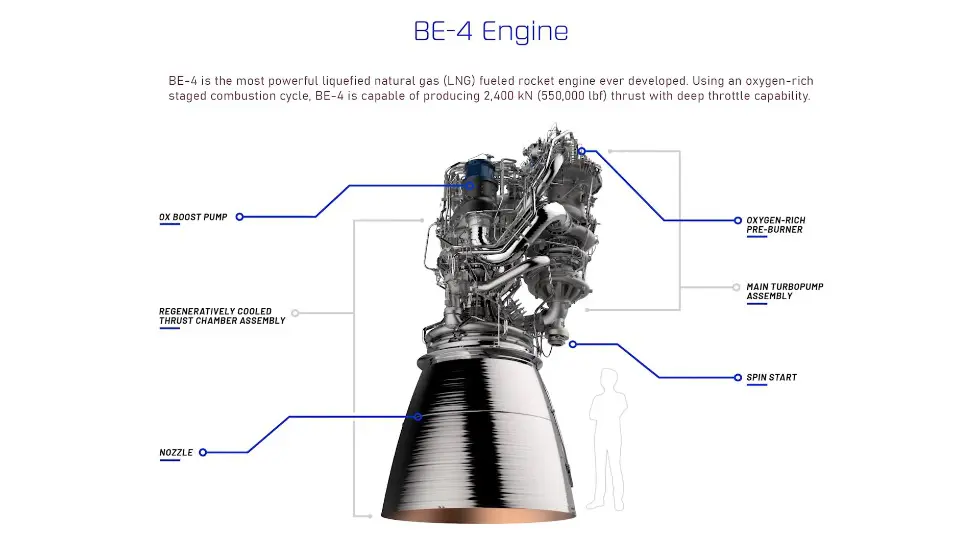
- The New Glenn rocket is powered by seven engines, each generating a little more than 550,000 lbs of thrust.
- The engines are fueled by liquid natural gas (LNG) and liquid oxygen (LOX), which are the fuel and oxidizer, respectively.
- The cycle is an oxidizer-stage combustion cycle, which was pioneered by the Russians.
- The first stage of the Vulcan rocket, which is the United Launch Alliance rocket, is also powered by the same engine as the New Glenn rocket.

Cost and Size in Rocket Design
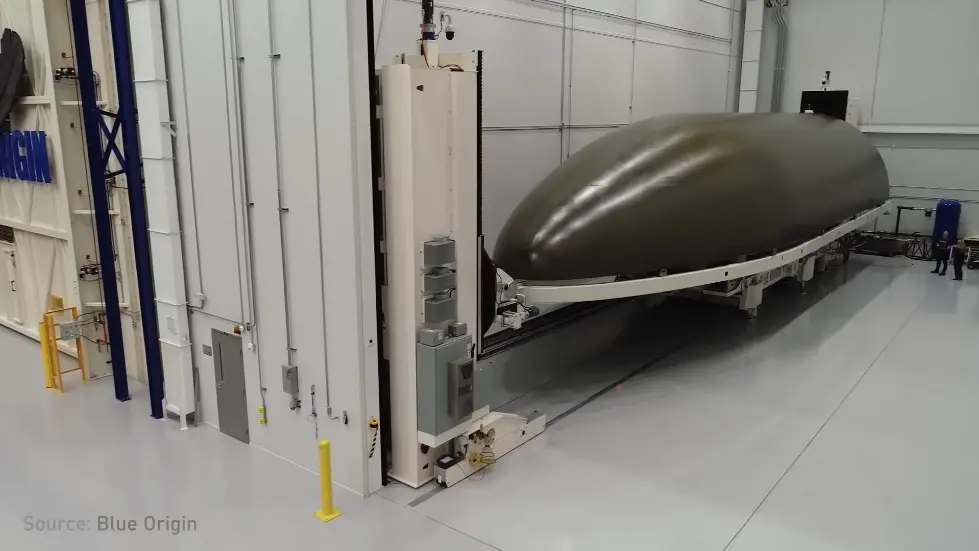
- Size is costly in rocket design, as larger rockets require more propellant and larger tanks.
- Hydrogen is a very good propellant for upper stages because it has high specific impulse (ISP).
- Liquid hydrogen is not dense, so it requires large tanks to store it.
- The Delta 4 is an example of a vehicle that is all hydrogen, but it was not very cost effective.
Manufacturing Large Structures
- Manufacturing large structures is very challenging and time-consuming.
- It requires a lot of heavy lift operations, tooling, and cranes.
- The foundation of large structures, such as launch pads, can be deep and require many pilings.
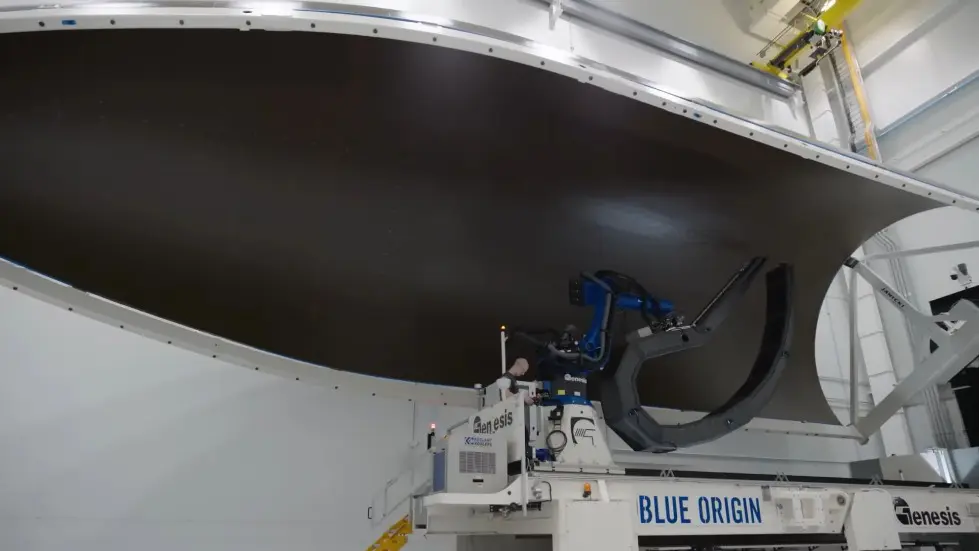
- The materials used in large structures must be lightweight and withstand high temperatures and harsh conditions.
- Carbon composites are now used to build lightweight and stiff structures that were not possible in the past.

Materials Used in Rocket Components
- The materials used in rocket components must be lightweight and withstand high temperatures and harsh conditions.
- Carbon composites are now used to build lightweight and stiff structures that were not possible in the past.
- Aluminum and lithium are also used in rocket components due to their ability to be friction stir welded.
- Friction stir welding is a remarkable technology that has become very practical over the last couple of decades.
Friction Stir Welding
- Friction stir welding is a technology that was invented decades ago but has become very practical over the last couple of decades.
- It involves stirring two pieces of metal together with a pin that rotates at a certain rate.
- Instead of using heat to weld two pieces of metal together, friction stir welding uses friction to heat the material.
- After welding with friction stir welding, the material can be touched immediately and it's just warm.

Engineering and Construction Challenges
- Building large structures, such as launch pads, is a major undertaking both from an engineering and construction point of view.
- The foundation of launch pads can be deep and require many pilings.
- The materials used in rocket components must be lightweight and withstand high temperatures and harsh conditions.
- Friction stir welding is a remarkable technology that has become very practical over the last couple of decades.

Section 1: Traditional Welding Techniques
- Traditional welding techniques use weak regions where the weld is made.
- Friction stir welding is a technique that makes the weld as strong as the bulk material.
- This allows for the creation of strong, lightweight structures.
- The use of explosive charges for separation is a robust way of separating structures.
- Explosives can sever the entire connection between two structures.
Section 2: Reusable and Expendable Stages
- The first stage of a rocket is reusable, while the second stage is expendable.
- The second stage is made of liquid hydrogen and liquid oxygen, which allows for a higher specific impulse.
- The first stage lands downrange on a landing platform in the ocean and comes back for maintenance.
- The second stage is currently being worked on to make it as inexpensive as possible.
- There are two paths being considered for making the second stage reusable: either make it reusable or make it inexpensive so it can be expended.

Section 3: Cost of Space Flight
- Space flight getting into orbit is a solved problem, but reducing the cost of access to orbit is the only interesting problem.
- Lowering the cost of access to orbit will open up new opportunities for startups and entrepreneurs.
- Bezos' company, Blue Origin, is working to lower the cost of access to orbit.
- Reducing the cost of access to orbit is a key mission for Blue Origin.
- The cost reduction stage is a crucial part of making space exploration more accessible and affordable.
Section 4: Inventing Better Ways
- Inventing better ways is a key part of cost reduction.
- Inventing better ways makes the world richer by making things less expensive.
- Examples of inventions that have made the world richer include the plow and the internet.
- There are big challenges on the manufacturing and engineering sides when working to get a new rocket to the first launch.
- Overcoming these challenges is crucial for the success of space exploration and making it more accessible and affordable.
Challenge of Manufacturing
- The real challenge of space exploration is not the launch, but manufacturing at a rate to produce new rockets.
- To manufacture a rocket at least once a month, two engines are needed, which means one engine needs to be produced every week.
- All manufacturing facilities, processes, inspection techniques, and acceptance tests need to be operating at rate and rate manufacturing is at least as difficult as designing the vehicle in the first place.
- Every upper stage has two engines, so four engines are needed to launch the vehicle twice a month.
- The manufacturing of engines and other components requires all the right machine tools, fixtures, and people.

Manufacturing Technologies
- Manufacturing is the biggest challenge in space exploration.
- The manufacturing process needs to be efficient to produce new rockets at a rate.
- The challenge is to get to rate manufacturing in an efficient way.
- Inefficient manufacturing can lead to higher costs and not moving the state-of-the-art forward.
- There are easier businesses to do, such as making salty snack food, but space exploration is more meaningful and worthwhile.
Fruits of Space Exploration
- The fruits of space exploration come from building a road to space and getting the infrastructure in place.
- Infrastructure such as payment systems and transportation systems already existed when Amazon started.
- The internet is another giant piece of infrastructure that was around in the early 1990s.
- The internet piggybacked on top of the long-distance phone network to access servers and other resources.
- If the internet did not exist, it would have been difficult to access and use servers and other resources.

Jeff Bezos' Childhood Experiences
- Jeff Bezos grew up on a ranch in Texas.
- He learned self-reliance and problem-solving skills from his grandfather, who was a resourceful and innovative person.
- He fell in love with the idea of space and space exploration at a young age.
- The space race between the Soviet Union and the US during the 1950s and 1960s inspired him.

Jeff Bezos' Space Dreams
- Jeff Bezos wants to use his Amazon winnings to build heavy infrastructure for space exploration.
- He hopes that this infrastructure will allow for the next generation to use it and start their own space companies.
- He believes that when a really valuable space company is started in a dorm room, it will be a marker of success.
- He finds it exciting to see that the entrepreneurial spirit and imagination can be unleashed when there is enough infrastructure in place.

Jeff Bezos' Timeline for Space Exploration
- Jeff Bezos is optimistic that the first launch of the New Glenn rocket will be in 2024.
- He is not 100% certain what payload will be on the first launch, but he hopes that Escapade will also launch in 2024.
- There may be other things that might go on that first mission, but the first launch is the most important.
- Jeff Bezos is extremely nervous about the first launch, but he is also excited to watch it.

Jeff Bezos' Space Launch Experience
- Jeff Bezos was aboard a New Shepherd on the first crude flight.
- He was not as nervous as he thought he would be, but it was a difficult conversation to have with his mother about the flight.
- He was laughing inside the capsule during the flight.
- He finds it an incredible experience to have been a part of the first space launch.

Jeff Bezos' Childhood Experiences
- Jeff Bezos grew up on a ranch in West Texas with his parents and siblings.
- His grandfather was a resourceful and innovative person who taught him self-reliance and problem-solving skills.
- Bezos fell in love with the idea of space and space exploration at a young age, inspired by the space race between the Soviet Union and the US during the 1950s and 1960s.
- The launch of the first manned spacecraft, Yuri Gagarin's Vostok 1, in 1961 further fueled Bezos' interest in space.
- Bezos' family and friends were nervous and emotional before the launch, but Bezos felt a sense of excitement and anticipation.
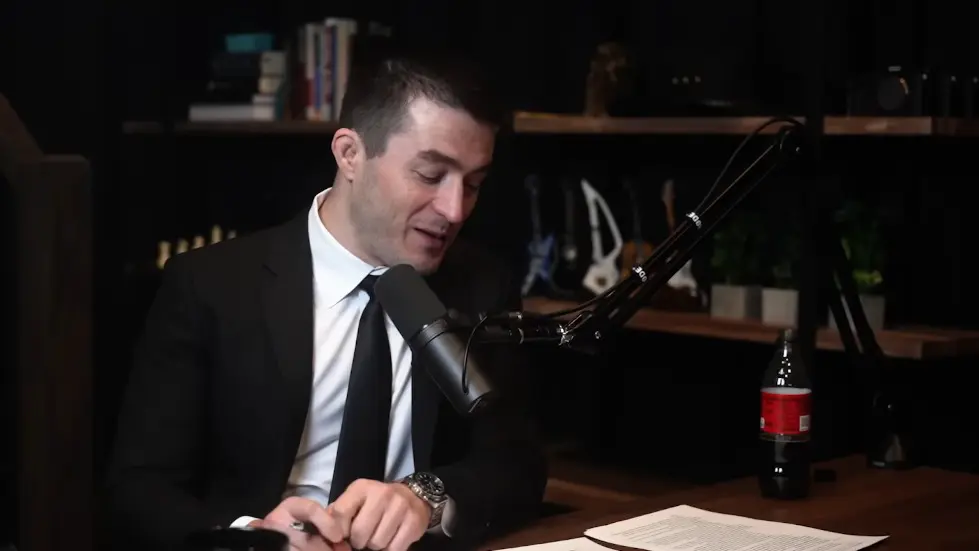
The Space Race and Bezos' Inspiration
- The space race between the Soviet Union and the US during the 1950s and 1960s inspired Bezos' interest in space exploration.
- Bezos was particularly inspired by the idea of humans becoming a multi-planetary species and exploring other planets in space.
- Bezos saw space exploration as a way to push the boundaries of human knowledge and understanding.
- Bezos was also inspired by the idea of space as a frontier, similar to the Wild West in the United States.
- Bezos saw space exploration as a way to expand human horizons and create new opportunities for innovation and discovery.
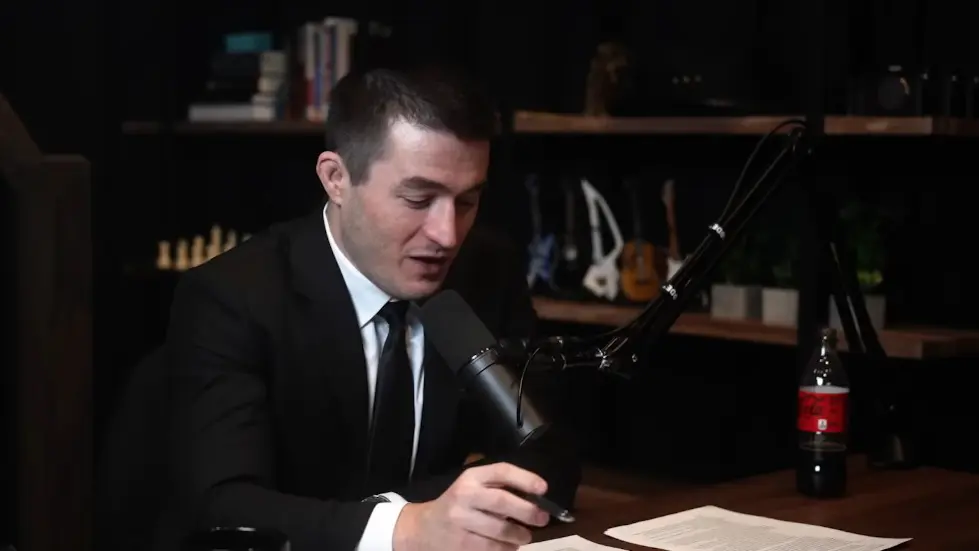
Bezos' Space Dreams
- Bezos has always dreamed of colonizing Mars and making it a second home for humans.
- Bezos sees space exploration as a way to solve some of the world's biggest problems, such as climate change and resource depletion.
- Bezos believes that space exploration will require a massive amount of innovation and collaboration between governments, private companies, and individuals.
- Bezos sees space exploration as a way to unite humanity and create a sense of shared purpose and identity.
- Bezos believes that space exploration will require a long-term commitment and a willingness to take risks and push the boundaries of what is possible.
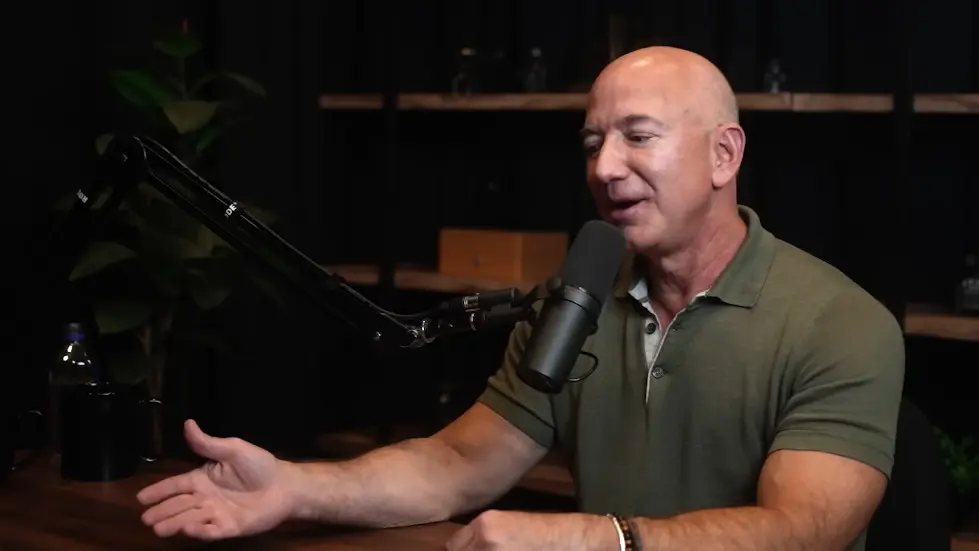
Blue Origin and Space Tourism
- Blue Origin is a private space company founded by Bezos in 2002.
- Blue Origin's goal is to make space accessible to everyone, not just governments and astronauts.
- Blue Origin is working on developing reusable rockets and spacecraft that can be used for both space exploration and space tourism.
- Blue Origin is also working on developing new technologies for space habitats and life support systems.
- Bezos sees space tourism as a way to generate revenue and support the development of new technologies for space exploration.

Bezos' Vision for the Future of Space
- Bezos sees the future of space as a place where humans can live and work, just like we do on Earth.
- Bezos believes that space exploration will require a massive amount of innovation and collaboration between governments, private companies, and individuals.
- Bezos sees space exploration as a way to solve some of the world's biggest problems, such as climate change and resource depletion.
- Bezos believes that space exploration will require a long-term commitment and a willingness to take risks and push the boundaries of what is possible.
- Bezos sees space exploration as a way to unite humanity and create a sense of shared purpose and identity.

Section 1: Introduction
- The video is about Jeff Bezos, the founder of Amazon and Blue Origin, discussing his childhood experiences on a ranch in Texas and how they influenced his life.
- He talks about how he learned self-reliance and problem-solving skills from his grandfather, who was a resourceful and innovative person.
- He also talks about how he fell in love with the idea of space and space exploration at a young age, and how the space race between the Soviet Union and the US during the 1950s and 1960s inspired him.
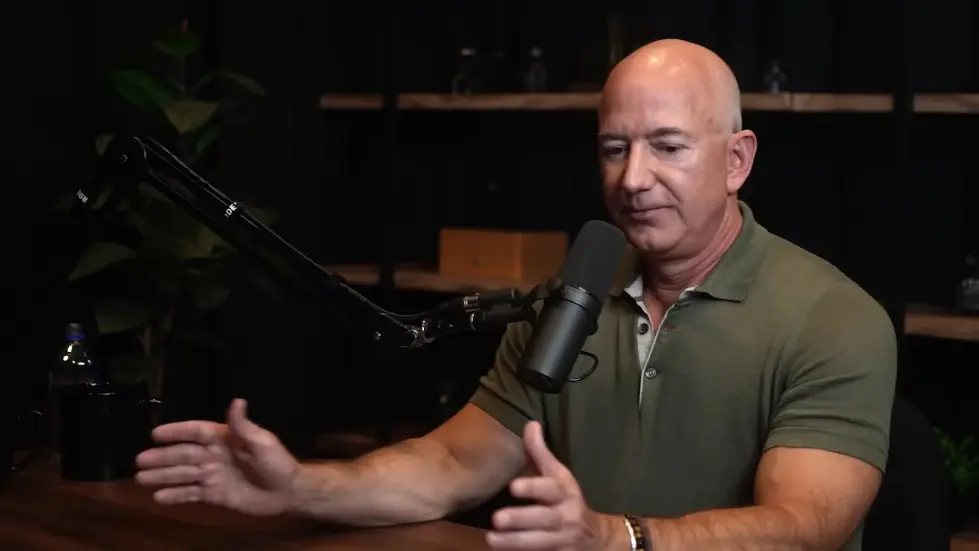
Section 2: Space Exploration
- Bezos talks about the importance of space exploration and how it has inspired him throughout his life.
- He mentions the space race between the Soviet Union and the US during the 1950s and 1960s, and how it inspired him to pursue a career in space exploration.
- He talks about how he plans to use Blue Origin to make space travel more accessible and affordable for everyone.

Section 3: Blue Origin
- Bezos talks about the founding of Blue Origin and its mission to make space travel more accessible and affordable for everyone.
- He mentions the importance of safety in space exploration and how Blue Origin is working to make space travel safer for everyone.
- He talks about the challenges of building a reusable rocket and how Blue Origin is working to overcome them.

Section 4: Conclusion
- Bezos talks about his vision for the future of space exploration and how he plans to use Blue Origin to make it a reality.
- He mentions the importance of innovation and taking risks in order to achieve his goals.
- He talks about the importance of leadership and how he plans to use his experience and expertise to lead Blue Origin to success.

Two-way door decisions
- Two-way door decisions are decisions that allow you to walk out of one door and choose another door.
- Some decisions are two-way door decisions, while others are one-way door decisions that cannot be reversed easily.
- One-way door decisions should be made with caution and deliberation, as they have long-term consequences.
- Single individuals or small teams should make two-way door decisions, while senior executives should slow them down and ensure they are made correctly.
- It is important to know the difference between one-way and two-way door decisions, as they have different consequences and require different levels of scrutiny.

Amazon Prime
- Amazon Prime is an example of a one-way door decision, as it is a significant change that is difficult to reverse.
- Some decisions, such as changing the decision to create Amazon Prime, are technical decisions that have long-term consequences.
- It is important to scrutinize one-way door decisions carefully, as they have significant consequences and can be difficult to reverse.
- Most decisions are not one-way door decisions, and can be made quickly with the understanding that they can always be changed.
- The "disagree and commit" principle can be used to make decisions quickly and avoid unnecessary arguing.

CEO decisions
- The CEO is ultimately responsible for making decisions in a company.
- The CEO may not always make the decision that they agree with, and may have to disagree and commit with their direct reports.
- It is important for the CEO to listen to the opinions of their direct reports and make decisions based on their judgment and expertise.
- The CEO should be willing to gamble with their direct reports and trust their judgment, even if they disagree with their decision.
- The CEO should be open to feedback and willing to change their decision if they are convinced that their direct report's decision is better.

Jeff Bezos' Childhood Experiences
- Jeff Bezos grew up on a ranch in Texas.
- He learned self-reliance and problem-solving skills from his grandfather, who was a resourceful and innovative person.
- He fell in love with the idea of space and space exploration at a young age.
- The space race between the Soviet Union and the US during the 1950s and 1960s inspired him.

Dispute Resolution in Teams
- Dispute resolution is a really interesting thing in teams.
- When two people disagree about something, even if everybody's well intentioned, they just have a very different opinion about what the right decision is.
- There are many mechanisms that we use to resolve these kinds of disputes, but many of them are really bad.
- An example of a really bad way of coming to agreement is compromise.
- In things like the height of the ceiling, where truth is a knowable thing, you shouldn't allow compromise to be used when you can know the truth.

Executive Dispute Resolution
- Executives who disagree and just have a war of attrition in which everyone gets exhausted first is not a good way to resolve disputes.
- It is important to escalate the dispute to a higher authority or to a neutral third party to get a resolution.
- It is important to get to the resolution as quickly as possible because that ultimately leads to high velocity of the yes.
- Exhausting the other person is not truth-seeking, and compromise is not truth-seeking.
- It is important to try to get as close to truth as possible in dispute resolution.

You have read 50% of the summary.
To read the other half, please enter your Name and Email. It's FREE.
You can unsubscribe anytime. By entering your email you agree to our Terms & Conditions and Privacy Policy.
Watch the video on YouTube:
Jeff Bezos: Amazon and Blue Origin | Lex Fridman Podcast #405 - YouTube
Related summaries of videos:
- Teddy Atlas: Mike Tyson, Cus D'Amato, Boxing, Loyalty, Fear & Greatness | Lex Fridman Podcast #406
- Guillaume Verdon: Beff Jezos, E/acc Movement, Physics, Computation & AGI | Lex Fridman Podcast #407
- Tal Wilkenfeld: Music, Guitar, Bass, Jeff Beck, Prince, and Leonard Cohen | Lex Fridman Podcast #408
- Matthew Cox: FBI Most Wanted Con Man - $55 Million in Bank Fraud | Lex Fridman Podcast #409
- Lee Cronin: Controversial Nature Paper on Evolution of Life and Universe | Lex Fridman Podcast #404
- Lisa Randall: Dark Matter, Theoretical Physics, and Extinction Events | Lex Fridman Podcast #403
- Michael Malice: Thanksgiving Pirate Special | Lex Fridman Podcast #402
- John Mearsheimer: Israel-Palestine, Russia-Ukraine, China, NATO, and WW3 | Lex Fridman Podcast #401
- Elon Musk: War, AI, Aliens, Politics, Physics, Video Games, and Humanity | Lex Fridman Podcast #400
- Jared Kushner: Israel, Palestine, Hamas, Gaza, Iran, and the Middle East | Lex Fridman Podcast #399
- Home
- About us
- Contact
- Book Summaries 0-9
- Book Summaries A
- Book Summaries B
- Book Summaries C
- Book Summaries D
- Book Summaries E
- Book Summaries F
- Book Summaries G
- Book Summaries H
- Book Summaries I
- Book Summaries J
- Book Summaries K
- Book Summaries L
- Book Summaries M
- Book Summaries N
- Book Summaries O
- Book Summaries P
- Book Summaries Q
- Book Summaries R
- Book Summaries S
- Book Summaries T
- Book Summaries U
- Book Summaries V
- Book Summaries W
- Book Summaries X
- Book Summaries Y
- Book Summaries Z
- Jay Shetty Podcast - Summaries
- Tom Bilyeu Impact Theory - Summaries
- Lex Fridman - Summaries
- Diary of a CEO - Summaries
- Alex Hormozi - Summaries
