
Andrew Huberman: Focus, Stress, Relationships, and Friendship | Lex Fridman Podcast #277
Last updated: Jun 2, 2023
The video is a conversation between Lex Fridman and neuroscientist Andrew Huberman about various topics including focus, stress, relationships, and friendship.
The video is a podcast interview with neuroscientist Andrew Huberman, discussing topics such as focus, stress, relationships, and friendship. The conversation also touches on personal anecdotes, including cheat meals and dieting habits. The interview is conducted by Lex Fridman and is part of his podcast series.
- 30 minutes in the sauna twice or thrice a week reduces the likelihood of dying of a cardiovascular event by 27 percent, and four or more times per week reduces the probability of dying by 50 percent.
- Andrew Huberman is a brilliant neuroscientist at Stanford University, host of the Huberman Lab podcast, and can be found on Instagram, Twitter, and YouTube.
- The worst possible thing you can do in terms of meals is a bang bang, which is going to multiple restaurants and doing a full meal at each one, and the best cheat meal is one where you throw out all the rules and just enjoy the food and atmosphere.
- Andrew's research focuses on the visual system and how it interacts with the rest of the brain, how stress affects the brain and how to mitigate its effects, and the neuroscience of relationships and how to build strong friendships.
- Eats first meal around 11am and last bite of food around 8 or 9pm, trains in the morning, usually has two meals and some snacking in the middle, and never fasted for 24 hours or done a long fast except when doing the chickpeas.
- Lost all appetite for sweets about 12 to 14 months ago, still loves savory food such as meat, butter, and cheese, and probably a scientific explanation related to neurons and sugar.
- Used to put butter on croissants but doesn't eat them anymore, thinks butter is cheating and disrespects the fundamental food, and bread is just a vehicle for butter, while for others, butter is a vehicle for bread.
- Did a three-day fast and ate only grilled chicken breast, which was the most delicious piece of meat ever eaten, and eats one meal a day, especially when traveling, to have more freedom to indulge in the quantity of food.
- Attribution is important in academia and science, citing sources and giving credit to others makes you look better, and celebrating others raises all boats and builds a strong community.
- Phelps needed to eat a lot because he exercised in water, heat transfer in water is greater, so you burn more calories, and exercising in water, even warm water, burns far more calories.
- Sharing things you love builds a wonderful community, you're as strong as your community, and building a community is about celebrating others and sharing.
- Rick Rubin is a special human being, has a unique way of finding songs in an album, steps through individual songs to find the one you mention, puts himself mentally in the space of the album, and listening to music with him is a unique experience.
Andrew Huberman: Focus, Stress, Relationships, and Friendship | Lex Fridman Podcast #277 - YouTube

Benefits of Sauna
- 30 minutes in the sauna twice or thrice a week reduces the likelihood of dying of a cardiovascular event by 27 percent.
- Four or more times per week reduces the probability of dying by 50 percent.
- Being naked in the sauna is beneficial in certain contexts, such as childbirth.

Introduction to Andrew Huberman
- Andrew Huberman is a brilliant neuroscientist at Stanford University.
- He is the host of the Huberman Lab podcast, one of the best health and science podcasts in the world.
- He can be found on Instagram, Twitter, and YouTube.
- Andrew is a great human being and has quickly become a great friend.

Cheat Meals
- The worst possible thing you can do in terms of meals is a bang bang, which is going to multiple restaurants and doing a full meal at each one.
- The best cheat meal is one where you throw out all the rules and just enjoy the food and atmosphere.
- Andrew used to follow the Tim Ferriss slow carb diet, which worked well for him.
- He would have a full cheat day once a week, where he would eat pizzas, croissants, and donuts.
- The next day, he would fast completely to avoid gastric distress.

Andrew Huberman: Focus, Stress, Relationships, and Friendship | Lex Fridman Podcast #277 - YouTube
Andrew's Research
- Andrew's research focuses on the visual system and how it interacts with the rest of the brain.
- He is interested in how stress affects the brain and how to mitigate its effects.
- He is also interested in the neuroscience of relationships and how to build strong friendships.
- Andrew believes that the key to building strong relationships is to be curious and interested in other people.
- He recommends practicing gratitude and expressing it to others as a way to strengthen relationships.

Diet and Eating Habits
- Eats first meal around 11am and last bite of food around 8 or 9pm.
- Trains in the morning.
- Usually has two meals and some snacking in the middle.
- Never fasted for 24 hours or done a long fast except when doing the chickpeas.
- There are different ways to do cheat days, such as trying all the restaurants in a new city or doing a cheat day marathon.

Loss of Appetite for Sweets
- Lost all appetite for sweets about 12 to 14 months ago.
- Still loves savory food such as meat, butter, and cheese.
- Doesn't know what happened or changed.
- Probably a scientific explanation related to neurons and sugar.
- Most delicious thing is croissants from Little T's Bakery in Portland.

Bread and Butter
- Used to put butter on croissants but doesn't eat them anymore.
- Thinks butter is cheating and disrespects the fundamental food.
- Bread is just a vehicle for butter, while for others, butter is a vehicle for bread.
- Indian food doesn't appeal to him, but non-bread is very calorie-dense.
- Barbecue and Argentine steak are favorites.

Fasting and One Meal a Day
- Did a three-day fast and ate only grilled chicken breast, which was the most delicious piece of meat ever eaten.
- When fasting, shouldn't pig out because the stomach will shrink in size.
- Eats one meal a day, especially when traveling, to have more freedom to indulge in the quantity of food.

Attribution and Celebrating Others
- Attribution is important in academia and science.
- Citing sources and giving credit to others makes you look better.
- There is a culture of not celebrating others in science.
- People get competitive, especially in science.
- Celebrating others raises all boats and builds a strong community.

Phelps and Exercise in Water
- Phelps needed to eat a lot because he exercised in water.
- Heat transfer in water is greater, so you burn more calories.
- Caloric needs go way up when you exercise in water.
- Exercising in water, even warm water, burns far more calories.
- Caloric needs go up, which is why you get hungry after swimming.

Community and Sharing
- Sharing things you love builds a wonderful community.
- You're as strong as your community.
- Pointing out things you love raises all boats.
- It's rare to wish you had done something someone else did.
- Building a community is about celebrating others and sharing.

Rick Rubin and Music
- Rick Rubin is a special human being.
- He has a unique way of finding songs in an album.
- He steps through individual songs to find the one you mention.
- He puts himself mentally in the space of the album.
- Listening to music with him is a unique experience.

Meeting Rick Rubin
- Andrew Huberman met Rick Rubin through a common friend during the pandemic.
- They started doing some FaceTime together and talking about things related to science and health.
- They formed a friendship where they would talk about any number of different topics in life.
- They started spending time together in person when Rick was in town or nearby.
- Rick has an incredible understanding of how to get the brain and body into state.

Getting into Proper State of Mind
- Rick Rubin inspired Andrew to think about states of mind as something that needs to be ratcheted through challenging steps.
- Teaching oneself how to get into proper state is not just going to come from a cup of coffee or a lamp of a particular wavelength.
- It's going to be those things but it's also going to be really teaching oneself how to get into proper state.
- Before doing a very long podcast recording, Andrew has to really limit the kind of interactions he has for the two hours before.
- Getting into state of mind is something that we'd all just imagine would flip the switch but Rick really convinced Andrew that you have to do the work to do the work.

Rick Rubin's Process
- Rick Rubin has routines to allow himself to get into state.
- He's willing to sit there and be quiet with his eyes closed for a minute or two and or more.
- He has an incredible understanding of how to get the brain and body into state.
- He's willing to do the things that allow him to help these incredible artists get into the best state to do their craft.
- He asks how close Andrew likes the microphone to be, which is a very Rick Rubin kind of thing.

Hypnosis and Self-Hypnosis
- Andrew thinks hypnosis is a kind of self-hypnosis because hypnosis is a context where you limit the context, you're very alert, and you're very calm.
- Rick Rubin has a number of different practices that he uses to get into proper state.
- Andrew introduced Rick to a friend of his who's a neurosurgeon and neuroscientist, and they've become friendly.
- Rick is one of these people that he sort of defies definition, incredibly kind, incredibly private person.
- Rick is a fan of Lex Fridman's podcast, and Andrew introduced them.

Preparing for Podcasting
- Microphone distance and timbre of voice matter in podcasting.
- Podcasting is an art that requires a certain cadence and rhythm.
- Joe Rogan is an example of someone who has tapped into the cadence of podcasting.
- Andrew Huberman prepares for podcasting by taking a walk and assessing his energy level.
- He recites the lyrics of songs out loud to warm up his vocal cords and evaluate his articulation.
- He adjusts the cadence of his voice and reminds himself of the purpose of podcasting.

Stress and Relaxation
- Stress is a natural response to a perceived threat or challenge.
- Chronic stress can lead to negative health outcomes.
- Relaxation techniques such as yoga nidra and meditation can help reduce stress.
- Walking and talking to oneself can also be a form of relaxation and self-reflection.
- Engaging in activities that bring joy and pleasure can also help reduce stress.
- It is important to find a balance between stress and relaxation in order to maintain optimal health and well-being.

Relationships and Friendship
- Relationships are important for human well-being and happiness.
- Friendship is a form of relationship that involves mutual trust, support, and understanding.
- Friendship can help reduce stress and improve mental health.
- It is important to cultivate and maintain friendships through regular communication and shared experiences.
- Technology can be a useful tool for maintaining long-distance friendships.
- It is also important to set boundaries and prioritize self-care in order to maintain healthy relationships.

Focus and Attention
- Focus and attention are essential for learning and productivity.
- Distractions such as social media and multitasking can interfere with focus and attention.
- Engaging in activities that require sustained attention, such as reading or playing music, can help improve focus and attention.
- Regular exercise and adequate sleep are also important for maintaining optimal cognitive function.
- It is important to prioritize tasks and set realistic goals in order to avoid overwhelm and maintain focus.
- Mindfulness practices such as meditation can also help improve focus and attention.

Preparing for the Podcast
- Andrew Huberman focuses on communicating the beauty and utility of biology.
- He checks his emotional state to ensure he is not angry before recording.
- He accesses the parts of the research and papers he loves the most.
- He falls in love with the literature and pioneers of the work.
- He accesses his child-like energy and basks in sharing the information.

Mental Protocols
- Many of the best areas of life are their own form of hypnosis.
- Andrew Huberman tries to set a state around meal times to appreciate food.
- He gives his partner space to cook and enjoys the pleasure in serving it.
- He grew up eating meals as a family without television.
- He spent most of his time playing soccer outdoors.

Athletes and Mental Protocols
- Olympic level athletes have to have a process like this.
- Tiger Woods taught himself self-hypnosis and used it during tournaments.
- There are other places in life that use a mental protocol to get ready.

Accessing Love and Beauty
- Andrew Huberman feels comfortable saying the word "beauty" publicly now.
- He wants to communicate the beauty and utility of biology.
- He falls in love with the literature and pioneers of the work.
- He accesses his child-like energy and basks in sharing the information.
- The goal is always to make the information interesting, clear, and actionable.

Childhood Memories and Family Dinners
- Andrew Huberman talks about wearing his brother's old clothes and admiring American things like Pepsi shirts.
- He shares his childhood view of the world where he thought anyone who had anything nice had to do something really bad to get it.
- He talks about the importance of family dinners and how it was a structured thing for him growing up.
- Andrew expresses his desire to have a lot of kids and pit them against Lex's kids with jiu-jitsu.
- He talks about the ritual of family dinners and how it breaks down walls between families.

Breaking Down Walls Between Families
- Andrew talks about how in Russia, neighbors would often break down walls between families and have dinner together.
- He mentions how this is missing for the most part in America.
- Andrew suggests bursting into each other's homes like in a sitcom to make each other feel at home.
- He talks about how people want to respect each other's privacy, but if family dinners are part of a ritual or culture, all walls get broken down.
- Andrew emphasizes that what matters in life are the people and the memories we create with them.

Academia and Informal Conversations
- Andrew talks about how professors would stop by his office or lab without setting up an appointment when he was a professor in San Diego.
- He mentions Harvey Kearney, a member of the National Academy and an expert in the evolution of vision and brains, who would show up in his lab and start talking to students and postdocs.
- Andrew talks about David Kleinfeld, a physics professor who is also an encyclopedia of knowledge.
- He shares an interesting fact about David Kleinfeld's former student who went on to create the Beavis and Butthead cartoon.
- Andrew emphasizes the importance of informal conversations and how they can lead to unexpected discoveries and collaborations.

Conclusion
- Andrew Huberman talks about the importance of family dinners and how they break down walls between families.
- He emphasizes that what matters in life are the people and the memories we create with them.
- Andrew shares his experience with informal conversations in academia and how they can lead to unexpected discoveries and collaborations.

Podcasting and Interviewing
- Podcasting has a community feel, like Cheers or Seinfeld.
- Preparing for guest episodes is different from solo episodes.
- Interview episodes are more conversational and enjoyable.
- Questions are listed out before the interview.
- Interviewing an expert is a pleasure and a learning experience.

Controversial Topics and Difficult Figures
- Some topics are avoided, but controversial figures are talked to.
- Difficult figures need to reveal something real about themselves.
- Dictators of the past are thought about to reveal something real.
- Great conversations involve discovering something new together.
- Curiosity is important to ask all kinds of questions and learn from an expert.

Impact of Conversations
- Conversations can have a big picture impact that is not seen in the moment.
- The audience can see the impact of the conversation.
- Empathy is important to understand difficult figures.
- Putting oneself in the mindset of a difficult figure involves understanding the evil inside of oneself.
- Journalistic questions are not enough to understand difficult figures.

Preparing for Interviews
- Preparing for interviews involves a similar process to conversations.
- High-stakes conversations require more preparation.
- Preparation involves thinking about the questions to ask.
- Preparation involves thinking about the impact of the conversation.
- Preparation involves thinking about the discovery that can be made together.

Exploring the Capacity for Good and Evil
- Huberman discusses the importance of empathizing with the capacity for evil in oneself and others.
- He mentions the idea that all people have the potential for good and evil within them.
- Huberman's colleague suggests that some individuals have lived out many versions of their possible selves in the first person.
- Accessing different parts of oneself is key to understanding one's capacity for good and evil.
- Huberman and his guest discuss the line between psycho nature nurture, neuroscience, and the law and justice.

The Importance of Empathy in Understanding Others
- Huberman emphasizes the importance of empathy in understanding others.
- He suggests that people should try to imagine themselves in the shoes of others, even those who have done cruel things.
- Empathizing with others can lead to moments of discovery and realization about oneself.
- Huberman and his guest discuss the idea that all people have the capacity for good and evil within them.
- They explore the idea that some individuals have lived out many versions of their possible selves in the first person.

The Complexity of Understanding Criminal Behavior
- Huberman and his guest discuss the complexity of understanding criminal behavior.
- They mention the idea that there may be good reasons why someone became who they are, but there is a red line that must be drawn.
- Some individuals, regardless of what drove them to their actions, may deserve to be eliminated as a consequence of their actions.
- Huberman and his guest discuss the line between psycho nature nurture, neuroscience, and the law and justice.
- They mention individuals they would like to hear interviewed, including Liz Holmes, who is synonymous with deception.

The Theranos Scandal and Dark Human Beings in Science
- Huberman and his guest discuss the Theranos scandal and the dark human beings in science.
- They mention the importance of understanding whether or not it was even science or all deception.
- Huberman expresses interest in hearing an interview with Liz Holmes, one of the most interesting and disliked people on the planet.
- They discuss the Theranos building and its association with the scandal.
- Huberman's guest suggests that Huberman would be uniquely suited to bring out important components of the conversation that other interviewers have not been able to do.

Theranos and Silicon Valley
- Theranos promised health-related results that impacted real-world decision making.
- Steve Jobs' response to the iPhone dropping calls was dismissive, but people held it to a high standard.
- Elizabeth Holmes seemed to adopt the idea that you could get it wrong multiple times before getting it right.
- Multiple people from major universities and government trusted her, while others did not speak up.
- There are multiple people involved in the lies, and the case is interesting from a neuroscience perspective.

Sociopathy and Psychopathy
- Revealing something real about sociopaths or psychopaths requires the same skill as being a good therapist.
- Some therapists won't work with sociopaths because they don't feel progress can be made.
- There are certain domains of psychiatry that are more tractable than others.
- Borderlines are interesting because they split between psychotic and neurotic.
- Schizophrenics are challenging because of the detachment from reality.
- Narcissists are challenging because they're often so charming that even therapists are charmed.

Melanie Klein's Work on Borderlines
- Being neurotic is actually a healthy state to be in, provided it's not destructive.
- Psychotic is truly delusional thinking about reality.
- Borderlines split intermittently between psychotic and neurotic.
- Borderlines are challenging for psychologists because of the splitting.
- Schizophrenics are challenging because of the detachment from reality.
- Narcissists are challenging because they're often so charming that even therapists are charmed.

Carl Deisseroth and Neuroscience
- Carl Deisseroth is brilliant and humble.
- He is not a narcissist.
- He and Andrew Huberman come from the same science background.
- Carl is a truly amazing scientist with an amazing marriage to another amazing scientist.
- Speaking of getting into a state, Carl is a practicing psychiatrist.
- Carl Deisseroth is like the Michael Jordan or Wayne Gretzky of neuroscience.

Creating Optimal Work Environment
- Carl Zimmer's office is a coat closet with a small table lamp.
- He asks people what they are most excited about lately in meetings.
- He keeps pictures of his kids and other things elsewhere.
- He works in a dark room to get into the optimal state of mind.
- He is similar to Rick Rubin in figuring out the physical space he needs.

Different Cultures in Neuroscience
- New York neuroscience mafia is famous for having all the tickets to the opera and enjoying lifestyle.
- Andrew Huberman is from the west coast and is starting wars with the neuroscience mafia.
- Carl and Silicon Valley pride themselves on controlling the environment.
- Individuals should be deliberate about controlling the environment.
- Lex Friedman's podcast studio creates a feeling of robots constantly moving around.

Difficult Guests
- There is tremendous interest in understanding what led Elizabeth Holmes and Galen Maxwell to do what they did.
- Assuming that Galen Maxwell did the things she was accused of doing, they are despicable.
- She believes that she is the victim of Jeffrey Epstein.
- The nature of truth and the human mind is what it is.
- Andrew Huberman rarely mentions names without making significant progress.

Other Topics
- Andrew Huberman talks about the importance of sleep and how it affects the brain.
- He discusses the effects of stress on the brain and how to manage it.
- He talks about the importance of relationships and how they affect the brain.
- He discusses the importance of friendship and how it affects the brain.
- He talks about the importance of focus and how to improve it.

Preparing for Conversations
- Andrew Huberman does not bring up Vladimir Zelensky and Vladimir Putin lightly.
- He regrets mentioning a conversation with Vladimir Putin before the war in Ukraine broke out.
- He only starts preparing seriously when it's confirmed.
- Preparing for those conversations is a heavy burden.
- He mentions those conversations very loosely and casually without having really deeply put himself into a place that he's ready to talk to them.

Interview with Brad Johnson
- Brad Johnson is a former cyber criminal turned stateside.
- He talked about stealing a lifetime's worth of collected coins from some elderly woman and openly admitted that he felt no remorse.
- He grew up in a family where criminal behavior was very common.
- Andrew Huberman found himself somewhat conflicted but also hung up on this idea.
- Brad Johnson is quite a charming guest and his stories are terrific.

Neurological Sophistication
- Andrew Huberman thinks that at some level, science is more about facts than it is opinions and judgments.
- He doesn't know that he has the ability to suspend judgment away from the kind of top-level contours of his initial reaction.
- He thinks that the difference between chess or a game of go and a game of checkers is the difference between holding people accountable and empathy.
- He is not good at conversation and is working very hard to get better at it.
- He has anxiety from social interaction.

Anxiety from Social Interaction
- Andrew Huberman has a huge amount of anxiety from social interaction.
- He never detects that in himself.
- He appears steady and does not see any perspiration.
- He was scared shitless with Rick Rubin.
- Rick Rubin is at when you first meet him.

Andrew's Anxiety and Conspiracy Theories
- Andrew appears calm but experiences anxiety in conversations.
- Lex asks about Andrew's access to famous people and if he works for an intelligence agency.
- Andrew has no boss and is not controlled by any intelligence agency.
- Andrew loves dogs but is scared of falling in love with them.
- Andrew has never talked to an intelligence agency.

Connecting with People and Perceptions
- Podcasts have a powerful way of connecting people.
- People show love to Andrew, but he wonders why.
- Interrupting someone during a conversation can be a sign of interest.
- Andrew is lovable, and people love him because of it.
- Andrew loves people and hugs.
- Andrew wants a family but is nervous about how people perceive him.

Being Yourself and Putting Love Out There
- Being yourself and kind to people can open doors.
- Working hard and ignoring those who want to control you is important.
- Putting love out into the world can have a positive impact.
- Karma seems to work in mysterious ways.
- Andrew and Lex discuss how they became friends and had barbecue with Rick Rubin.
- Andrew took a risk in connecting with Lex, who comes from a different community.

Andrew's Research on Stress and Relationships
- Andrew's research focuses on stress and relationships.
- Stress can have a negative impact on relationships.
- Andrew's lab studies the neural circuits involved in stress and social behavior.
- Andrew's lab also studies the effects of stress on the brain and body.
- Andrew discusses the importance of sleep and exercise in managing stress.
- Andrew's lab is working on developing new treatments for stress-related disorders.

Risk-taking in Academia
- Posting lectures online as an academic is risky.
- Not many academics and scientists talk in a public-facing way.
- Intelligent risk-taking can pay off.
- Admiration for taking risks with integrity and rigor.
- Launching an entire art form or venue without prior example is bold.

Authenticity and Trust
- Andrew Huberman has an incredible ability to get to people.
- Authenticity and willingness to go places where people haven't been before.
- Complimenting Lex Fridman for taking risks and launching an entire art form.
- Depth of connection with certain people through podcasting.
- Andrew Huberman fans appreciate the whole picture of a scientist that finds beauty and reveals it.

Interest in Amanda Knox Story
- Followed the Amanda Knox story closely.
- Scenes of some of the prisons in locked up abroad are dramatic.
- Amanda Knox went on to become a student at the University of Washington.
- She has talked quite openly about her experience.

Training with Mark Zuckerberg
- Andrew Huberman trains with Mark Zuckerberg.
- Mark Zuckerberg is a fascinating human being.
- Mark Zuckerberg just started training.
- Interesting conversations with Mark Zuckerberg.
- Mark Zuckerberg is a good training partner.
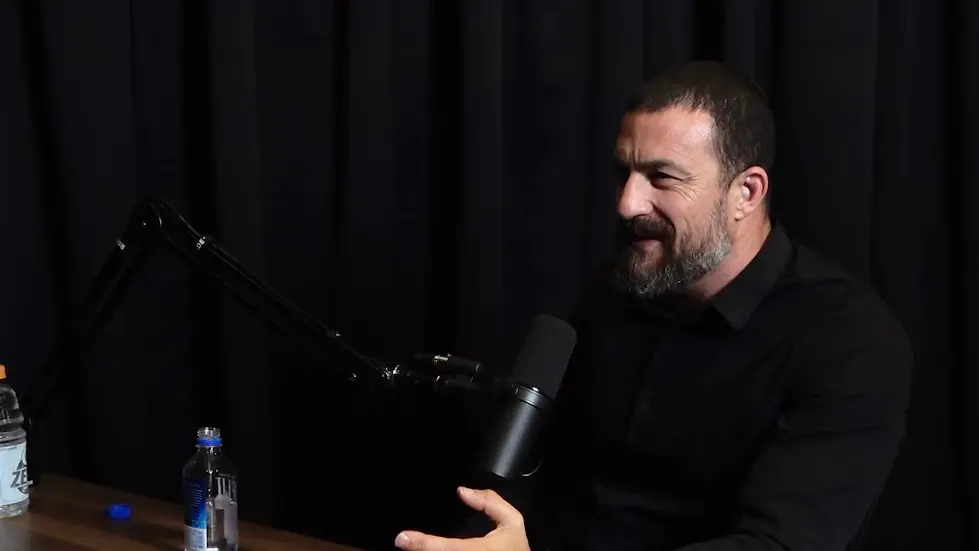
People's Perception of Others
- People tend to assume guilt and make judgments about others based on limited information.
- About a third of people have already decided that a person is despicable and not worth listening to.
- Another third of people are open to learning more about others.
- The remaining third are interested in learning about people and themselves, even if they feel revulsion towards them.
- Hearing conversations with and about people that you cannot relate to can be informative.
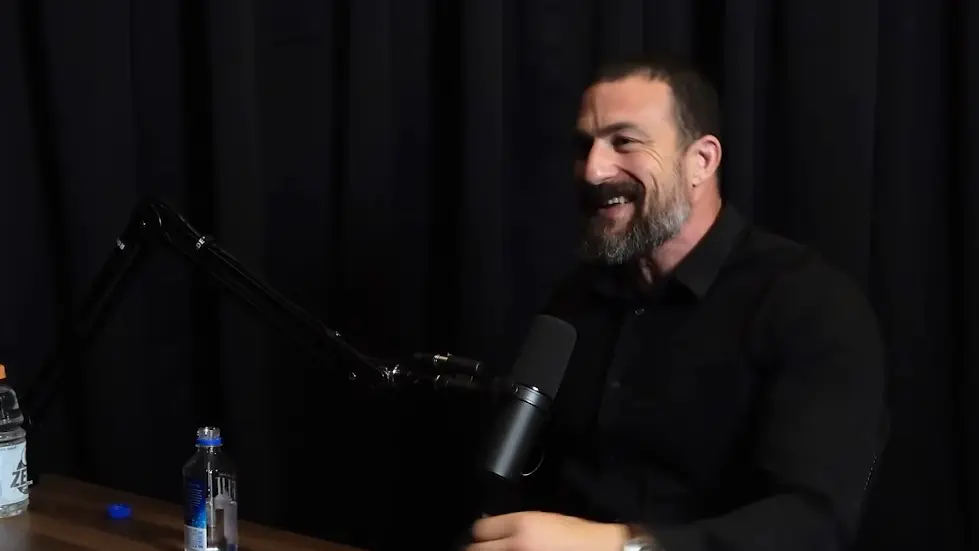
What Are You Willing to Die For?
- Journalists and filmmakers who operate in war zones have to ask themselves what they are willing to die for.
- People who take risks, such as going on a commercial space flight, also have to ask themselves this question.
- It's not a dramatic question, but it's an honest one.
- When the risk goes up, it's important to know what you're willing to die for.
- There are certain things that people are willing to die for, such as their beliefs or their loved ones.
Favorite Songs for the End of the World
- There are certain songs that people listen to when they feel like the end of the world is near.
- Listening to a favorite song can provide comfort and calmness in a stressful situation.
- Some people prefer to listen to songs that fit the mood of the situation, such as "Where Is My Mind" from Fight Club.
- Others prefer to listen to songs that remind them of the absurdity of life, such as "The Sentence" by Rancid.
- Having a favorite song for the end of the world is a personal choice.
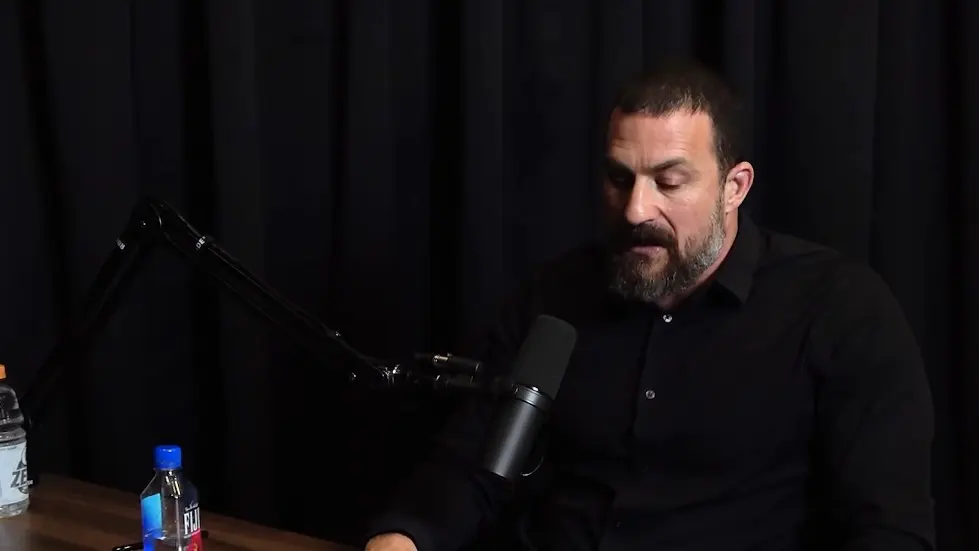
Boldness and Bravery in Academia
- Being bold and brave in the physical world is not a common trait among academics.
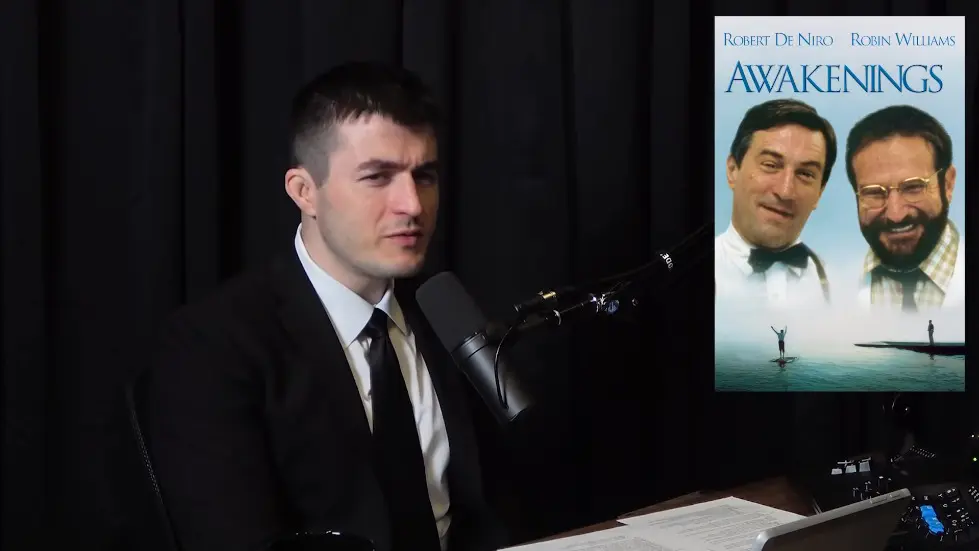
- Oliver Sacks, a neurologist and writer, was a true hero who took tremendous pushback from the neurology community for his books and articles.
- He was accused of horrible things until the movie Awakenings came out with De Niro and Robin Williams.
- Academics tend to focus on their research and intellectual pursuits rather than physical bravery.
- There are exceptions, such as Oliver Sacks, who was both a brilliant researcher and a brave writer.

Science Culture and Personality
- New York neuroscience mafia is a real thing.
- Science culture in New York is different from the West Coast.
- Personalities in science used to be celebrated, but now it's punished.
- People in science can have any personality as long as they're ethical and respectful.
- There's a place for everybody in science.

Shifting Toward Possibility
- Stanford is about the future, not just the past.
- Students at Stanford are mostly interested in what they're going to create.
- Shift toward possibility as opposed to things steeped in tradition.
- Pick the right culture for you.
- MIT is about tinkering and having fun building cool stuff.

Curiosity and Science
- Curiosity is what drives science.
- Celebrate curiosity for its own sake.
- There's no cure for curiosity.
- Expand the scope and scale of consciousness to understand the universe.
- MIT's architecture is impressive.

Science and the Future
- Stanford is mostly interested in what could happen next.
- MIT is about building the coolest thing the world has ever built.
- Science is about possibility and the future.
- Science is about tinkering and having fun building cool stuff.
- Expand the scope and scale of consciousness to understand the universe.

Celebrating Weirdness and Diversity
- Pressure to conform in academic settings
- Encouraging diversity in all forms, including weirdness of ideas and behavior
- Freedom of speech to be weird and authentic
- Examples of CEOs and leaders losing authenticity due to pressure
- Authenticity without oversharing

Job Loss Due to Online Behavior
- More than half of job loss due to online behavior is because people were trying to be funny
- Examples of people losing careers due to online behavior
- Insensitive tweets leading to job loss
- Not everyone can pull off being funny online
- Tim Dillon's tweet about getting married

Pressure on CEOs and Leaders to Conform
- CEOs feeling like caged birds who have forgotten how to sing
- Pressure to behave more like a CEO and less like a giggling school boy
- Authenticity being suffocated by pressure
- Examples of Steve Jobs and Elon Musk being able to maintain their authenticity despite pressure
- Freedom to be authentic and weird

Authenticity Without Oversharing
- Being authentic without revealing everything about your life
- Examples of aspects of life that are kept private
- People losing careers due to online behavior
- Chair of psychiatry at Columbia losing position due to insensitive tweet
- More than half of job loss due to online behavior is because people were trying to be funny

Freedom of Speech and Community Building
- Freedom of speech is important, including for controversial and hateful voices.
- However, hate can destroy a community full of love easier than a community full of love can overtake one with hate.
- Digital mechanisms should be created to discourage the collision of communities.
- All communities should have a platform and ability to speak to a large audience.
- Classroom rules should be established for comments and feedback.

Moderating Social Media
- Every page is their own to moderate.
- People should understand that there are certain rules of institution, but etiquette should be established within the context of the kind of conversation.
- Social media is a great place for conversation, but not necessarily for every kind of conversation.
- People that get blocked should not be thought poorly of.
- Thinking positively of them allows for never thinking of them again.

Relationships and Friendship
- Friendship is important for mental health and well-being.
- Friendship is a two-way street and requires effort from both parties.
- It is important to have friends who challenge you and push you to be better.
- It is important to have friends who are supportive and there for you in tough times.
- It is important to have a diverse group of friends with different perspectives and experiences.

Stress and Focus
- Stress can be beneficial in small doses, but chronic stress can be harmful to mental and physical health.
- Stress can be managed through techniques such as meditation, exercise, and deep breathing.
- Focus can be improved through techniques such as mindfulness and setting clear goals.
- It is important to take breaks and rest to avoid burnout.
- Getting enough sleep is crucial for mental and physical health.

Transmuting Evacuative Projection
- Evacuative projection is when people try to evacuate their negative feelings by projecting them onto someone else.
- Andrew Huberman transmutes negative projections into positivity.
- He doesn't accept projections and never adds to the negativity by thinking hateful thoughts towards others.
- Huberman believes that if people were better understood when experiencing or observing evacuative projection, the world would be a much healthier and happier place.
- It requires a stable internal rudder to transmute negative projections into positivity.

Positive Reinforcement in Feedback
- Andrew Huberman's favorite thing is when comments to other people's comments are positively reinforcing.
- He believes that it's not just about feedback, but also a venue for parsing information.
- Huberman is positively struck by the nature of most interactions, not just feedback, but also in the classroom and on social media.
- He finds joy in hearing students talking about the material, which means that the ideas are reverberating in their nervous systems and will eventually wick out to others.
- Huberman believes that positive reinforcement in feedback is essential for a healthy and happy environment.

Mike Jones and the Butcher Knife
- Andrew Huberman received a gift from Mike Jones, a craftsman who makes beautiful knives.
- Huberman learned about Jones through Joe Rogan, who recommended his work.
- Jones engraved a line from a poem recited by Lex Fridman on the knife.
- Huberman admires craftspeople and finds joy in their work.
- He used to keep the knife on the table, but it intimidated guests, so he now keeps it on his side.

Humor and Dexter-like Qualities
- The conversation turns to the butcher knife's design, which has some Dexter-like qualities.
- Huberman jokes that there's nothing about his place that softens the sense that his guests might not murder him.
- He believes that his place could use a woman's touch.
- The conversation ends with a bathroom break.

Reciting Lyrics as Mantra
- Andrew often recites lyrics as a mantra.
- He reads a poem called "If" by Rudyard Kipling.
- The poem is advice from father to son.
- The poem contains a series of "ifs" that describe how to live a good life.
- The poem is a reminder to keep your head when all about you are losing theirs.

Favorite Books and Poetry
- Andrew recommends the book "Projections" by Carl Daisarath.
- The book is a deep dive into the mind of a psychiatrist and researcher.
- The book uses poems and quotes effectively.
- Andrew is a big fan of poetry and tries to read a poem once every few days.
- He is a big fan of Wendell Berry.

Preparation for Solo Podcast
- Andrew listens to certain songs and recites their lyrics to prepare for his solo podcast.
- He is very lyrics-driven and doesn't understand the structure of music.
- He finds that lyrics touch his soul.

Understanding Music and Lyrics
- Andrew doesn't understand the structure of music.
- He can hear music and like it, but he doesn't really understand it.
- He finds that lyrics make a lot of sense to him.

You have read 50% of the summary.
To read the other half, please enter your Name and Email. It's FREE.
You can unsubscribe anytime. By entering your email you agree to our Terms & Conditions and Privacy Policy.
Watch the video on YouTube:
Andrew Huberman: Focus, Stress, Relationships, and Friendship | Lex Fridman Podcast #277 - YouTube
Related summaries of videos:
- Grimes: Music, AI, and the Future of Humanity | Lex Fridman Podcast #281
- David Buss: Sex, Dating, Relationships, and Sex Differences | Lex Fridman Podcast #282
- Joe Rogan: Comedy, Controversy, Aliens, UFOs, Putin, CIA, and Freedom | Lex Fridman Podcast #300
- Jordan Peterson: Life, Death, Power, Fame, and Meaning | Lex Fridman Podcast #313
- Magnus Carlsen: Greatest Chess Player of All Time | Lex Fridman Podcast #315
- Noam Chomsky: Putin, Ukraine, China, and Nuclear War | Lex Fridman Podcast #316
- Annaka Harris: Free Will, Consciousness, and the Nature of Reality | Lex Fridman Podcast #326
- Kanye 'Ye' West Interview | Lex Fridman Podcast #332
- Ben Shapiro: Politics, Kanye, Trump, Biden, Hitler, Extremism, and War | Lex Fridman Podcast #336
- MrBeast: Future of YouTube, Twitter, TikTok, and Instagram | Lex Fridman Podcast #351
- Home
- About us
- Contact
- Book Summaries 0-9
- Book Summaries A
- Book Summaries B
- Book Summaries C
- Book Summaries D
- Book Summaries E
- Book Summaries F
- Book Summaries G
- Book Summaries H
- Book Summaries I
- Book Summaries J
- Book Summaries K
- Book Summaries L
- Book Summaries M
- Book Summaries N
- Book Summaries O
- Book Summaries P
- Book Summaries Q
- Book Summaries R
- Book Summaries S
- Book Summaries T
- Book Summaries U
- Book Summaries V
- Book Summaries W
- Book Summaries X
- Book Summaries Y
- Book Summaries Z
- Jay Shetty Podcast - Summaries
- Tom Bilyeu Impact Theory - Summaries
- Lex Fridman - Summaries
- Diary of a CEO - Summaries
- Alex Hormozi - Summaries
