

Leaderself - Page 6 of 28
-
Dr. Andy Galpin and Dr. Andrew Huberman: How to Build Physical Endurance and Lose Fat (Huberman Lab Guest Series)
The video is about Dr. Andrew Huberman and Dr. Andy Galpin discussing the science and science-based tools for building physical endurance and losing fat. The episode is the third in the sixth episode series on fitness, exercise, and performance. The conversation focuses on the specific protocols required to achieve the four different kinds of endurance and how to maximize fat loss. Dr. Galpin explains that endurance can be triggered through various ways, including fatigue management and fueling. He also discusses the importance of proper mechanics, such as breathing and posture, in increasing endurance.
-
Dr. Andy Galpin and Dr. Andrew Huberman: Optimal Nutrition and Supplementation for Fitness (Huberman Lab Guest Series)
The video is about Dr. Andy Galpin discussing nutrition and supplementation for fitness and performance. He explains that supplements are not just augmenting what should already be there but are potent compounds that can transform our ability to perform in the short term and recover from exercise. He also discusses the importance of focusing on basic sleep, nutrition, hydration, and other factors for optimal performance. He emphasizes the need for precision supplementation and only giving individuals exactly what they need. He also mentions the 80/20 rule, which is a list of supplements that provide 80% of the benefit for the lowest cost.
-
U.S. Surgeon General Dr. Vivek Murthy and Dr. Andrew Huberman: Efforts and Challenges in Promoting Public Health
The video is about a discussion between Andrew Huberman and Dr. Vivek Murthy, the Surgeon General of the United States, about the challenges and efforts in promoting public health. The discussion covers a range of topics, including nutrition and the obesity crisis, food additives, mental health, and corporate interests in public health policy. Dr. Murthy also discusses the major public health events that have occurred over the past 5 years and the current and future landscape of public health. The goal of the discussion is to provide listeners with a better understanding of public health and the role of the Surgeon General in promoting it.
-
Dr. Paul Conti and Dr. Andrew Huberman: How to Improve Your Mental Health (Huberman Lab Guest Series)
The video is about Dr. Andrew Huberman and Dr. Paul Conti discussing how to improve mental health. The episode focuses on assessing one's internal narratives, creating a constructive self-awareness, and overcoming hindrances to improving mental health. Dr. Conti also provides information and protocols for cultivating generative drive, which is a hallmark of mental health. The episode includes diagrams that can be accessed for free and are useful for understanding the material. The podcast is separate from Dr. Huberman's teaching and research roles at Stanford and is part of his effort to bring zero-cost consumer information about science and science-based tools to the general public. The episode is sponsored by BetterHelp and Waking Up, a meditation app.
-
Andrew Huberman: The Science of MDMA and Its Therapeutic Uses - Benefits and Risks (Huberman Lab Podcast)
The video by Dr. Andrew Huberman is about the science of MDMA and its therapeutic uses. MDMA, also known as ecstasy or Mali MDMA, is a compound that has properties similar to methamphetamine but also distinct from it. MDMA is a stimulant that produces big increases in both dopamine and serotonin, making it an empathogen that can increase one's sense of social connectedness and empathy. MDMA is currently being tested in clinical trials for its use as an empathogen for the treatment of PTSD. However, it is still a schedule one drug that is highly illegal to possess or sell in the United States. The video discusses the history of MDMA, the difference between recreational and therapeutic use, and the toxicity of MDMA. It also covers the spacing between sessions, dosages, and things that can be done to offset the potential toxicity of MDMA.
-
Andrew Huberman: Adderall, Stimulants and Modafinil for ADHD: Short- and Long-Term Effects (Huberman Lab Podcast)
The video is about the effects of stimulants, such as Adderall, Ritalin, and Vyvanse, on attention deficit hyperactivity disorder (ADHD). The speaker, Andrew Huberman, discusses the science behind these drugs and how they work to improve the symptoms of ADHD. He also addresses common questions about these compounds, such as their addictive potential and their impact on sleep, health, and reproductive health. The speaker emphasizes that this podcast is separate from his teaching and research roles at Stanford and is part of his effort to provide zero-cost consumer information about science and science-based tools to the general public.
-
Dr. Paul Conti and Dr. Andrew Huberman: How to Understand and Assess Your Mental Health (Huberman Lab Guest Series)
The video is about Dr. Andrew Huberman and Dr. Paul Conti discussing the structure of our own minds and how to think about our own minds as a way to enhance our mental health. Dr. Conti explains how our subconscious mind and our conscious mind interact to drive our emotions, decision making, and behavior. The video also discusses common challenges such as overthinking and the role of defense mechanisms and other aspects of the conscious and unconscious mind interactions that can lead us toward or away from the healthiest versions of ourselves. Dr. Conti provides protocols for addressing levels of anxiety, confidence, and self-talk, and restructuring self-talk. He also discusses the relationship between our conscious mind and our subconscious mind in ways that can be applied toward enhancing our mental health. Dr. Conti has provided several PDFs that illustrate his framework for understanding the structure of the mind and the subconscious mind, which are available for free by going to the links in the show.
-

Andrew Huberman: Developing a Rational Approach to Supplementation for Health & Performance | Huberman Lab Podcast
The video is about developing a rational approach to supplementation for health and performance. The speaker, Andrew Huberman, discusses the importance of considering various factors when taking supplements, such as dosage, sourcing, and safety. He also covers the different types of supplements, including foundational supplements and outcome supplements, and their specific benefits. Huberman emphasizes the importance of behavioral tools and proper nutrition as the foundation of mental health, physical health, and performance.
-
Dr. Peter Attia and Dr. Andrew Huberman: Improve Vitality, Emotional and Physical Health and Lifespan (Huberman Lab Podcast)
The video is an interview between Dr. Andrew Huberman and Dr. Peter Attia, where they discuss the importance of understanding the role of mitochondria in health and longevity, and how to improve vitality, emotional and physical health through lifestyle changes and supplements.
-
Dr. Elissa Epel and Dr. Andrew Huberman: Control Stress for Healthy Eating, Metabolism and Aging (Huberman Lab Podcast)
The video is about Dr. Andrew Huberman and Dr. Elissa Epel, a professor of Psychiatry and Behavioral Sciences at the University of California, San Francisco, and her research on stress and its impact on our biology and psychology. Dr. Epel's laboratory focuses on stress and the many impacts it has on our brain and body, both negative and positive. The video discusses how stress changes our telomeres, which are a component of our genetic machinery that impacts how quickly our cells and therefore we age. It also explores how stress impacts our behavioral choices, such as which foods we elect to eat and how we experience those foods. The video also talks about several important stress interventions that Dr. Epel's laboratory has explored, including meditation, breath work, and specific dietary interventions such as omega-3 fatty acid intake. The video emphasizes that stress and stress interventions vary in their effectiveness depending on whether or not the subjects in her experiments are male versus female and their social status.
-

Dr. Susanna Søberg and Dr. Andrew Huberman: How to Use Cold & Heat Exposure to Improve Your Health | Huberman Lab Podcast
The video is about Dr. Andrew Huberman and Dr. Susanna Søberg discussing the use of cold and heat exposure to improve human health. Dr. Søberg is a researcher who has focused on how deliberate cold and heat exposure can enhance human metabolism and establish actionable protocols that can be used outside of the laboratory to improve metabolism and human health. The video covers the effects of cold and heat on various aspects of the body's physiology, including hormone health, metabolism, and changes in neurotransmitters such as dopamine and epinephrine. Dr. Søberg also answers common questions about deliberate cold and deliberate heat exposure, including the difference between cold showers versus cold immersion up to the neck versus total body cold immersion, and whether going back and forth between heat and cold changes fundamentally the way that heat and cold impact the metabolism, hormones, and neurotransmitter production. The video is sponsored by Plunge and Maui Nui Venison.
-
Dr. Paul Conti and Dr. Andrew Huberman: Tools and Protocols for Mental Health (Huberman Lab Guest Series)
The video is about Dr. Andrew Huberman and Dr. Paul Conti discussing tools and protocols for mental health. The episode is the fourth in a four-part series on the topic of mental health. Dr. Conti discusses the importance of self-care and how it relates to mental health. He explains that true self-care is about constructing a life narrative in which we frame our past, present, and future in a way that allows us to see what's gone wrong, what's gone right, and the best path to navigate forward. Dr. Conti also discusses some of the things that can inhibit our ability to take excellent self-care, including traumatic experiences, and explains how to frame those experiences so that we can best move forward. He shares various practices that include therapy and practices that we can carry out on our own such as specific forms of meditation, journaling, and other ways of examining the self and fostering better self-care toward our mental health.
-
Andrew Huberman: Journal Club with Dr. Peter Attia - Metformin for Longevity and The Power of Belief Effects
The video is about a journal club discussion between Andrew Huberman and Peter Attia, where they discuss two papers on Metformin and the placebo effect. The first paper is about the potential role of Metformin in longevity, and the second paper is about the placebo effect and how it can follow a dose response. The discussion covers the existing peer-reviewed research on these topics and how scientists and clinicians approach these issues. The podcast is separate from Huberman's teaching and research roles at Stanford and is part of his effort to bring zero-cost consumer information about science and science-related tools to the general public.
-

Crazy Stories From A Professional Card Counter - Steven Bridges | Modern Wisdom 687
The video is about Chris Williamson, the host of the Modern Wisdom Podcast, discussing his experience as a professional card counter. He explains that card counting falls under the category of advantage play, which involves playing a game within the rules with the same information as everyone else in the casino. However, the way that the information is used is different, giving the player an advantage over the house. Chris also talks about the importance of bankroll management and risk management in card counting, and how he started his apprenticeship in the field.
-
Mark Zuckerberg: First Interview in the Metaverse | Lex Fridman Podcast #398
The video is about Mark Zuckerberg's first interview in the metaverse, where he appears as a photorealistic Kodak avatar in 3D with spatial audio. The technology is incredible and Zuckerberg believes it's the future of how human beings connect to each other in a deeply meaningful way on the internet. The avatars can capture many of the nuances of facial expressions that humans use to communicate emotion, and Zuckerberg is working on upgrading his emotions expressing capabilities. The video is from the Lex Fridman YouTube channel.
-
8 Strategies For Avoiding A Life You Hate - Dr Gad Saad | Modern Wisdom 686
The video is about Dr. Gad Saad discussing strategies for avoiding a life that is not fulfilling or satisfying. He argues that humans have been cursed with the ability to feel chronic and prolonged existential angst and dissatisfaction due to adaptive mechanisms that misfire and become maladaptive. He uses examples such as compulsive buying and pathological gambling to illustrate this point. Dr. Saad also discusses the field of evolutionary medicine and how it incorporates evolutionary principles into the practice of medicine, including in the sub-specialty of psychiatry and clinical psychology. He mentions Randy Nessie, a friend of his who has been on his show several times and is an expert in evolutionary psychiatry. Dr. Saad concludes that happiness is adaptive, but there is no general mechanism for seeking it, and it is up to individuals to find their own path to happiness.
-

Peterson Academy, Andrew Tate, New Book, Childhood Stories, Life | Jordan Peterson
In this video, Mikhaila Peterson talks about her experiences with Andrew Tate and the rumors surrounding their relationship. She also discusses the importance of belief and how it shapes our identity and actions. She also talks about the importance of being a monster rather than a rabbit and how embracing our worst enemy can lead to personal growth. She also talks about the importance of being a good listener and how it can lead to better relationships.
-
Stop Making Excuses & Transform Your Life - Rich Roll (4K) | Modern Wisdom 685
The video is about Rich Roll, who shares his story of how he transformed his life after hitting rock bottom at the age of 31 due to a decade-long problem with drugs and alcohol. He talks about how he began to take stock of his life and understand why he ended up in that situation, and how he reinvented himself to create a new life that was more in alignment with his true self. Roll emphasizes the importance of self-reflection and the idea that everything is changing all the time, and that it's up to individuals to direct that change rather than reacting to the world around them. He also talks about the tools and opportunities available to people today to craft their own career paths and find ways to support themselves through pursuits that they are curious about or that light them up.
-
Greg Lukianoff: Cancel Culture, Deplatforming, Censorship & Free Speech | Lex Fridman Podcast #397
The video is about Greg Lukianoff, a free speech advocate and First Amendment attorney, discussing the concept of cancel culture and its impact on free speech. He argues that cancel culture is a term that has been abused and misused, but it refers to the uptick of campaigns to get people fired, expelled, or de-platformed for speech that would normally be protected by the First Amendment. Lukianoff discusses the organization of Fire, which was founded in 1999 by Harvey Silverglade and is dedicated to protecting individual rights and expression. He also talks about his own background and how he became involved with Fire.
-
Cancelled For Appearing On This Podcast - Vincent Harinam | Modern Wisdom 684
The video is about Chris Williamson's experience of being "soft cancelled" at a prestigious university in the UK for appearing on a podcast with Vincent Harinam and Michaela Peterson. Chris facilitated the cancellation and has since left the academy as a member of staff and a lecturer. The video discusses the details of the situation, including the application and interview process for the job, the reasons for the cancellation, and the reactions of various members of staff and the hiring committee. Chris also reflects on the experience and the impact it has had on him.
-
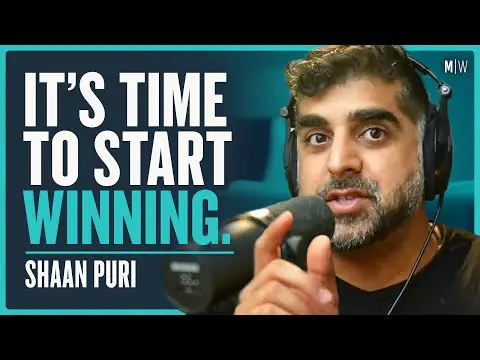
7 Semi-Controversial Rules For Success - Shaan Puri | Modern Wisdom 683
The video is about Chris Williamson discussing seven semi-controversial rules for success. The first rule he discusses is that hard work is overrated. He argues that what you do is more important than how hard you work on it. He uses the example of working in a restaurant, where people work hard but are not necessarily successful. He believes that project selection is the most critical decision and that it is more important to choose the right project than to work hard. He also discusses the importance of taking risks and being willing to fail.
-
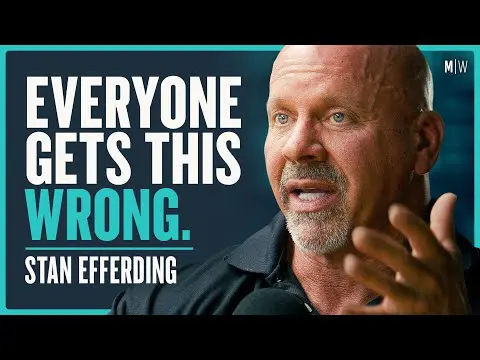
Simple Practices To Lose Fat & Build Muscle - Stan Efferding (4K) | Modern Wisdom 682
The video is about the causes of the obesity epidemic and how it is due to consuming more calories than we used to, primarily from hyperpalatable and ultra-processed foods. The video discusses how these foods interfere with our ability to become satiated and how it is difficult to shut off the consumption of these foods. The video also touches on the importance of physical activity and how certain people have different hunger signaling and metabolic rates. The video emphasizes that the solution to the obesity epidemic is not just about moving more and eating less, but also about understanding the complex factors that contribute to weight gain.
-
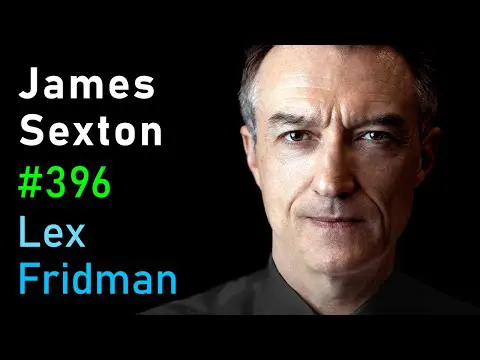
James Sexton: Divorce Lawyer on Marriage, Relationships, Sex, Lies & Love | Lex Fridman Podcast #396
The video is about James Sexton, a divorce lawyer and author, discussing the reasons why marriages fail. He argues that disconnection is the most common reason for marriages to fail, and that it is a complex issue that involves multiple factors such as communication, trust, and mutual respect. Sexton also discusses the role of intimacy in a courtroom and how he presents his clients' stories to a judge in a way that makes them the hero and the other side the villain. He emphasizes the importance of looking at both sides of a relationship and understanding the actions that led to the breakdown.
-
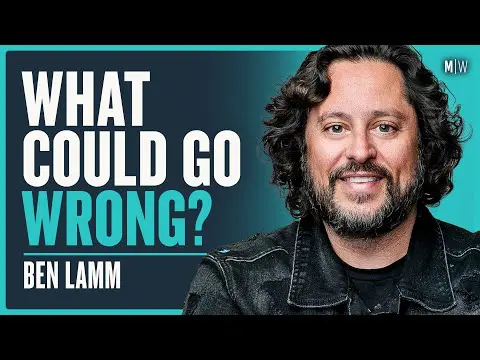
The Man Bringing Extinct Creatures Back To Life - Ben Lamm | Modern Wisdom 681
The video is about a company called Revive & Restore, which is working to bring back extinct species to increase biodiversity and combat climate change. The company is using technology to clone and engineer genes from extinct animals into living cells, and then implanting the embryos into the closest living relative. The video discusses the concept of de-extinction, which is the idea of bringing back extinct species to increase biodiversity and preserve all life on Earth. The video also talks about the challenges of bringing back extinct animals, such as the need for precise genomics and the use of advanced technology.
-
Why Fathers Matter - Dr Anna Machin | Modern Wisdom 680
The video is about the importance of fathers and how the current narrative about fathers is based on myths and stories that are not accurate. The speaker, Dr. Anna Machin, argues that fathers are biologically primed to parent as much as women are, and that they play a crucial role in their children's rearing. The speaker also discusses the demonization of fatherhood and how it may be a response to single-parent households. The speaker also talks about how fathers saved the human race from extinction by sticking around and helping with childbirth.
-

The Most Attractive Traits In A Guy - Sara Saffari (4K) | Modern Wisdom 679
The video is about the concept of "muscle mommy" and the idea that women are increasingly embracing a more muscular and athletic body type. The speaker, Sarah Safari, discusses her own experiences with the movement and how it has evolved over time. She also talks about the importance of confidence and self-acceptance in attractiveness. The video is from Chris Williamson's YouTube channel, where he hosts the Modern Wisdom Podcast.
-
Walter Isaacson: Elon Musk, Steve Jobs, Einstein, Da Vinci & Ben Franklin | Lex Fridman Podcast #395
The video is about Walter Isaacson's conversation with Lex Fridman about his new book on Elon Musk. The conversation covers topics such as the role of difficult childhoods in the lives of great men and women, Elon Musk's experiences with bullying and his father's criticism, and the Veld School, a paramilitary camp for young South African boys. The video is from Lex Fridman's YouTube channel and is titled "Walter Isaacson: Elon Musk, Steve Jobs, Einstein, Da Vinci & Ben Franklin | Lex Fridman Podcast #395 - YouTube".
-
Will We Ever Become An Interstellar Civilisation? - Avi Loeb | Modern Wisdom 678
The video is about the possibility of our universe being created by aliens in a lab and the limitations of Einstein's theory of general relativity. The speaker, Avi Loeb, discusses the idea that advanced technological civilizations may have unified quantum mechanics and gravity, and that our universe could have been the result of a lab experiment. He also talks about the fine-tuning argument and how it relates to the idea of a divine entity creating the universe. The speaker suggests that if evidence for such a civilization were found, it would be possible to test their capabilities and see what they are up to.
-

What No One Wants to Admit About Porn - Zack Telander | Modern Wisdom 677
The video is about Chris Williamson's experiences and achievements in the content game, including his growth on YouTube and his interactions with other content creators. He talks about his recent experiences, such as meeting Ben Smith, the winner of the CrossFit Games, and having an episode on the Joe Rogan Experience. He also discusses the reaction to his content and the impact it has had on his career.
-

Eric Weinstein - Why Can No One Agree On The Truth Anymore? (4K) | Modern Wisdom 676
The video is about Eric Weinstein discussing the concept of truth and how it is becoming increasingly difficult for people to agree on it. He explains how traveling with children has changed his perspective on life and how he has come to realize the importance of family and continuity. He also talks about the impact of technology and the market on family structures and how it has led to a decline in family values.