
Opposing Views: Islam - The End of Europe? | Mohammed Hijab & Ayaan Hirsi Ali 140
Last updated: Jul 2, 2023
The video is about the opposing views on Islam and its impact on Europe, specifically on second wave feminism. The speaker, Mikhaila Peterson, hosts a conversation with two guests, Muhammad Hijab and Ayaan Hirsi Ali, discussing the Islamic discourse and its comparison with Western discourses. The video explores the idea that Islam is innately misogynistic and how it does not correspond with Western feminist ideals. The guests share their personal experiences and perspectives on the topic, and the conversation is intense and thought-provoking.
This video by Mikhaila Peterson was published on Mar 2, 2022.
Video length: 01:40:24.
- Mikhaila Peterson believes that Islam is innately misogynistic and does not correspond with Western feminist ideals.
- She thinks that Islam gives her a framework to worship one god and find meaning and purpose in life.
- Peterson believes that Christianity worships one god, but the doctrine of the trinity is unintelligible and inconceivable.
- She thinks that Islam is a choice that everyone has to make, and she is a Muslim because it speaks to her instinctively.
- Peterson believes that Islam is misogynistic in its approach to women, and she gives examples such as the law of sharia, which declares that a woman has to have a male guardian at all times and that a woman's testimony in court is worth half that of a man's.
- Peterson thinks that Islam is a religion that is not compatible with Western values and that it is a threat to the end of Europe.
- She believes that Islam is a religion that is based on a different cultural and historical context, and that it is not possible to impose Western values on it.
- Peterson thinks that Islam is a religion that is based on a different cultural and historical context, and that it is not possible to impose Western values on it.
- She believes that Islam is a religion that is based on a different cultural and historical context, and that it is not possible to impose Western values on it.
Opposing Views: Islam - The End of Europe? | Mohammed Hijab & Ayaan Hirsi Ali 140 - YouTube

Mikhaila Peterson's Perspective on Islam
- Mikhaila Peterson believes that Islam is innately misogynistic and does not correspond with Western feminist ideals.
- She thinks that Islam gives her a framework to worship one god and find meaning and purpose in life.
- Peterson believes that Christianity worships one god, but the doctrine of the trinity is unintelligible and inconceivable.
- She thinks that Islam is a choice that everyone has to make, and she is a Muslim because it speaks to her instinctively.
- Peterson believes that Islam is misogynistic in its approach to women, and she gives examples such as the law of sharia, which declares that a woman has to have a male guardian at all times and that a woman's testimony in court is worth half that of a man's.

Section 1: Introduction
- The video is about the opposing views on Islam and its impact on Europe, specifically on second wave feminism.
- The speaker, Mikhaila Peterson, hosts a conversation with two guests, Muhammad Hijab and Ayaan Hirsi Ali, discussing the Islamic discourse and its comparison with Western discourses.
- The guests share their personal experiences and perspectives on the topic, and the conversation is intense and thought-provoking.

Section 2: Misogyny in Islam
- The speaker, Mikhaila Peterson, believes that Islam is innately misogynistic and does not correspond with Western feminist ideals.
- The basic tenets of law in Sharia law, when implemented, result in a huge difference between the way men and women are treated.
- Women are expected to cover their bodies and there is some discussion on how much of that is allowed in some cases.
- In extreme cases, women are confined to the house and need their male guardian's endorsements to marry someone else.
- Divorce is difficult for women in Islam, and almost impossible to divorce their husband.

Opposing Views: Islam - The End of Europe? | Mohammed Hijab & Ayaan Hirsi Ali 140 - YouTube
Section 3: Definition of Misogyny
- The speaker, Mikhaila Peterson, defines misogyny as the hatred of women.
- From a definitional perspective, it is impossible to postulate that Islam is misogynistic.
- The Quran explicitly mentions that we cannot have hatred towards any believer, including women.
- The label "misogyny" is used haphazardly and arbitrarily between people in the West to mean different things.
- The definition of misogyny can be ideologically inspired, and it depends on who is making the claim and what the robust definition is.

Section 4: Conclusion
- The speaker, Mikhaila Peterson, believes that there is an equality of value between men and women in Islam, but not identicality and roles.
- The prophet Muhammad himself said that men are equal to women in front of the law, but there are exceptions and the equality of value does not mean identicality and roles.
- The guests share their personal experiences and perspectives on the topic, and the conversation is intense and thought-provoking.
- The video explores the idea that Islam is innately misogynistic and how it does not correspond with Western feminist ideals.

Section 1: Islamic Discourse and Second Wave Feminism
- The video discusses the opposing views on Islam and its impact on Europe, specifically on second wave feminism.
- The speaker, Mikhaila Peterson, hosts a conversation with two guests, Muhammad Hijab and Ayaan Hirsi Ali, discussing the Islamic discourse and its comparison with Western discourses.
- The guests share their personal experiences and perspectives on the topic, and the conversation is intense and thought-provoking.
- The video explores the idea that Islam is innately misogynistic and how it does not correspond with Western feminist ideals.
- The guests argue that equality of value does not mean identicality and roles, and that women have a collective female temperament that needs to be tailored for in legislation and social and political life.
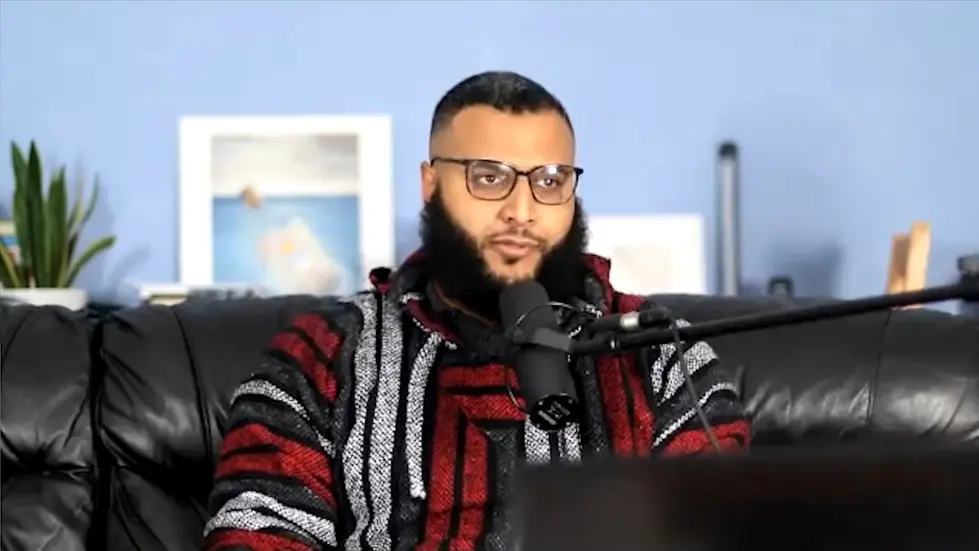
Section 2: The Truthfulness and Objectiveness of Second Wave Feministic Discourses
- The video discusses the truthfulness and objectiveness of second wave feministic discourses.
- Iron Hersey, a feminist, is opposed to feminism when she says that feminism has now almost certainly been cracked open as a false ideology.
- Megan Iron McGann, herself, was embroiled in a public inquiry where she was in a preligionist relationship and practicing polygyny.
- The challenge is to establish the truthfulness and objectiveness of second wave feministic discourses and juxtapose it with the Islamic discourse, especially when discussing second wave or third wave feministic discourses.
- The video argues that the Islamic system is superior and believes that nuclear households are being destroyed in the west.

Section 3: Differences with Western Discourses
- The video discusses the differences with Western discourses, especially second wave or third wave feministic discourses.
- The Islamic discourse does not show that Islam is misogynistic, to the contrary.
- Megan Iron McGann is blissfully ignorant of the Islamic tradition and makes unsubstantiated claims about Muslim women and their rights in Islam.
- To know about women's rights in Islam, one has to go to the source.
- Ayan Hirsi Ali is an ultra-crepidarian academic charlatan who has been let in by the most unusual types of affirmative action program to the neoconservative circles.

Section 4: Conclusion
- The video concludes that the Islamic system is superior and believes that nuclear households are being destroyed in the west.
- The video argues that the Islamic discourse does not show that Islam is misogynistic, to the contrary.
- The video emphasizes the importance of going to the source to know about women's rights in Islam.
- The video argues that Ayan Hirsi Ali is an ultra-crepidarian academic charlatan who has been let in by the most unusual types of affirmative action program to the neoconservative circles.
- The video emphasizes the importance of attacking the idea rather than the person in order to have any guests on the show again.

Section 1: Misogyny in Islam
- The speaker discusses the potential misogyny in Islam and its impact on women, both believers and non-believers.
- There is no differential in the treatment of women as compared to men's relationships with non-believing women.
- Islam prohibits certain things like having intercourse before marriage or being alone in a place with a woman.
- The speaker mentions that there is evidence for a causal relationship between the immigration of Muslim men to European countries and an increase in rape.
- The speaker also mentions that the data used to support this claim is missing important information, such as the religious background of the perpetrators.

Section 2: The Immigration of Muslim Men to Europe
- The speaker discusses the thesis put forward by McGann in her newest book, Pray, that the immigration of Muslim men to European countries causes an increase in rape.
- The speaker mentions that the data used to support this claim is missing important information, such as the religious background of the perpetrators.
- The speaker also mentions that the data used to support this claim is not conclusive, as it does not even show that these men are Muslim men.
- The speaker tries the same methodology with Latin America and America, and finds a correlative increase in rape among people coming from these countries.
- The speaker mentions that the data used to support this claim is not conclusive, as it does not even show that the causation is those people.

Section 3: The Data Used to Support the Thesis
- The speaker mentions that the data used to support the thesis is missing important information, such as the religious background of the perpetrators.
- The speaker also mentions that the data used to support the thesis is not conclusive, as it does not even show that these men are Muslim men.
- The speaker mentions that the data used to support the thesis is not conclusive, as it does not even show that the causation is those people.
- The speaker mentions that the data used to support the thesis is not conclusive, as it does not even show that the causation is those people.
- The speaker mentions that the data used to support the thesis is not conclusive, as it does not even show that the causation is those people.

Section 4: The Impact of Islam on Women
- The speaker discusses the potential misogyny in Islam and its impact on women, both believers and non-believers.
- There is no differential in the treatment of women as compared to men's relationships with non-believing women.
- Islam prohibits certain things like having intercourse before marriage or being alone in a place with a woman.
- The speaker mentions that there is evidence for a causal relationship between the immigration of Muslim men to European countries and an increase in rape.
- The speaker also mentions that the data used to support this claim is missing important information, such as the religious background of the perpetrators.

Section 1: The Impact of Islam on Europe
- The video discusses the impact of Islam on Europe, specifically on second wave feminism.
- The speaker, Mikhaila Peterson, hosts a conversation with two guests, Muhammad Hijab and Ayaan Hirsi Ali, discussing the Islamic discourse and its comparison with Western discourses.
- The guests share their personal experiences and perspectives on the topic, and the conversation is intense and thought-provoking.
- The video explores the idea that Islam is innately misogynistic and how it does not correspond with Western feminist ideals.

Section 2: The Islamic Discourse
- The video discusses the Islamic discourse and its comparison with Western discourses.
- The guests share their personal experiences and perspectives on the topic, and the conversation is intense and thought-provoking.
- The video explores the idea that Islam is innately misogynistic and how it does not correspond with Western feminist ideals.

Section 3: The Impact of Islam on Women
- The video discusses the impact of Islam on women, specifically on second wave feminism.
- The speaker, Mikhaila Peterson, hosts a conversation with two guests, Muhammad Hijab and Ayaan Hirsi Ali, discussing the Islamic discourse and its comparison with Western discourses.
- The guests share their personal experiences and perspectives on the topic, and the conversation is intense and thought-provoking.
- The video explores the idea that Islam is innately misogynistic and how it does not correspond with Western feminist ideals.

Section 4: The Impact of Islam on Europe
- The video discusses the impact of Islam on Europe, specifically on second wave feminism.
- The speaker, Mikhaila Peterson, hosts a conversation with two guests, Muhammad Hijab and Ayaan Hirsi Ali, discussing the Islamic discourse and its comparison with Western discourses.
- The guests share their personal experiences and perspectives on the topic, and the conversation is intense and thought-provoking.
- The video explores the idea that Islam is innately misogynistic and how it does not correspond with Western feminist ideals.

Section 1: Guardianship in Islam
- The speaker, Mikhaila Peterson, hosts a conversation with two guests, Muhammad Hijab and Ayaan Hirsi Ali, discussing the Islamic discourse and its comparison with Western discourses.
- The guests share their personal experiences and perspectives on the topic, and the conversation is intense and thought-provoking.
- The video explores the idea that Islam is innately misogynistic and how it does not correspond with Western feminist ideals.
- The speaker, Mikhaila Peterson, is Jordan Peterson's daughter, podcaster, lifestyle and diet researcher, founder, and mother.

Section 2: Guardianship in Marriage
- In some areas, women are required to cover their bodies or have their faces open, and the difference between these two is discussed.
- The majority view in the Muslim world is that the hands and face should be allowed to be seen, but the rest of the body should be covered.
- The minority view is that everything should be covered, and this view is held by a small percentage of women.
- The women who follow this minority view do so from their own volition, and they are not forced to do so.

Section 3: Face Covering in Islam
- The idea of face covering in Islam is discussed, and it is noted that the majority view is that the hands and face should be allowed to be seen, but the rest of the body should be covered.
- The minority view is that everything should be covered, and this view is held by a small percentage of women.
- The women who follow this minority view do so from their own volition, and they are not forced to do so.
- The speaker, Mikhaila Peterson, notes that she has seen people be pressured to put on a hijab, but this is not very common.

Section 4: Sexual Differences in Islam
- The speaker, Mikhaila Peterson, notes that men's sex drive is more frequent, pressing, and severe than women's, and this is accepted in the psychological community.
- The Quran mentions that covering is mandated upon Muslim women to avoid sexual violence and distraction from the purpose of life, which is to worship one god.
- The speaker, Mikhaila Peterson, notes that covering the face is not required in Islam, and this is the vast majority of women who accept and practice this.
- The speaker, Mikhaila Peterson, notes that in the Islamic tradition, something called "a man's protective jealousy over a woman" exists, which means that men should feel uncomfortable if other men are looking at a woman in a sexual manner.

Section 1: The Role of Islam in Maintaining Family Stability
- Islam provides a way to maintain family stability by promoting certain roles and behaviors for men and women.
- Islam extends the Western understanding of gender roles to include girls' schools, boys' schools, girls' and boys' locker rooms, etc.
- The Western understanding of gender roles is arbitrary and not far away from the Islamic understanding.
- Islam is extended to other areas such as girls' schools, boys' schools, girls' and boys' locker rooms, etc.
- Islam is believed to be the foundation for family stability and maintaining honor.

Section 2: The Impact of Islam on Western Discourse
- Islam is innately misogynistic and does not correspond with Western feminist ideals.
- Islam has a different understanding of gender roles compared to Western discourse.
- Islam is extended to other areas such as girls' schools, boys' schools, girls' and boys' locker rooms, etc.
- Islam is believed to be the foundation for family stability and maintaining honor.
- Islam is not far away from the Western understanding but it is extended.

Section 3: The Impact of Islam on Second Wave Feminism
- Islam is innately misogynistic and does not correspond with Western feminist ideals.
- Islam has a different understanding of gender roles compared to Western discourse.
- Islam is extended to other areas such as girls' schools, boys' schools, girls' and boys' locker rooms, etc.
- Islam is believed to be the foundation for family stability and maintaining honor.
- Islam is not far away from the Western understanding but it is extended.

Section 4: The Impact of Islam on European Society
- Islam is innately misogynistic and does not correspond with Western feminist ideals.
- Islam has a different understanding of gender roles compared to Western discourse.
- Islam is extended to other areas such as girls' schools, boys' schools, girls' and boys' locker rooms, etc.
- Islam is believed to be the foundation for family stability and maintaining honor.
- Islam is not far away from the Western understanding but it is extended.

Section 1: The Impact of Islam on Europe
- The video discusses the opposing views on Islam and its impact on Europe, specifically on second wave feminism.
- The speaker, Mikhaila Peterson, hosts a conversation with two guests, Muhammad Hijab and Ayaan Hirsi Ali, discussing the Islamic discourse and its comparison with Western discourses.
- The guests share their personal experiences and perspectives on the topic, and the conversation is intense and thought-provoking.
- The video explores the idea that Islam is innately misogynistic and how it does not correspond with Western feminist ideals.
- The guests discuss the treatment of women in Islam and how it differs from Western values.

Section 2: The Clash of Values
- The video discusses the clash of values between Islam and Western civilization when it comes to the treatment of women.
- The guests discuss the differences in societies and how they explain the differences in treatment of women.
- The guests discuss the clash of values when it comes to the treatment of women in Islam versus Western values.
- The video explores the idea that the treatment of women in Islam is a clash of values.
- The guests discuss the differences in treatment of women in different societies and how they explain those differences.

Section 3: The Spread of Islam
- The video discusses the spread of Islam, particularly over Europe.
- The guests discuss the spread of Islam through immigration and proselytizing.
- The guests discuss the efforts of radical Islamists to use violence to take power in Muslim societies and spread Islam through violence.
- The guests discuss the disillusionment of young Muslims with the actions of radical Islamists and their questioning of whether those actions are truly Islamic.
- The guests discuss the impact of modernity and exposure to the modern world on young Muslims and their atheism or agnosticism.

Section 4: The Role of Islam in Europe
- The video discusses the role of Islam in Europe and how it has always been part of Europe.
- The guests discuss the impact of the Renaissance on the relationship between Islam and Europe.
- The guests discuss the differences in treatment of women in different societies and how they explain those differences.
- The guests discuss the clash of values when it comes to the treatment of women in Islam versus Western values.
- The guests discuss the impact of modernity and exposure to the modern world on young Muslims and their atheism or agnosticism.

The Impact of Islam on Europe
- The speaker, Mikhaila Peterson, hosts a conversation with two guests, Muhammad Hijab and Ayaan Hirsi Ali, discussing the Islamic discourse and its comparison with Western discourses.
- The guests share their personal experiences and perspectives on the topic, and the conversation is intense and thought-provoking.
- The video explores the idea that Islam is innately misogynistic and does not correspond with Western feminist ideals.
- The guests discuss the influence of Islam on Europe, including its impact on the Renaissance and the development of Western science.
- The speaker argues that the influence of Islam on Europe has been positive, despite some negative aspects such as the subversion narrative.

The Subversion Narrative
- The subversion narrative is a narrative that suggests that Muslims are taking over Europe.
- The speaker argues that this narrative is a nonsense narrative put forward by fascistic people.
- The speaker calls out individuals like Iron McGann, who has been accused of promoting this narrative.
- The speaker argues that the subversion narrative is embarrassing for everyone and needs to be called out.

The Growth of Islam
- The speaker discusses the growth of Islam as a religion.
- The speaker argues that Islam is not the fastest growing religion in terms of religious campaigning or conversion efforts.
- The speaker argues that Islam is the fastest growing religion in terms of birth rates.
- The speaker suggests that research on the growth of Islam needs to be updated.

The Influence of Islam on Western Science
- The speaker discusses the influence of Islam on Western science.
- The speaker argues that the theory on optics developed by ibn Haitham was carried over to the West and helped develop things like cameras.
- The speaker suggests that the influence of Islam on Western science has been positive.

Section 1: Growth of Islam
- Islam is the world's fastest growing religion, according to Pew Research.
- The reason for this is largely due to birth rates, as Muslim women have more children than non-Muslim women.
- Islam encourages polygeny, although it is not widely practiced.
- There is a growing level of Muslim converts in the West, with a huge number of people becoming Muslim from all parts of the world.
- People are leaving Christianity in droves in the United Kingdom, where the speaker is from.
You have read 50% of the summary.
To read the other half, please enter your Name and Email. It's FREE.
You can unsubscribe anytime. By entering your email you agree to our Terms & Conditions and Privacy Policy.
Watch the video on YouTube:
Opposing Views: Islam - The End of Europe? | Mohammed Hijab & Ayaan Hirsi Ali 140 - YouTube
Related summaries of videos:
- How To Be More Attractive To The Opposite Sex | Rob Henderson & Mikhaila Peterson #143
- The Problem With Elon Musk, Raising Kids and Libertarianism | Will Witt 148
- Wokeism, Advice to Teens and the Dangers of Casual Relationships | Jordan Peterson 150
- Inclusiveness or Dangerous Brainwashing?: The Transgender Movement | Kara Dansky 152
- The Education System, Social Politics, and The Daily Wire | Brett Cooper 153
- Letting Go of Beliefs and Pursuing Truth | Amala Ekpunobi 154
- Everything You Need to Know About Incels | William Costello 159
- Corporate America Is Controlling You and You Need to Know | Jordan Peterson and Vivek Ramaswamy 160
- Couples Therapist Advice on Break Ups, Love Languages, and Conflict | Vanessa Bennett & John Kim 161
- Mass Protests, Morality Police, and Iranian Bravery | King Raam 162
- Home
- About us
- Contact
- Book Summaries 0-9
- Book Summaries A
- Book Summaries B
- Book Summaries C
- Book Summaries D
- Book Summaries E
- Book Summaries F
- Book Summaries G
- Book Summaries H
- Book Summaries I
- Book Summaries J
- Book Summaries K
- Book Summaries L
- Book Summaries M
- Book Summaries N
- Book Summaries O
- Book Summaries P
- Book Summaries Q
- Book Summaries R
- Book Summaries S
- Book Summaries T
- Book Summaries U
- Book Summaries V
- Book Summaries W
- Book Summaries X
- Book Summaries Y
- Book Summaries Z
- Jay Shetty Podcast - Summaries
- Tom Bilyeu Impact Theory - Summaries
- Lex Fridman - Summaries
- Diary of a CEO - Summaries
- Alex Hormozi - Summaries
