
Daniel Ek Spotify Founder on The Diary of a CEO with Steven Bartlett: How A 23 Year Old Introvert Built A $31 Billion Business!
Last updated: Nov 2, 2023
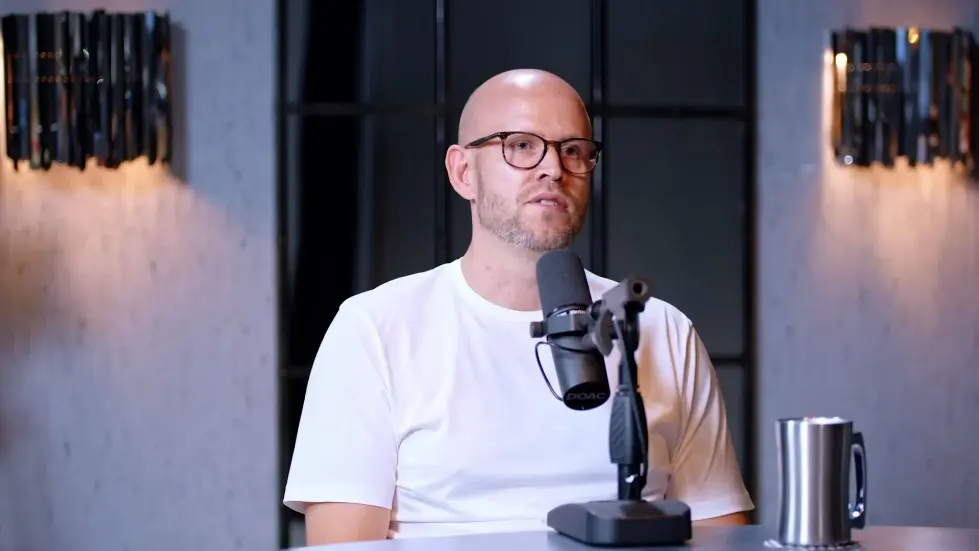
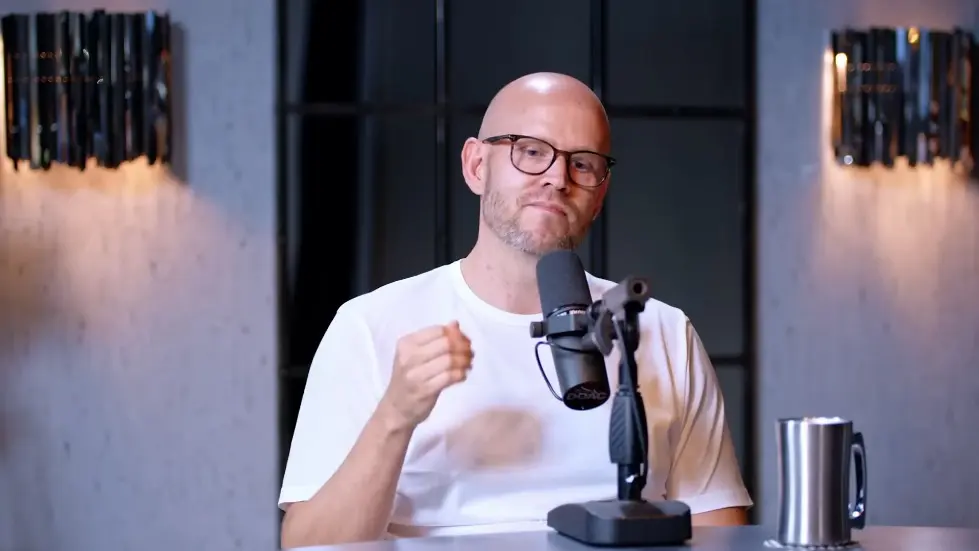
The video is about Daniel Ek, the founder of Spotify, who built a $31 billion business despite being an introverted and academically average individual.
On the Diary of a CEO podcast with Steven Bartlett, he shares his journey, including his struggles with depression and near-death experiences, and how he found success by working on something he cared about, music.
He emphasizes the importance of relationships and sharing the burden with others. He also talks about his upbringing, which heavily influenced him and brought him along in many contexts with adults and professionals from a young age. He shares that his mother wanted him to be broad and a good human being, rather than specific things like a doctor or lawyer.
This video by The Diary Of A CEO was published on Sep 28, 2023.
Video length: 01:26:34.
Ek discusses his background as an introverted, average student who struggled academically and socially. He talks about how he was inspired by the music industry and how he overcame numerous challenges, including running out of money and gaining weight, to create a successful business.
Ek also discusses the importance of relationships and how they can solve problems, such as Apple's music streaming service. He also talks about his upbringing, which heavily influenced him and brought him along in many contexts with adults and professors from a young age.
Ek's mother wanted him to be broad and a good human being, rather than specific things like a doctor or lawyer.
- Spotify was founded by Daniel Ek.
- Ek built a $31 billion business despite being an introverted and academically average individual.
- He shares his journey, including his struggles with depression and near-death experiences.
- Ek emphasizes the importance of relationships and sharing the burden with others.
- He talks about his upbringing, which heavily influenced him and brought him along in many contexts with adults and professionals from a young age.
- Ek started his first company at the age of 16.
- The company later got acquired and Ek retired at the age of 23.
- Ek modeled himself after Mark Zuckerberg and tried to be the best product person.
- He learned the importance of sharing the burden with someone and not trying to do everything alone.
Spotify Founder: How A 23 Year Old Introvert Built A $31 Billion Business! - YouTube

Introduction
- The video is about Daniel Ek, the founder of Spotify.
- Ek built a $31 billion business despite being an introverted and academically average individual.
- He shares his journey, including his struggles with depression and near-death experiences.
- Ek emphasizes the importance of relationships and sharing the burden with others.
- He talks about his upbringing, which heavily influenced him and brought him along in many contexts with adults and professionals from a young age.

Early Life and Education
- Ek was a product of a very strong single mother.
- His mother had him doing a pentathlon as a child, which was a wide education for him.
- Ek was clumsy as a child and had poor fine motor skills.
- His mother enrolled him in an all-female gymnastics group and a theater group to help him express himself.
- Ek saw many contracts in life from a very young age, including with adults and professionals.
Starting His First Company
- Ek started his first company at the age of 16.
- The company later got acquired and Ek retired at the age of 23.
- The first month of the company was fun, with nightclubs, sports cars, and 20-30 girls throwing around money.
- Ek realized that the thing he thought he wanted he just didn't want at all.
- He was just empty and trying to figure out what to do in life.

Spotify Founder: How A 23 Year Old Introvert Built A $31 Billion Business! - YouTube
Creating Spotify
- Ek created Spotify, a one-stop shop for music.
- Spotify is a big thing and has changed the music industry.
- Ek modeled himself after Mark Zuckerberg and tried to be the best product person.
- He learned the importance of sharing the burden with someone and not trying to do everything alone.
- Ek faced near-death experiences and ran out of money, but he persevered.
Conclusion
- Ek's journey to success was not easy, but he learned valuable lessons along the way.
- He emphasizes the importance of relationships and sharing the burden with others.
- Ek's upbringing heavily influenced him and brought him along in many contexts with adults and professionals from a young age.
- He talks about his struggles with depression and near-death experiences.
- Ek's creation of Spotify has had a significant impact on the music industry.

Early Life and Education
- Daniel Ek, founder of Spotify, comes from a music family.
- His grandfather was an opera singer, grandmother was an actress in theater, and also a jazz pianist.
- Music education was the premier focus of his education.
- His mother identified him as an introvert early on.
- He had an easy time in school and was encouraged to make an effort.

Introversion and Social Groups
- Introverts often struggle to find friends and fit into social groups.
- Daniel Ek found it easy to learn new things in school.
- He had a good memory and was able to memorize concepts easily.
- He could be in any social group but didn't excel at anything.
- Being able to relate to others and be accepted in a group is a blessing, but it also means he never really belonged anywhere.

Interests and Passions
- Daniel Ek is interested in music, theater, and jazz piano.
- He loves seeing creative people, business people, and scientists mixed together.
- He is described as ambitious by those who know and work with him.

Challenges and Struggles
- Daniel Ek struggled to find friends and fit into social groups.
- He had a hard time speaking to people who were artists and scientists.
- He had to work hard to find energy from people who were excited about something.
- He had to learn to be comfortable with anyone he was not comfortable with.

Conclusion
- Daniel Ek's upbringing and education heavily influenced his later success as the founder of Spotify.
- His mother identified him as an introvert early on, but he found it easy to learn new things in school.
- He could be in any social group but didn't excel at anything.
- He is described as ambitious by those who know and work with him.
- Despite his struggles, Daniel Ek found success by working on something he cared about, music.

Ambition
- The speaker is discussing the concept of ambition and its importance in achieving success.
- He believes that ambition is the drive to strive for something greater and that it is a key factor in achieving success.
- He also believes that ambition should be balanced with effort and that aiming higher can lead to greater rewards.
- The speaker encourages people to shoot for the stars and not settle for less.
- He believes that many people are afraid of failure and that this stops them from even beginning to try.

University Education
- The speaker discusses the role of university education in entrepreneurship.
- He believes that studying as many businesses as possible and getting business exposure is the single best thing an entrepreneur can do.
- He suggests working for great businesses or great individuals to learn from them and gain valuable skills.
- The speaker believes that entrepreneurship is about putting two or more things in a new context and that studying different things is important.
- He emphasizes the importance of understanding business, product, and how to make that product in entrepreneurship.

Entrepreneurship
- The speaker discusses the concept of entrepreneurship and its importance in innovation.
- He believes that innovation is about putting two or more things in a new context and that it is not entirely novel.
- The speaker encourages people to study different things and understand a little bit about business and product to make that product.
- He believes that entrepreneurship is about understanding the drivers from that and that it is important.
- The speaker emphasizes the importance of effort and balance in ambition and that aiming higher can lead to greater rewards.

Personal Journey
- The speaker shares his personal journey and how his mother taught him to be ambitious.
- He believes that his mother's teachings have influenced his approach to ambition and success.
- The speaker discusses his struggles with depression and near-death experiences and how they have shaped his perspective on life and success.
- He emphasizes the importance of relationships and sharing the burden with others in achieving success.
- The speaker shares his upbringing and how it has influenced his approach to success and his desire to be a good human being.

Education and Learning Sales
- The speaker believes that education can be helpful in learning sales and the theory of it, but it is not the only path to take.
- He suggests that there are many other paths one can take that may be even more beneficial for certain individuals.
- The speaker emphasizes the importance of relationships and sharing the burden with others in achieving success.
- He believes that success is often serendipitous and that it is not always the result of a specific path or plan.
- The speaker is a product of all the experiences and relationships he has had in his life, and he believes that these experiences have shaped him into the person he is today.

Self-Education and University
- The speaker believes that self-education is invaluable and is the most important thing one can do as a young individual about anything they are interested in.
- He suggests that getting a degree from a university can be helpful, but it is not the only path to take.
- The speaker believes that it is important to find a broad base of knowledge and skills that will be useful in the future.
- He suggests that certain types of people may do well in a university environment, but it may not be the best use of their time for others.
- The speaker believes that it is important to find the right path for each individual, based on their interests and goals.

Startups and Entrepreneurship
- The speaker suggests that joining a startup is a great way to learn and grow as an entrepreneur.
- He believes that it is important to be close to the decision-making process and to learn more in a startup environment.
- The speaker suggests that it is the cheapest way to fail when you are young.
- He believes that it is important to observe companies and learn from their successes and failures.
- The speaker suggests that there are many paths to entrepreneurship, and it is important to find the right one for each individual.

Advice for Young People
- The speaker advises young people to go and join a startup that is doing something at the cutting edge of the world or a wave that is currently coming into shore.
- He believes that it is important to be close to the decision-making process and to learn more in a startup environment.
- The speaker suggests that it is the cheapest way to fail when you are young.
- He believes that it is important to observe companies and learn from their successes and failures.
- The speaker suggests that there are many paths to entrepreneurship, and it is important to find the right one for each individual.

The Early Years
- Spotify founder Daniel Ek was an introverted and academically average individual.
- He struggled with depression and had near-death experiences.
- Ek found success by working on something he cared about, music.
- He emphasizes the importance of relationships and sharing the burden with others.
- His upbringing heavily influenced him and brought him along in many contexts with adults and professionals from a young age.

The Acquisition of Vertigo
- After Vertigo was acquired, Ek retired at 23.
- He was able to retire due to the money he earned from the acquisition.
- Ek lived his dream life as a 23-year-old man.
- He had champagne and a red Ferrari.
- Ek found that being financially independent allowed him to live a more socially accepted life and find his tribe.

The Search for Financial Independence
- Ek wanted to be financially independent.
- He thought that once he achieved financial independence, he would be more socially accepted.
- Ek thought that he would find his tribe and live his dream life.
- Ek thought that he would be able to retire in his 40s or 50s.
- Ek was mind-bogged by the idea of achieving financial independence at such a young age.

The Journey to Financial Independence
- Ek started frequenting night clubs and buying a sports car.
- He tried to get the girls he couldn't get before, but they didn't really care about him.
- Ek realized that the thing he thought he wanted didn't want at all.
- He started getting phone calls from people asking him to come out on Friday evenings.
- Ek realized that he just didn't care and had no energy to do that.

The Realization
- Ek started getting phone calls from people asking him to come out on Friday evenings.
- He realized that he just didn't care and had no energy to do that.
- Ek started putting on his computer or playing his guitar.
- Something on the back of his head started forming around who am I and why do I care about it.
- Ek met his co-founder because he was the founder of Trade Doubler and bought his company.

The Founder's Background
- Daniel Ek, the founder of Spotify, was an introverted and academically average individual.
- He was born in Stockholm, Sweden and grew up in a family that valued relationships and personal growth.
- His mother wanted him to be a broad and good human being, rather than a specific profession like a doctor or lawyer.
- He struggled with depression and had near-death experiences, which influenced his outlook on life.
- He bonded with his co-founder over their shared love for music and their desire to create something they cared about.

The Turning Point
- The co-founder and Daniel realized that they had been approaching their goals all wrong.
- They decided to create an environment where they could learn from smart people and work on something they enjoyed.
- They started discussing ideas and brainstorming potential products to create.
- Daniel suggested music as a potential product, but his co-founder thought it was a terrible idea.
- They discussed the reasons why the music industry was struggling and how they could fix it.

The Product Idea
- Daniel and his co-founder decided to create a better product that would address the problems facing the music industry.
- They considered different ways to make money, such as paying out based on how much people were listening.
- They realized that they needed to build a sustainable business, but were willing to take a risk on the idea.
- Daniel told his co-founder that he thought the idea was probably going to lose them a lot of money, but they were willing to give it a shot.
- His co-founder was hesitant at first, but eventually agreed to move forward with the idea.

The Transition
- Daniel stopped responding to people who were trying to get him out in the evenings after finding a new purpose in the music industry.
- He felt happy again after a week of focusing on the new product and found a new sense of purpose.
- He had been feeling depressed for the better part of a year before finding the music industry as a potential solution.
- He realized that the idea of happiness he had been pursuing was not a valid hypothesis and that he needed to experience the anti-climax to truly understand what made him happy.
- He went through a series of life experiences, including buying a big house and a car, before finally moving as close to the office as possible in a one-bedroom studio apartment.

The Importance of Attention and Fame
- The speaker emphasizes the importance of relationships and sharing the burden with others.
- He shares his struggles with depression and near-death experiences.
- He talks about his upbringing, which heavily influenced him and brought him along in many contexts with adults and professionals from a young age.
- He shares that his mother wanted him to be broad and a good human being, rather than specific things like a doctor or lawyer.
- He emphasizes that we all have to go through the experience of seeking attention and fame, even if we don't seek it consciously.

Experiencing Parts of Life
- The speaker shares that one of the most amazing things he gets to do is take his friends on crazy experiences.
- He talks about the child-like imagination and wonder that his friends have when they look at his life.
- He shares that he sees the other side when they're looking at his life with a child-like imagination and wonder.
- He talks about the idea of what life is and how it's important to experience it up close.
- He emphasizes that it's important to experience life up close, especially when it comes to wealth and having none.

The Symptoms of Depression
- The speaker talks about his experience of depression nine months after the sale of Spotify.
- He shares that it's hard to know when we're drifting down the wrong path because it creeps up on us like a frog and a frying pan.
- He describes the feeling of subtle growing emptiness that he felt when he was working seven days a week.
- He shares that he was lonely and didn't know it at the time.
- He talks about the symptoms that he encountered and how they related to his experience of depression.

Finding Meaning in Social Currency
- The speaker talks about the thrill of experiencing social currency and feeling like he had made it.
- He shares that after experiencing the tenth time, he realized that the feeling of making it was losing its charm.
- He talks about the hangarounds that he was trying to get in with, who realized that they could replace him with someone who had the money and connection that he had at that time.
- He shares that status and fame really mattered, and that it was important to experience it up close.
- He emphasizes the importance of relationships and sharing the burden with others.

The Founder's Journey
- The video is about Daniel Ek, the founder of Spotify, who built a $31 billion business despite being an introverted and academically average individual.
- He shares his journey, including his struggles with depression and near-death experiences, and how he found success by working on something he cared about, music.
- He emphasizes the importance of relationships and sharing the burden with others.
- He talks about his upbringing, which heavily influenced him and brought him along in many contexts with adults and professionals from a young age.
- He shares that his mother wanted him to be broad and a good human being, rather than specific things like a doctor or lawyer.

The Paradox of Aspiration
- The author talks about the Ferrari syndrome, which describes how people who aspire to buy a Ferrari think of themselves as saying "one day when I'm in this Ferrari, everyone's gonna look at this Ferrari and they're gonna be amazed with me."
- The author describes this as a paradox, as people are more focused on the Ferrari than the individual sitting in it.
- The author relates this to his own life, feeling that he was rewarded on the outside for being successful, but not learning or forming genuine connections with people.
- He realized that he needed to be allowed to be by himself in order to thrive.
- He learned that learning and belonging were core components of being sufficiently happy.

You have read 50% of the summary.
To read the other half, please enter your Name and Email. It's FREE.
You can unsubscribe anytime. By entering your email you agree to our Terms & Conditions and Privacy Policy.
Watch the video on YouTube:
Spotify Founder: How A 23 Year Old Introvert Built A $31 Billion Business! - YouTube
Related summaries of videos:
- Jada Pinkett Smith on The Diary of a CEO with Steven Bartlett (EXCLUSIVE): “I Just wanted to stay alive until 4pm!”
- Dr. Daniel Amen on The Diary of a CEO with Steven Bartlett - Do you have ADHD?
- Morgan Housel The Savings Expert on The Diary of a CEO with Steven Bartlett: “Do Not Buy A House!” Do THIS Instead!
- Casey Neistat with Steven Bartlett (The Diary of a CEO): Why I Quit YouTube & What I'm Doing Now!
- Kristen Holmes and Steven Bartlett: The Fitness Scientist: Even A Little Alcohol Is Hurting Your Health!
- Daniel Lieberman and Steven Bartlett: Harvard Professor: REVEALING The 7 Big LIES About Exercise, Sleep, Running, Cancer & Sugar
- Jim Kwik and Steven Bartlett - The Memory Expert: Do You Want A Perfect Memory?
- Mia Khalifa Opens Up About The Dark Side Of The Adult Entertainment Industry | E248
- The No.1 Sex Expert: How To Have Great Sex EVERY Time! (And Fix Bad Sex) - Tracey Cox | E247
- 10 Life-changing Lessons From The Longest Ever Study On Human Happiness! Dr. Robert Waldinger | E246
- Home
- About us
- Contact
- Book Summaries 0-9
- Book Summaries A
- Book Summaries B
- Book Summaries C
- Book Summaries D
- Book Summaries E
- Book Summaries F
- Book Summaries G
- Book Summaries H
- Book Summaries I
- Book Summaries J
- Book Summaries K
- Book Summaries L
- Book Summaries M
- Book Summaries N
- Book Summaries O
- Book Summaries P
- Book Summaries Q
- Book Summaries R
- Book Summaries S
- Book Summaries T
- Book Summaries U
- Book Summaries V
- Book Summaries W
- Book Summaries X
- Book Summaries Y
- Book Summaries Z
- Jay Shetty Podcast - Summaries
- Tom Bilyeu Impact Theory - Summaries
- Lex Fridman - Summaries
- Diary of a CEO - Summaries
- Alex Hormozi - Summaries
