
Alex Hormozi: The Talent Grid - How I Recognize Skill in Self & Team
Last updated: Jun 15, 2023
The video is about a framework for recognizing skill levels in oneself and team members, with three levels of employees/talent: individual contributors, managers, and leaders.
This video by Alex Hormozi was published on May 31, 2021.
Video length: 12:23.
In this video, Alex Hormozi discusses his framework for recognizing skill in oneself and in a team.
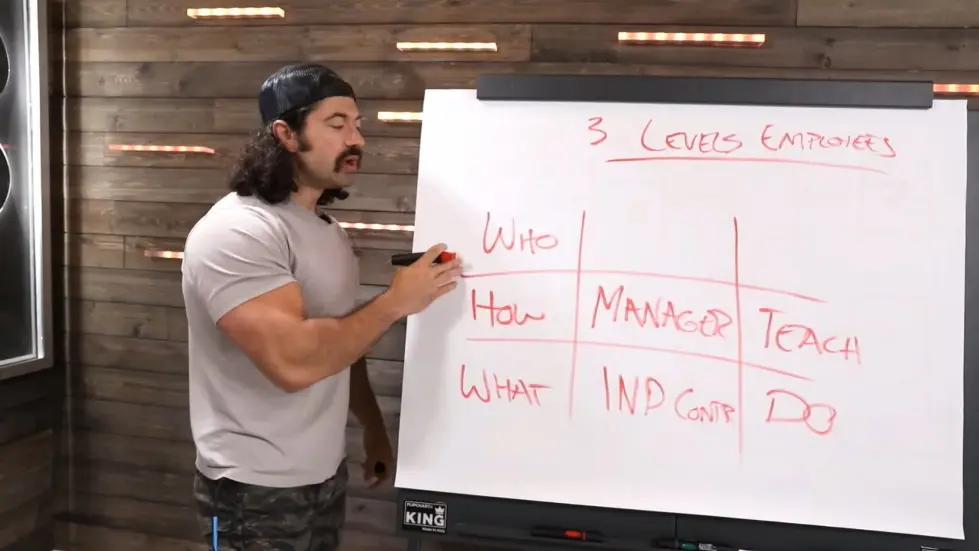
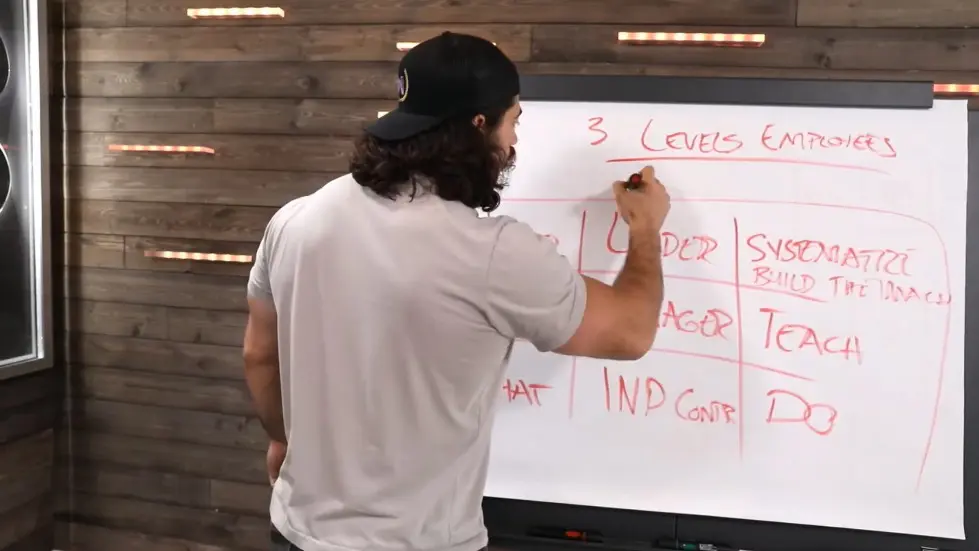
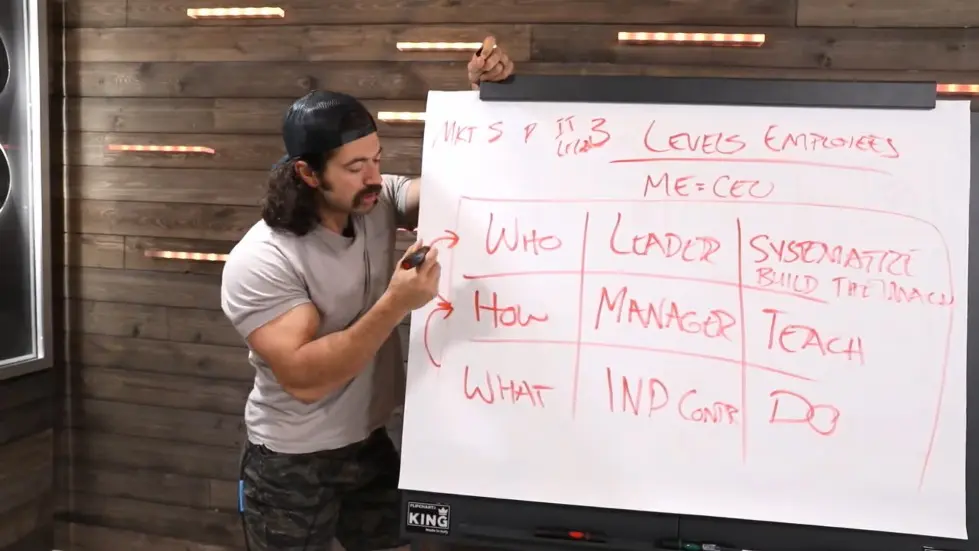
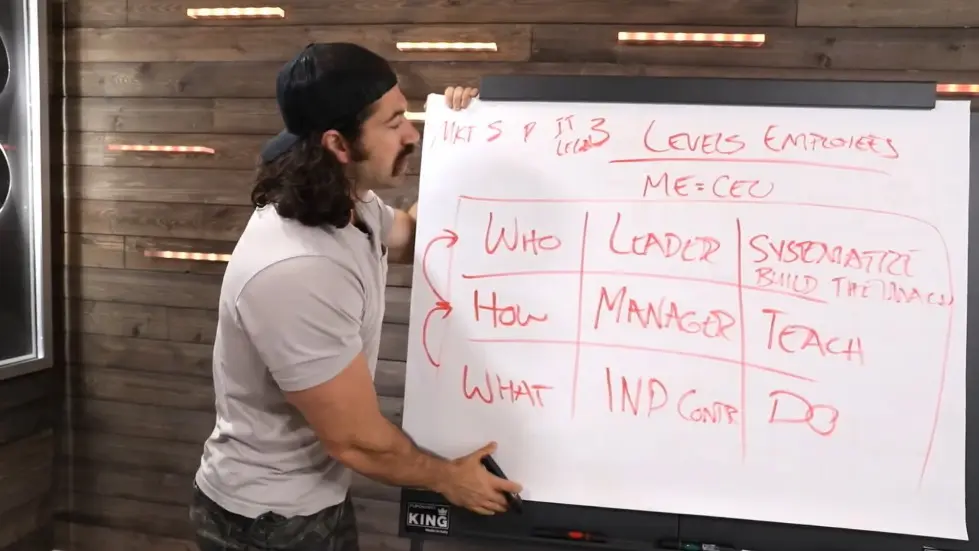
He breaks down talent into three levels: understanding what to do as an individual contributor, understanding how to do it as a manager, and understanding who can do it as a leader. Hormozi emphasizes the importance of recognizing where one is at in their skill level and being able to identify where others are at in order to effectively delegate tasks and responsibilities.
He also notes the importance of systematizing processes in order to build a successful business.
- Learning frameworks is important for growth.
- Recognizing skill levels in oneself and team members is crucial.
- There are three levels of employees/talent: individual contributors, managers, and leaders.
- Understanding what to do, how to do it, and who can lead is important for success.
- The Talent Grid is a framework for recognizing skill levels in oneself and team members.
- A truly delegated business acts as a portfolio where you are actually an owner.
- It's important to recognize where you and your team members are at and help them jump to the next level.
The Talent Grid - How I Recognize Skill in Self & Team - YouTube
Introduction
- Learning frameworks is important for growth.
- Developing frameworks helps to fix problems easily.
- Recognizing skill levels in oneself and team members is crucial.
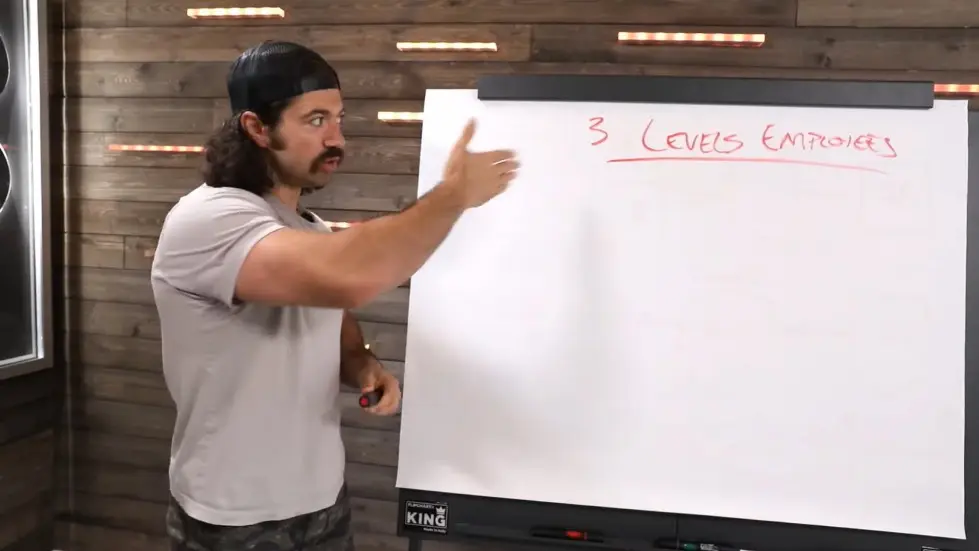
- There are three levels of employees/talent: individual contributors, managers, and leaders.

Level 1: Understanding What to Do
- Level 1 is being an individual contributor.
- Time is spent doing and learning what to do.
- Recognizing this level helps to identify what needs to be done next.
- Employees may get stuck at this level due to their own beliefs.
- Identity is fluid and can be changed to become successful.

Level 2: Understanding How to Do It
- Level 2 is becoming a manager.
- Time is spent teaching others to replicate the skill.
- Managers don't necessarily need to know how to do something better than an individual contributor.
- They should understand how it works.
- Recognizing this level helps to identify who can manage others.
The Talent Grid - How I Recognize Skill in Self & Team - YouTube
Level 3: Understanding Who
- Level 3 is becoming a leader.
- Leaders are engaged and systematize the process.
- Building the machine that builds the machine is important.
- Systematizing is not delegating, but creating a system that can teach for you.
- Recognizing this level helps to identify who can lead and crack open to the million-plus per month level.
Conclusion
- Recognizing skill levels in oneself and team members is crucial for growth.
- There are three levels of employees/talent: individual contributors, managers, and leaders.
- Understanding what to do, how to do it, and who can lead is important for success.
- Identity is fluid and can be changed to become successful.

The Talent Grid
- The Talent Grid is a framework for recognizing skill levels in oneself and team members.
- There are three levels of employees/talent: individual contributors, managers, and leaders.
- You can grade yourself in terms of where you're at and where a team member is at.
- You can even grade departments within your business.
- As you grow, you can move up and eventually have a team of leaders who are building the machine that builds the machine for you.

Delegated Business
- A truly delegated business acts as a portfolio where you are actually an owner.
- If you are no longer on the slack channel for a company, that is what is considered a truly delegated business.
- Entrepreneurs often think their business is systematized, but their phone is still blowing up with notifications.
- Checking all the boxes means the company can continue to grow without your direct involvement.
- You can check all the boxes at a business level or at a department level.

Department Level
- You can look at each department and think about what level you are involved in.
- You can grade yourself and your team members within each department.
- You can look at your strengths and weaknesses to figure out where your bottlenecks are.
- It's important to build a machine that teaches people how to do things so you can scale.
- Every quarter, you can look at your business on a sheet and think about whether people know what to do, whether you have the base skill, whether you have the sequence, and whether you can find somebody who can help systematize and build the machine.
Jumping Levels
- It's difficult for most employees to jump levels.
- Individual contributors need to learn how to manage themselves before they can become managers.
- Managers need to learn how to delegate before they can become leaders.
- Leaders need to learn how to build a machine that builds the machine before they can become CEOs.
- It's important to recognize where you and your team members are at and help them jump to the next level.
The Talent Grid - Recognizing Skill Levels in Self and Team
- Leadership is different from being in charge, and it takes time for managers to become leaders.
- There are three levels of talent: individual contributors, managers, and leaders.
- Amazing leaders may not be good individual contributors, and good individual contributors may not be good leaders.
- Being an operator is hard because you have to master all levels of talent to recognize and teach it in others.
- Entrepreneurship is a growth-oriented occupation that requires personal growth to attract and lead people at a higher level.
- Having a framework for recognizing skill levels can help entrepreneurs apply things faster and break through bottlenecks in their businesses.
Watch the video on YouTube:
The Talent Grid - How I Recognize Skill in Self & Team - YouTube
Related summaries of videos:
- Alex Hormozi: I Taught 116+ Salesmen My Closing Framework
- Alex Hormozi: 9 Beliefs That Built My Ultra High Net Worth Got Me To $121M By Age 31
- Alex Hormozi: When Money Stopped Mattering
- Alex Hormozi: What I Learned After Countless Failed Business Partnerships
- Alex Hormozi: How I Accidentally Made $17M when I was 28 Using “Leverage”
- Alex Hormozi: How I make $100,000/mo PASSIVE...I am the BANK
- Alex Hormozi: I spent $1,025,000 for this business tip...it paid off
- Alex Hormozi: How the rich avoid paying taxes...MY strategy - Part 1
- Alex Hormozi: The best way to invest your money...nobody will tell you this.
- Alex Hormozi: 1 SIMPLE mental technique that will SKYROCKET your sales...
- Home
- About us
- Contact
- Book Summaries 0-9
- Book Summaries A
- Book Summaries B
- Book Summaries C
- Book Summaries D
- Book Summaries E
- Book Summaries F
- Book Summaries G
- Book Summaries H
- Book Summaries I
- Book Summaries J
- Book Summaries K
- Book Summaries L
- Book Summaries M
- Book Summaries N
- Book Summaries O
- Book Summaries P
- Book Summaries Q
- Book Summaries R
- Book Summaries S
- Book Summaries T
- Book Summaries U
- Book Summaries V
- Book Summaries W
- Book Summaries X
- Book Summaries Y
- Book Summaries Z
- Jay Shetty Podcast - Summaries
- Tom Bilyeu Impact Theory - Summaries
- Lex Fridman - Summaries
- Diary of a CEO - Summaries
- Alex Hormozi - Summaries
